10 Simple Lines About Mathura Junction Railway Station
This work has been verified by our teacher: 16.01.2026 at 12:28
Type of homework: Essay Writing
Added: 16.01.2026 at 11:59
Summary:
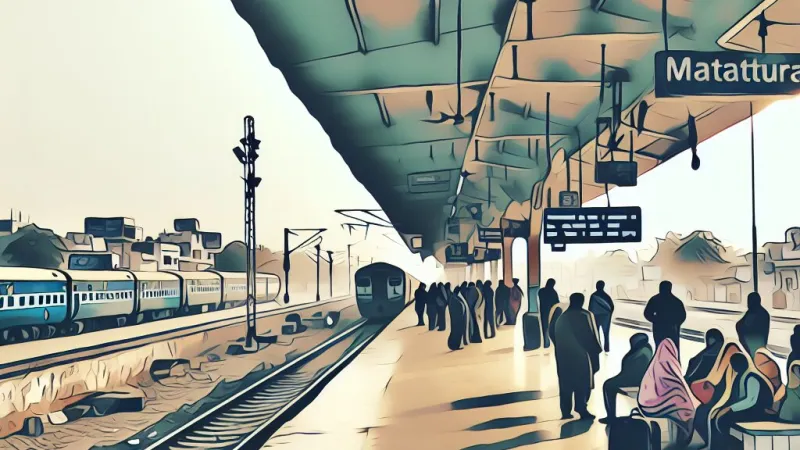
Mathura Junction: główny, ruchliwy dworzec w Mathurze (kod MTJ), ma połączenia z Delhi, Agrą i Jaipur; brama dla pielgrzymów i turystów, z udogodnieniami 🚆
10 Lines on Mathura Junction Railway Station
1. Mathura Junction is the main railway station situated in Mathura city, in the Indian state of Uttar Pradesh. 2. The station is identified by the code “MTJ,” which helps travellers and railway staff recognise it easily on tickets and timetables. 3. This important station is managed under the Agra division of the North Central Railway zone of Indian Railways. 4. Mathura Junction began serving passengers in the early 1900s and has grown steadily in importance since then. 5. The station has multiple platforms and serves as a busy junction where several railway lines branch out in different directions. 6. It links Mathura with major cities like Delhi, Agra, Jaipur, and Varanasi through regular passenger and express trains. 7. Every day, many long-distance and local trains halt at Mathura Junction, making it one of the busiest stops in the region. 8. Travellers can access amenities such as spacious waiting halls, reservation counters, food stalls, clean washrooms, and digital information boards at the station. 9. Mathura Junction is the main gateway for tourists and devotees visiting famous religious sites in Mathura and Vrindavan, associated with Lord Krishna. 10. Overall, Mathura Junction plays a vital role in the city’s life by connecting people, supporting tourism, and making travel more convenient for everyone.---
Detailed Elaboration and Indian Cultural Context
Writing about Indian railway stations is incomplete without acknowledging the way they form lifelines for cities and the millions who pass through them. Mathura Junction, in particular, enjoys a special place in India’s historical and cultural landscape, much like the railway settings described in Satyajit Ray’s films or R. K. Narayan’s “Malgudi Days”, where stations serve as crossroads of both ordinary and extraordinary tales.Historical Development
The foundation of Mathura Junction dates back to the British colonial era, a time when railways were expanding rapidly across India. The ease of connecting Mathura to Delhi and Agra meant that not only goods but also pilgrims and traders could reach this holy city more comfortably.Role as a Junction
The word “junction” is significant here. In Indian Railways parlance, a junction is not only a physical crossing of railway lines but also a space where cultures, languages, and lives intersect. At Mathura Junction, passengers from the north, west, and east of India pass through. Express trains like the Taj Express, which links Delhi and Agra, make important stops here, underlining Mathura’s pivotal spot on the map. Those travelling to the far corners of Uttar Pradesh or on pilgrimages often begin or end their journeys at Mathura Junction.Facilities and Upgrades
In recent years, the station has seen several modern improvements: installation of digital display screens, renovation of waiting areas, and enhancements in cleanliness due to Indian Railways’ “Swachh Bharat Abhiyan”. This reflects a broader national trend to modernise infrastructure for the benefit of both daily passengers and special tourists.Cultural and Religious Importance
Mathura is best known as the birthplace of Lord Krishna, and the station acts as the first glimpse of the city for millions of devotees during festivals like Janmashtami or Holi. The sight of colourful crowds, the chanting of bhajans, and the special arrangements for pilgrims often add a unique vibrancy to Mathura Junction during these times.Not unlike a scene from Munshi Premchand’s stories, where the hustle of the railway station brings forth the many faces of India—the station here is a microcosm of the country itself.
Regional Connectivity
Besides linking to large metropolises, the station is also central to the economy of Mathura, supporting trade and enabling connections to rural hinterlands. Vendors, coolies (porters), and tea stall owners see the station as their workplace, echoing the scenes so often observed in iconic Indian literature.Conclusion
Thus, Mathura Junction is much more than a place to board or disembark from trains. It is where journeys begin, stories unfold, and people from all walks of life meet for a moment before continuing on their paths. Its platforms have witnessed generations heading to temples, families reuniting, and countless adventures starting anew.So, while these ten lines capture the essential facts for a school assignment, behind each line lies a story—a reminder that in India, a railway station is always more than just stone, steel, and schedules. It is a celebration of life on the move.
Frequently Asked Questions about AI Learning
Answers curated by our academic expert team
What is Mathura Junction Railway Station known for?
Mathura Junction Railway Station is known as the main railway station in Mathura city, connecting major cities and serving as a gateway for tourists and devotees.
Which facilities are available at Mathura Junction Railway Station?
Facilities at Mathura Junction Railway Station include waiting halls, reservation counters, food stalls, clean washrooms, and digital information boards for passengers.
What is the importance of Mathura Junction Railway Station in tourism?
Mathura Junction Railway Station is the primary entry point for tourists and devotees visiting Mathura and Vrindavan, especially during religious festivals.
When was Mathura Junction Railway Station established?
Mathura Junction Railway Station began serving passengers in the early 1900s, during the British colonial era, supporting historical and economic growth.
Which major cities are connected by Mathura Junction Railway Station?
Mathura Junction Railway Station connects Mathura to cities like Delhi, Agra, Jaipur, and Varanasi through regular passenger and express trains.
Rate:
Log in to rate the work.
Log in