Key Facts About Kargil Vijay Diwas: Tribute to India's Brave Soldiers
This work has been verified by our teacher: 15.01.2026 at 20:30
Type of homework: Essay Writing
Added: 15.01.2026 at 19:45
Summary:
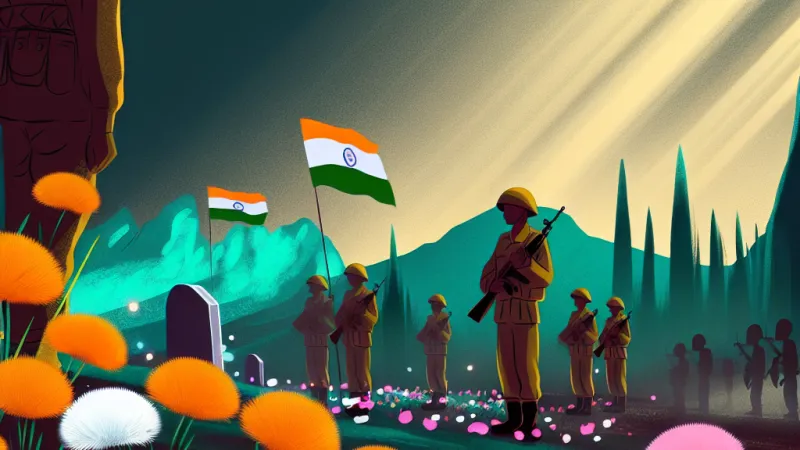
Kargil Vijay Diwas (26 lipca) upamiętnia zwycięstwo Indii w 1999 r. oraz bohaterstwo żołnierzy. To dzień dumy, pamięci i patriotyzmu. 🇮🇳
10 Lines on Kargil Vijay Diwas: An In-depth Essay
Kargil Vijay Diwas occupies a special place in the heart of every Indian. Celebrated every year on 26th July, this day stands as a powerful reminder of the valour and determination displayed by the Indian Armed Forces during the Kargil War in 1999. It is more than a date on the calendar; it commemorates a triumph of courage, unity, and unyielding patriotism. To truly grasp the significance of this day, students and citizens alike must understand both the events that led to this historic moment and the myriad sacrifices made by brave soldiers who fought under the harshest conditions to safeguard our nation’s integrity.
Historical Background of the Kargil War
The Kargil War did not arise in isolation; it was deeply rooted in the complex geopolitics of the Indian subcontinent. The conflict was fought in the formidable terrain of the Kargil district in erstwhile Jammu & Kashmir, a region marked by icy heights and treacherous mountain passes. The strategic significance of the area stems from its proximity to the Line of Control (LoC), the de facto border dividing India and Pakistan.In early 1999, as most of India busied itself with routine life, a grave threat was silently brewing in the heights above Dras, Batalik, and other sectors. Taking advantage of the winter’s isolation, Pakistani intruders, including regular troops and militants, infiltrated Indian territory, occupying key positions on the rugged ridgelines. This clandestine operation aimed to sever the vital link between the Kashmir Valley and Ladakh, disrupt the crucial Srinagar-Leh highway, and internationalise the Kashmir issue.
The Indian Armed Forces, aided by intelligence reports and the courage of local shepherds like Tashi Namgyal from Batalik, uncovered these incursions. What followed was a rapid and determined response under the banner of “Operation Vijay”. The Indian Army, supported by the Indian Air Force, launched assaults to reclaim the snow-clad peaks from well-entrenched adversaries. Soldiers braved not only enemy fire, but also extreme altitudes, biting cold, and perilous terrain. Notable among the heroes were Captain Vikram Batra ("Yeh dil maange more!") and Rifleman Sanjay Kumar, whose resolve became legends in military history.
After weeks of fierce combat, which saw hand-to-hand fighting and relentless bombardment, Indian forces steadily regained all positions. By mid-July, Pakistan was compelled to retreat, and on 26 July 1999, India officially declared victory, restoring its territorial sovereignty.
Importance of Kargil Vijay Diwas
Kargil Vijay Diwas has grown to symbolise the nation’s undying spirit and its collective gratitude towards its armed defenders. The day is an emblem of both celebration and solemn remembrance. It immortalises the raw courage of our soldiers—those who returned victorious and those who made the supreme sacrifice.For the Indian public, the war was not merely a military event, but a defining moment that rekindled a powerful sense of unity and pride. Songs such as “Sandese Aate Hain” from the film Border, and poignant poems like Harivansh Rai Bachchan’s “Agnipath”, echo in school assemblies and military gatherings, keeping the memories alive.
Kargil Vijay Diwas also serves an educational purpose. It teaches every student the cost of freedom and why safeguarding national security is imperative. Above all, it inspires forthcoming generations to live with strength, honour, and duty towards the motherland, as embodied by the men and women in uniform.
How Kargil Vijay Diwas is Celebrated Across India
The commemoration of Kargil Vijay Diwas witnessed on each 26th of July is marked by nationwide pride and reverence. Ceremonies are held at the highest levels—most notably at the Amar Jawan Jyoti at India Gate in New Delhi, where the Prime Minister, Defence Minister, and senior officers lay wreaths and pay homage to the martyrs. The same spirit is mirrored at the Kargil War Memorial in Dras, Ladakh, where the gallant stories are etched in stone and memory.Equally, educational institutions across India play a pivotal role in passing on the legacy. Schools and colleges organise programmes featuring patriotic songs, speeches, debates, and exhibitions. Students recite poems, stage enactments based on true war incidents, and create elaborate displays depicting Operation Vijay. Documentaries recounting the stories of bravery are screened to instil a deeper understanding among the youth.
Media coverage peaks on this day, with news channels interviewing surviving soldiers and families of martyrs. Public awareness is further amplified through social media, where citizens post messages, videos, and images with hashtags like #KargilVijayDiwas and #RememberTheMartyrs. Journalists and writers publish features highlighting the lesser-known stories of courage, ensuring that the sacrifices never fade from collective memory.
Legacy and Lessons from the Kargil War
The Kargil War left an indelible mark on India’s military preparedness and national consciousness. In its aftermath, significant steps were taken to upgrade both technology and strategy. The government invested in advanced surveillance systems, satellite imagery, and unmanned aerial vehicles (UAVs) to curb the possibility of future infiltrations. The armed forces underwent modernisation, and lessons were drawn about the importance of seamless intelligence coordination and joint operations.On the international stage, India’s measured yet firm response to Pakistan’s aggression earned wide respect. The principled stance of not crossing the LoC demonstrated India’s commitment to responsible behaviour even during conflict, bolstering credibility in diplomatic circles.
At the heart of the Kargil story lies a powerful message on unity and vigilance. The war was a stern reminder that as a nation, India's unity must be unwavering in the face of external threats, and eternal vigilance remains the price of liberty. Kargil Vijay Diwas, thus, is not just a date for rituals, but an annual call to remember, reflect, and renew our pledge to support our gallant soldiers.
Key Facts and Figures
1. Date of Celebration: Kargil Vijay Diwas is commemorated on 26 July every year across India. 2. Duration of the War: The conflict lasted for roughly two months, from May to July 1999. 3. Troop Involvement: Nearly 2 lakh Indian soldiers and officers took part in Operation Vijay. 4. Martyrdom: The Indian Army suffered the loss of around 527 brave souls, with over a thousand more injured. 5. Operation Name: The military campaign was officially codenamed “Operation Vijay”. 6. Major Military Assets: Weapons and machines like MiG-21, MiG-27, MiG-29 aircraft, and field artillery were crucial. The Bofors howitzer, after its impressive use, became a household name. 7. Recognition: Many soldiers received gallantry awards, including 4 Param Vir Chakras and several Maha Vir Chakras. 8. Strategic Areas: Peaks such as Tololing, Tiger Hill, and Point 4875 in Dras saw the fiercest fighting. 9. Role of Air Force: Operation Safed Sagar was the Indian Air Force’s codename for their crucial role in providing air support. 10. Legacy: The War Memorial in Dras witnesses thousands of visitors every year, keeping the heroism alive.Conclusion
Kargil Vijay Diwas is a blend of pride and solemnity—a day to salute the indomitable courage and sacrifice that ensured that “India’s tricolour flies high and free,” as our soldiers intended. It is a reminder that the freedom we enjoy is safeguarded by the dedication of our Armed Forces, who stand watch on the frontiers in all weather, at all times.The aftermath of the Kargil War has shaped India’s defence forces to be more alert and resolute, but its real legacy lies in the hearts of Indians, young and old. On every 26th July, as we bow our heads in silence or join in fervent chants of “Bharat Mata ki Jai,” we do not merely remember a battle won, but reaffirm our gratitude to those who served—and those who continue to serve—our great nation.
As children and students, let us keep the flame of patriotism burning bright, learning from the past and looking to the future with hope and resolve. The story of Kargil is not just India’s, but each one of ours—a saga of resilience, unity, and everlasting pride.
Rate:
Log in to rate the work.
Log in