Impact and Causes of Deforestation in India: An Informative Essay
This work has been verified by our teacher: 15.01.2026 at 20:48
Type of homework: Essay Writing
Added: 15.01.2026 at 20:08
Summary:
Wycinka lasów to poważny problem Indii – prowadzi do utraty bioróżnorodności, zmian klimatu i zagrożenia dla ludzi; konieczna jest ochrona! 🌳
Paragraph on Deforestation
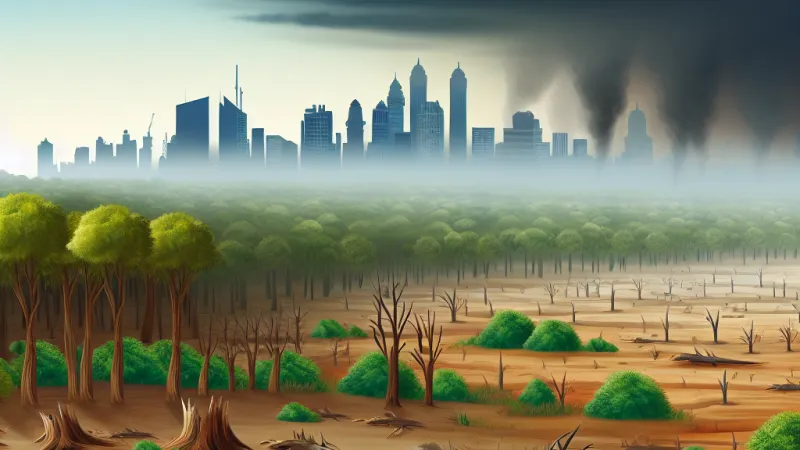
Deforestation, in its simplest terms, refers to the mass removal or destruction of forests, where broad stretches of greenery are cleared away to make space for human activity. This practice, sadly, is not a new phenomenon. India, once said to be “sone ki chidiya” partly due to her abundant natural resources, has witnessed the heartbreaking decline of vast, dense forests over the centuries. Our ancient scriptures—from the *Rigveda* to the folklore of tribal communities—are full of references to life thriving amid trees. Forests are not just a resource; they are the lungs of our planet, home to a brilliantly diverse range of plants and animals, and a life-support system for humans. Despite covering about 31% of the Earth’s surface globally, forests in India are fast shrinking, currently forming just around 24% of our total land area as per the Forest Survey of India’s recent report—a far cry from the one-third coverage recommended for ecological health.
In this essay, I will explore the roots of deforestation—why it’s happening—with real-life examples and references from Indian society and history. I will also examine the devastating consequences for both the environment and human life, highlight Indian and global stories of forest loss and protection, and suggest practical steps we must take to stop this dangerous trend. Ultimately, understanding deforestation is not just about statistics or policies—it is about the future of our shared home.
---
Causes of Deforestation
One must acknowledge the multifaceted reasons behind deforestation, particularly in India, where development and tradition often collide.Agricultural Expansion
As India’s population continues to surge—it is now the world’s most populous country—the demand for food grows in tandem. More mouths to feed means an urgent need for farmland, and forests are often the first casualty. The age-old practice of “slash-and-burn” agriculture, locally called ‘jhum’ in North-Eastern states, involves cutting down trees and burning the wood to create nutrient-rich soil for crops. While this practice was sustainable when populations were low and cycles of shifting cultivation were long, it is now disastrous due to higher frequency and reduced forest recovery time. From the heart of the Amazon to the ghats of Kerala, such farming methods have led to destruction on a massive scale.Logging and Timber Industry
India’s strong tradition of woodworking—from Kashmir’s walnut furniture to Channapatna toys—has always relied on timber. However, commercial logging, both legal and illegal, has gone far beyond sustainable use. Forests in Madhya Pradesh, Jharkhand, and Arunachal Pradesh teem with valuable hardwood trees like teak and sal, making them highly attractive to timber mafias. Illegal logging, often carried out under the cover of darkness and sometimes with the tacit approval of corrupt officials, leads not only to loss of tree cover but also to violence and lawlessness in rural areas.Livestock Grazing
Livestock forms the backbone of rural India’s economy. To feed cattle and goats, large swathes of forest are cleared to create pasture. Overgrazing, a major issue in fragile regions like Rajasthan and the Himalayan foothills, leads to the death of young trees and undergrowth, leaving the earth bare and vulnerable to erosion.Infrastructure Development and Urbanisation
The rapid pace of infrastructure building—be it roads, railways, or mining—often comes at the expense of valuable forests. Consider the relentless expansion of cities like Bengaluru or mining projects in Odisha; these require land, and forests are often seen as expendable. The construction of highways through dense woods, like the roads slicing through the Western Ghats, disrupts wildlife corridors, endangers species, and permanently alters landscapes.Mining and Resource Extraction
India’s mineral wealth is both a blessing and a curse. Coal, bauxite, iron ore—extraction leaves behind barren earth, open wounds in the landscape, as seen in Singrauli (Madhya Pradesh) and the iron ore mines of Goa. The chemicals released pollute both land and water, making it almost impossible for original forests to regrow.Other Human Activities
Additionally, people in rural India often depend on forests for firewood and charcoal. In places without access to clean energy, entire families survive by cutting and selling wood. Forest fires—whether naturally occurring, like those during blistering summers in Uttarakhand, or started by people to clear land—can destroy more in a day than human axes cut in a year.---
Environmental Consequences of Deforestation
The impact of losing forests goes far beyond the disappearance of trees.Loss of Biodiversity
Forests house an enormous variety of living beings. In India alone, they are home to Bengal tigers, elephants, snakes, birds, and unique plants like sandalwood and orchids found nowhere else. Many species—like the Asiatic Lion of Gir or rare orchids in the North-East—are endangered, and destruction of their habitat often spells doom. Tribal and indigenous communities suffer too, losing their homes, medicines, and cultural identity.Accelerating Climate Change
Trees are our silent warriors against climate change—a process called carbon sequestration means they absorb carbon dioxide and release oxygen, keeping the air clean. When forests are cut or burnt, all stored carbon is thrown back into the atmosphere, worsening global warming. Scientists believe deforestation accounts for around 10% of global greenhouse gas emissions—the reason behind hotter summers and erratic monsoons haunting India.Soil Degradation and Erosion
Roots of trees grip the soil, preventing it from being washed away. Without them, heavy rain during our monsoons causes massive soil erosion. Fertility is lost; the infamous “ravines” of Chambal are a sad reminder of this process. This ultimately affects food production, making farmers’ lives harder.Disruption of Water Cycles
Forests help regulate rainfall and keep rivers flowing throughout the year. When large tracts are cleared, local climates change—droughts become frequent in places like Vidarbha in Maharashtra, and rivers like the Ganga suffer fluctuating flows, affecting millions. Water quality too falls, as there are no roots to stop pollutants entering streams.Air Pollution and Reduced Air Quality
We often forget that trees absorb not just carbon but also dust and chemical pollutants. With fewer trees, cities like Delhi and Kanpur face choking air. The situation only worsens during winters, leading to health issues ranging from allergies to serious respiratory diseases.---
Socio-Economic Effects of Deforestation
Impact on Livelihoods
A large section of India's population—almost 300 million—depends directly or indirectly on forests, according to government data. From collecting leaves for tendu patta (used in beedi-making) to wild honey gathering, families lose their means of survival as forest cover shrinks. Ayurvedic medicines, many derived from forest plants, become harder to source.Natural Disasters
The frequency and intensity of floods and landslides have increased. Recent events like the Kerala floods and repeated cloudbursts in Uttarakhand point to how deforested hills cannot hold back water—leading to destruction, loss of homes, and economic hardship.Agriculture and Food Security
While clearing land may temporarily increase farmland, over time, the soil’s fertility drops. Yields fall, farmers are forced to move or try chemical-intensive farming, harming both health and the environment. Crops also become vulnerable to changing weather patterns—fewer forests mean more heat and less rain.---
Indian and Global Case Studies
The Chipko Movement
Undoubtedly one of the most inspiring stories comes from Uttarakhand’s Chipko Movement of the 1970s. When contractors tried to cut down trees in remote Himalayan villages, women led by Gaura Devi clung to the trees, risking their lives. Their cry—“What do the forests bear? Soil, water, and pure air”—echoes in Indian environmental consciousness even today, influencing government policy and spurring similar movements nationwide.Western Ghats and Eastern Himalayas
These two ‘biodiversity hotspots’ showcase the tragedy and hope of deforestation. The Western Ghats, though still home to tigers and ancient trees, have lost much to plantations and roads. Yet, successful conservation zones, like Silent Valley National Park in Kerala, show that determined effort can pay off.---
Solutions and Future Steps
Legal and Governmental Action
India enacted the Forest Conservation Act in 1980, which makes it compulsory to seek government approval before diverting forest land for non-forest purposes. Yet, loopholes and weak enforcement persist. Stricter, transparent implementation is essential.Reforestation and Afforestation
Large-scale tree planting drives, such as the ones in Rajasthan and Gujarat, have shown how degraded land can be brought back to life. Afforestation with native species—not just fast-growing exotics—is crucial for restoring the delicate ecological balance.Sustainable Forest Management
Restricting commercial cutting, promoting community-managed forests (like the Van Panchayats in Uttarakhand), and ensuring that only mature trees are harvested can help.Community Participation and Awareness
Villages best understand their local forests. Involving them—as seen in Joint Forest Management schemes—has created a sense of ownership, better protection, and alternative livelihoods like eco-tourism and handicrafts.Agroforestry
Combining trees with crops and livestock, a practice known as agroforestry, is gaining popularity in regions like Haryana and Karnataka. It reduces attack on remaining forests while boosting farm incomes.International and National Cooperation
India is a signatory to the Paris Accord and is part of global initiatives like the United Nations REDD+ programme, which incentivises forest preservation.---
Rate:
Log in to rate the work.
Log in