Short Essay on Cow: Biology, Breeds and Importance in India
This work has been verified by our teacher: 16.01.2026 at 10:28
Type of homework: Essay Writing
Added: 16.01.2026 at 9:55
Summary:
Krowa w Indiach: źródło mleka, nawozu i dochodu, symbol kultury; różne rasy i współczesne problemy dobrostanu. 🐄
Paragraph on Cow
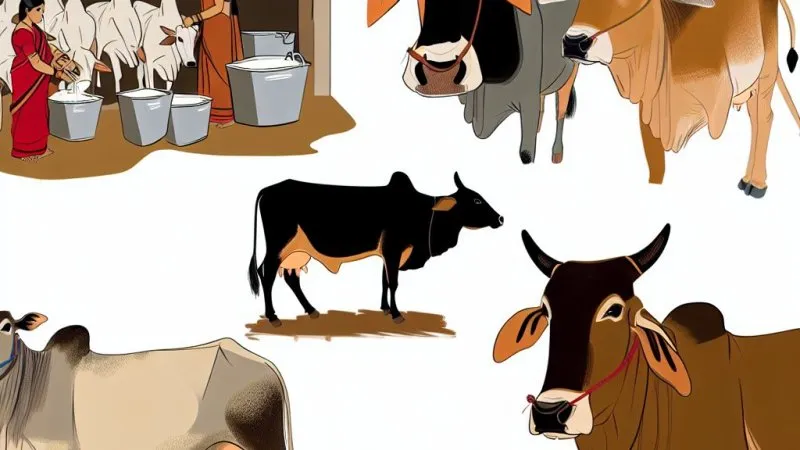
“A cow lazily chewing cud is a familiar sight in the Indian countryside, where its gentle presence is woven deeply into rural life.” The cow, a domesticated, herbivorous animal, is valued for its milk, hard work and significance in tradition. Not just an animal of the farm or street, the cow is often considered a symbol of abundance and quiet industry across the length and breadth of our country. This essay will explore the cow’s physical features, economic value, cultural importance, diversity of breeds and some pressing contemporary issues, with attention to the context of India.
---
Physical Features and Basic Biology
The cow is a four-legged mammal whose size and appearance vary widely among breeds; indigenous varieties such as the nimble Vechur are smaller, while crossbred or exotic dairy cows like the Holstein-Friesian are much larger. A typical cow has a broad head, expressive gentle eyes, a long muzzle for grazing, and two horns (which can differ in shape or be absent, depending on breed and sex). Its body is supported by strong legs ending in hooves, designed to walk long distances in search of fodder.Cows are ruminants, which means they have a complex, four-chambered stomach: the rumen, reticulum, omasum and abomasum. After grazing on grass or straw, a cow chews the food, swallows it into the rumen, regurgitates it as ‘cud’, and chews it again to aid digestion—a process called rumination. Cows are social creatures and often form herds, showing strong maternal instincts, especially towards calves. The reproductive cycle usually lasts nine months, and terms like “heifer” (young female), “bull” (male) and “calf” (young one) are commonly used in villages.
---
Economic Value and Products
Milk is the cow’s greatest contribution to Indian households—whether in villages, towns or cities. Across states like Gujarat and Punjab, early morning collections at dairy cooperatives like Amul showcase how many rural families depend on small-scale milk selling for extra income. The milk itself becomes the foundation for a variety of foods: freshly churned curd, thick slices of paneer, creamy butter, golden ghee and a dazzling array of sweets from rasgulla to peda. These products are dietary staples, rich in proteins and calcium, making them especially valued in growing children’s diets.Cow dung, far from being mere waste, is used as a natural fertiliser, crucial in organic farming and the backbone of India’s green revolution. Many homes still use dried dung cakes (upla) for fuel, and it is mixed with clay to plaster floors, keeping houses cool in the summer. Cow urine is used in some traditional medicines and rituals. Oxen, the strong, castrated males, are important for ploughing paddy fields, especially in states like Odisha or West Bengal where small-scale farming makes mechanisation difficult. Leather from dead cattle and horns also feeds into cottage industries, though this is a sensitive subject.
Thousands of rural and semi-urban families supplement their incomes through these multiple uses, highlighting the animal’s economic centrality.
---
Cultural and Religious Importance
The status of the cow goes beyond utility in India; it occupies a revered position in many communities, especially within Hindu traditions. The Atharva Veda calls the cow “aghnyā”, not to be harmed, reflecting her gentle, nurturing image. Gifting a cow (godaan) is considered a meritorious act in many Hindu rituals; in fact, even wedding ceremonies in some parts of Tamil Nadu have a custom where the bride’s family gifts a cow to the groom’s.Ghee, produced from cow’s milk, is essential in many pujas and havans, signifying purity and nourishment. In some festivals, such as Govardhan Puja in North India, entire communities decorate cows and offer them special treats, acknowledging their role in human livelihood. The mythologies of Krishna—raising cows in Vrindavan—or legends like Kamadhenu, the divine wish-fulfilling cow, are referenced in temple stories and art.
It is important, especially in formal writing, to present these facts sensitively and factually, avoiding extremes or polemic. The cultural reverence attached to cows helps explain not just their protection, but also community efforts to care for them, especially when they become old or stray.
---
Breeds and Diversity
India is home to an incredible variety of cattle breeds, shaped by local geography, climate and customs. For example, the Gir and Sahiwal breeds, originating from Gujarat and Punjab respectively, are prized for their high milk yield and hardiness. In contrast, the Vechur of Kerala is among the world’s smallest cattle and valued locally for its adaptability to limited space and feed.Exotic breeds like Jersey or Holstein-Friesian have been introduced for better milk production, leading to cross-breeding with native stock in places like Andhra Pradesh and Maharashtra. However, while these crosses can yield more milk, indigenous breeds are often more disease resistant and suited to harsh climatic conditions—an important point in light of climate change.
Farmers from my own district in Uttar Pradesh often recount how Red Sindhi cattle thrive in the hot, dry summers, while Tharparkar, found near Rajasthan, can tolerate drought better than foreign breeds. Conservation of native breeds is now seen as vital for sustainable dairy farming.
---
Contemporary Issues and Animal Welfare
Modern India faces several challenges regarding cattle management. The sight of stray cows ambling through busy city roads in Kanpur or grazing in garbage heaps in Mumbai reflects complex issues. Many urban cows eat plastic and waste, endangering their health and creating traffic hazards.As cows age or cease to be productive, inadequate shelter and lack of veterinary care become major concerns. Some cows are abandoned, sparking debates about animal welfare and responsibilities. Moreover, unregulated grazing can contribute to environmental stress, and cattle are a noted source of methane emissions—though this is a technical issue with many sides.
Legal regulations regarding cattle slaughter differ across states, which gives rise to social and legal disputes. Many communities have stepped up, forming community gaushalas to care for old or unowned cows, while initiatives like self-help groups and dairy cooperatives promote organised, humane farming. Efforts to improve waste disposal and reduce plastic pollution are ongoing, with government campaigns and school programmes educating people about the harms to both animals and the environment.
---
Conclusion
Cows in India are more than just livestock—they are a living connection to the country’s agricultural backbone, cherished traditions, and ideals of care for all beings. Their presence shapes family economies, religious customs, and even village landscapes. As India modernises, balancing the needs of animals with societal change is crucial. Respecting cows—by providing for their welfare, supporting sustainable dairy practices, and honouring our rich diversity of breeds—is both a necessity for livelihood and a reflection of our values. In short, the humble cow remains an enduring symbol of India’s rural promise and compassion.---
Structure Templates for Examination Answers
50–80 Words (Very Short Paragraph)
A cow is a familiar animal found on Indian farms and streets. It gives nutritious milk which is made into curd, ghee and sweets. Many people in villages depend on cows for earning money. The cow is respected in our culture, and it is important to look after its well-being.---
100–120 Words (Short Paragraph)
The cow is a gentle, four-legged animal, valued in Indian households for both practical and cultural reasons. It provides milk, which people use to make butter, curd and sweets such as rasgulla. In many villages, families sell milk through local co-operatives to earn a living. Cow dung is used for manure and fuel, making it very useful on farms. Moreover, the cow holds a respected place in Hindu traditions, with ghee often used in religious rituals. Thus, caring for cows is important both for our homes and our heritage.---
150–200 Words (Detailed Paragraph)
Cows are among the most valuable animals in Indian villages and cities. They have a stout body with horns and mainly graze on grass and crop remains. Their special four-chambered stomach helps them ruminate and digest tough plant foods. The milk cows yield forms the basis for popular dairy products like butter, paneer, curd, and ghee, supporting the livelihoods of millions of rural families. Cow dung is not wasted; it is used as manure for crops, fuel for stoves, and even for plastering hut floors. In Indian culture, cows are respected animals, often cared for with devotion and included in religious festivals like Govardhan Puja. Different Indian breeds, such as Gir and Sahiwal, are suited to local climates, which helps farmers conserve resources. However, issues like street cows and the need for better veterinary care are growing problems. Therefore, cows remain crucial to our daily lives and deserve thoughtful upkeep.---
250+ Words (Long Paragraph / Short Essay)
Cows occupy a central place in the Indian landscape, from bustling cities to remote villages. With a sturdy body, simple nature, and remarkable ability to digest coarse fodder, cows are nature’s quiet helpers. Indigenous breeds like the Gir and Red Sindhi are well suited to Indian climates, while crossbred cows are introduced for higher milk yield.The economic contributions of cows are immense. They provide milk daily, which is transformed into curd, paneer, and a wide range of sweets. Cow dung is a key resource for farmers, serving as organic fertiliser, domestic fuel, and even eco-friendly building material. Many families depend entirely or partly on income from milk and dairy by-products, making the cow an integral part of rural sustainability.
Culturally, cows are revered in India. Stories of Krishna caring for cows, or the gifting of a cow during religious ceremonies, reflect their esteemed status beyond utility. Ghee, made from cow’s milk, is vital in many Hindu rituals, and in festivals such as Pongal, cows are decorated and thanked.
Nevertheless, as cities grow, the management of cattle faces new hurdles. Stray cows create traffic problems and often fall prey to diseases after consuming plastic waste. Lack of resources for retired or infertile cows is an increasingly debated social issue.
In conclusion, the cow’s importance to Indian society is both timeless and evolving. To safeguard this relationship, it is essential to promote humane treatment, conserve native breeds, and modernise dairy practices.
---
Final Tips For Students
- Use simple yet accurate language; avoid repetition. - Refer to breeds or customs local to your area for extra marks. - Keep your answer respectful and factual, especially about religious or legal points. - Link your sentences with words like “moreover,” “for example,” or “therefore.” - Revise quickly for grammar before submission.---
Sample Openings and Closings
Opening: “In India, the cow is not only a source of milk and manure but also a gentle, admired presence in daily life.”Closing: “Hence, looking after cows is both a practical necessity for rural prosperity and a way to honour our longstanding values.”
Rate:
Log in to rate the work.
Log in