Tiranga Explained: History and Symbolism of India's National Flag
This work has been verified by our teacher: 17.01.2026 at 7:08
Type of homework: Essay Writing
Added: 17.01.2026 at 6:43
Summary:
Explore Tiranga and the national flag of India, history and symbolism, learn origins, manufacture, legal etiquette and school uses to write clear essays.
National Flag of India: The Tiranga and the Fabric of a Nation
---Introduction
A saffron band catching the morning sun flutters above the school assembly, its hues reflected in a thousand attentive faces. In those quiet moments, as the National Anthem plays, the Tiranga—the Indian National Flag—becomes far more than just cloth; it is a living monument to collective memory, aspiration, and hard-won unity. Marked by three bold colours and a deep-blue Ashoka Chakra, India’s flag is instantly recognisable to its over 1.4 billion citizens. It is a symbol that binds disparate communities, commemorates the sacrifices of millions, and signals India’s ideals to the world. But the true significance of the Tiranga extends beyond ceremonies; each element reflects the nation’s journey through colonial oppression, a battle for independence, and the ongoing effort to craft civic unity from immense diversity. This essay traces the historical evolution, symbolism, manufacture, legal protocols, societal roles, and contemporary debates surrounding the Indian National Flag, aiming to reveal how the flag is not just a marker of identity, but a vital instrument in shaping how India imagines and sustains its unity.---
Historical Evolution: Origins to Adoption
Colonial Backdrop & Regional Banners
Before the mid-19th century, the Indian subcontinent’s banners were as varied as its peoples: merchant guilds emblazoned their own symbols; princely states displayed regal insignias derived from local legend; and religious processions carried standards unique to their faiths. With the consolidation of British rule, however, colonial flags—Maritime Ensigns or the Star of India—prevailed in official spaces. These colonial emblems, bearing unmistakable British motifs, failed to inspire Indian loyalties. In fact, they became potent reminders of subjugation, spurring early nationalists to imagine new symbols that could galvanise people beyond linguistic, caste, or religious lines.Nationalist Experiments: Symbols of a New Hope
Around the turn of the twentieth century, as national consciousness gained momentum, early nationalist groups experimented with their own flags. One of the earliest, unfurled during the 1906 session of the Indian National Congress in Calcutta, featured green, yellow, and red bands, along with eight lotus flowers, a sun, and a crescent—invoking Hindu, Buddhist, and Islamic motifs. This bold attempt at visual synthesis mirrored the secular ideals of the movement, while also negotiating the challenge of representing India’s diverse traditions. Slogans like “Vande Mataram” were stitched or painted onto these flags, turning banners into rallying points for protest, from the Swadeshi movement in Bengal to early Home Rule agitations.Pioneers in Flag Design: Bhikaji Cama, Venkayya & Gandhi
One of the most significant moments in the flag’s journey came in 1907, when Madame Bhikaji Cama—exiled Parsi revolutionary—hoisted a tricolour at the International Socialist Congress in Stuttgart. Her flag, a blend of saffron, green, and red with symbols like the sun, crescent, and ‘Vande Mataram’ script, was an audacious assertion of India’s right to self-determination on foreign soil. It also signalled a crucial shift: the fight for independence would now be associated with tangible, visual symbols.Transforming these symbols into a unified flag became the task of Pingali Venkayya, an educationist from Andhra Pradesh. Between 1916 and 1921, Venkayya experimented with multiple designs and submitted proposals to the Congress leadership. Mahatma Gandhi’s intervention proved decisive, advocating the inclusion of the charkha (spinning wheel) to embody ‘swadeshi’—the movement for economic self-reliance and the dignity of manual labour. By 1931, a tri-band tricolour—saffron, white, and green—emerged as the Congress flag, its central charkha signifying the unique fusion of political and social revolution.
From Congress Flag to National Emblem
As the dawn of independence approached, the Constituent Assembly set up a panel to finalise the official national flag. Intense debates followed: should the charkha, deeply tied to the Congress and Gandhian philosophy, remain? Would it adequately represent all citizens, regardless of political allegiance? On 22 July 1947, unity prevailed around a slightly modified design. The charkha gave way to the Ashoka Chakra—a 24-spoked wheel drawn from the Lion Capital at Sarnath—chosen for its pan-Indian historical resonance and philosophical grounding in ‘dharma’ (righteousness). By 15 August 1947, as Jawaharlal Nehru hoisted the flag at Red Fort, the tricolour—now officially enshrined—had absorbed layers of meaning from every phase of India’s freedom struggle.---
Symbolism and Meanings
Saffron: Courage and Renunciation
Saffron crowns the flag, immediately catching the eye. Traditionally associated with sacrifice and renunciation, this shade evokes not only Hindu monastic robes but also the fierce courage displayed by martyrs across India’s regions. In Indian epics such as the Ramayana and Mahabharata, saffron infers a call to righteous action, symbolically aligning the flag with selflessness practiced in public life.White: Peace and Truth
At the centre, the white band embodies peace, truthfulness, and the aspiration for harmonious coexistence. For secular India, white is also a visual pause—a truce amidst saffron’s energy and green’s fecundity. Strikingly, it mediates the extremes, suggesting that balance, tolerance, and inclusivity are not only attainable but foundational to national unity.Green: Growth and Faith
The green stripe at the base stands for prosperity, faith, and fertility—a tribute to India’s agricultural heartlands and the promise of renewal. From the lush Ganga plain to the rice paddies of Kerala, green invokes not just geographical fortune, but a faith in the potential of a diverse people committed to progress.The Ashoka Chakra: Dharma and Forward Motion
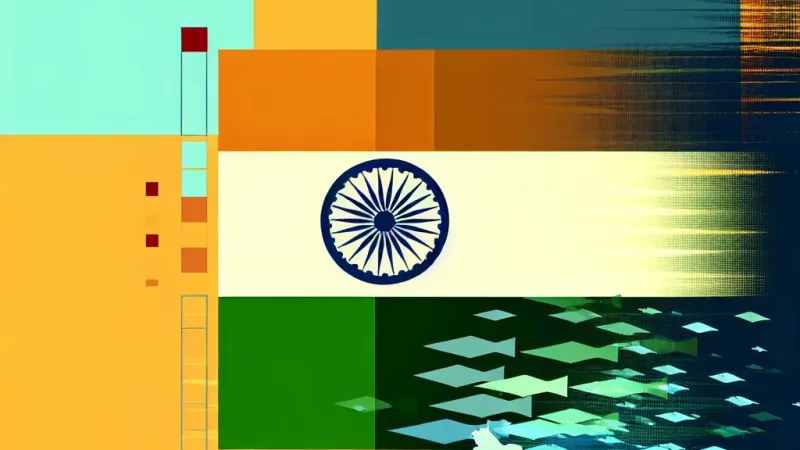
At the heart of the flag lies the Ashoka Chakra, a navy-blue wheel with twenty-four spokes. Adapted from the abacus of the Lion Capital of Ashoka—now India’s state emblem—it stands for the ‘wheel of dharma’, signifying that the nation, too, must remain in motion, ever moving towards justice and order. Some interpret the 24 spokes as representing the hours of the day; others see them as expressions of core virtues (truth, courage, patience, justice, etc.). Its inclusion subtly reaffirms the idea that ethical governance should serve as the core axle of Indian polity.Plural Meanings and Cultural Resonances
The flag’s triple colours and central symbol allow for broad resonance, which has ensured their survival through periods of political tension and shifting identities. Saffron, for example, was at one time claimed by particular religious groups, yet its presence alongside green and white—as well as the pan-Buddhist Ashoka Chakra—broadened its appeal. What unites rather than divides continues to drive reinterpretations of these symbols, letting the flag remain a living emblem open to new readings. For many, the Tiranga is as much a personal artefact—waved during cricket victories, hoisted at weddings or commemorations—as a national totem.---
Technical Specifications and Manufacture
Geometry and Official Colours
Precision is central to the flag’s design. By law, its length must be exactly one and a half times its breadth—a 3:2 ratio. The three horizontal bands are equal in width: saffron at the top, white in the middle, and green below, with the navy blue Ashoka Chakra perfectly centred in the white band. Each colour corresponds to specific shade numbers as designated by the Bureau of Indian Standards, to avoid inconsistency in public displays.Fabric and Traditional Production
In a unique mandate, the official flag for all significant occasions is supposed to be made from khadi—a handspun, handwoven cotton or silk, chosen to honour Gandhian principles of self-reliance and indigenous industry. The Khadi and Village Industries Commission (KVIC) remains the sole body authorised to produce flags for governmental sale, ensuring rigorous standards of uniformity and authenticity. In practice, cheaper flags made of polyester or synthetic materials now appear during mass celebrations, but such usage is permitted only under explicit guidelines to safeguard the dignity of the symbol.Sizes and Proportions
The flag is manufactured in a range of official sizes, all strictly adhering to the 3:2 length-to-breadth rule. For example, a commonly used flag might measure 150 × 100 cm, while a larger ceremonial flag is 300 × 200 cm. What matters most is proportionality—the relative placement, thickness of bands, and especially the Chakra’s diameter, which must be three-fourths the width of the white stripe and have all twenty-four spokes rendered precisely.Standardisation and Certification
Quality control, enforced by national and state authorities, is crucial. Each flag is inspected for accurate colours, proper stitching, and the correct rendering of the Chakra. This systematic certification scheme goes beyond bureaucracy; it is intended to prevent misuse by political actors and commercial manufacturers, ensuring that what is displayed in schools, government offices, and public events is an authentic representation of the Tiranga.---
Law, Protocol and Etiquette
The Flag Code and Prevention of Insults Act
To protect the dignity of the national emblem, India implemented the National Flag Code, a comprehensive set of guidelines that was consolidated in 2002, and the Prevention of Insults to National Honour Act, 1971. The Flag Code details situations for hoisting, dimensions, and respectful disposal, while the latter criminalises deliberate insult, desecration, or misuse.Hoisting, Lowering, and Half-Mast Procedures
On Independence Day (15 August) and Republic Day (26 January), elaborate flag-hoisting ceremonies mark official and educational observances throughout the country. The procedure demands that the flag be raised briskly and lowered slowly, accompanied in schools and public events by the singing of “Jana Gana Mana.” When national mourning is observed—such as the demise of the President, Prime Minister, or other dignitaries—the flag is flown at half-mast only after formal communication from the government, preserving uniformity and solemnity.Proper Handling and Prohibited Uses
National flag etiquette is scrupulously detailed. The flag must never touch the ground or be flown upside down. It cannot be used as clothing, drapery for statues, or any form of decorative item. Commercial printing—on paper plates, napkins, or political posters—is expressly forbidden unless by certified authorities. Similarly, torn or soiled flags are to be respectfully retired by burning or by any other dignified manner specified in the Flag Code.Civic Education and Penalties
Schools have a special responsibility to inculcate awareness of flag protocols among children. Regular lessons and flag-raising drills are meant to foster respect and prevent inadvertent insults. Civic bodies and ordinary citizens alike are empowered to report misuse. The law prescribes fines and even imprisonment for egregious violations, though educational remedies are favoured for minor or accidental breaches.A Quick Do’s and Don’ts Checklist for Students
Do’s: - Always hoist the flag in a prominent, respected place. - Raise it briskly; lower it slowly. - Ensure it is clean, undamaged, and properly proportioned.Don’ts: - Don’t let the flag touch the ground or water. - Don’t use it as wearing apparel or on cushions, handkerchiefs, etc. - Don’t place any emblem, lettering, or figure on the flag.
---
Ceremonial Uses, Celebrations, and Public Life
The Tiranga occupies centre stage during national holidays, rallies, sports tournaments, and international hearings. Every schoolchild learns the ritual of unfurling the flag on 15 August and 26 January, with the strains of the national anthem echoing across campuses. In government offices, the flag is raised at specific hours, and military personnel salute it with formal precision.Beyond mandated occasions, the flag’s presence is felt in private spheres: soldiers wear it as an armband; athletes drape it across their shoulders after victories; and ordinary citizens mount it on their vehicles or balconies during celebrations and crises. Indian embassies abroad and peacekeeping forces hoist it as symbols of assurance and authority.
Classrooms across India frequently use the flag in creative education—from poster competitions and dramatizations of freedom movement episodes to interviews with local veterans recounting their relationship with the flag as protestors or soldiers. Such practices embed the flag’s significance not just as an official mandate but as cultural memory, handed from generation to generation.
---
Debates, Controversies, and Contemporary Relevance
Historic and Communal Controversies
At the time of adoption, heated debates erupted over the potential religious connotations of the tricolour. Some believed saffron stood only for Hindu interests or green only for Muslims, but these readings were challenged by leaders like Nehru, Maulana Azad, and Rajendra Prasad, who insisted that the flag’s symbolism transcended faith and spoke to all Indians. The replacement of the charkha with the Ashoka Chakra at independence was itself contentious: though some lamented the departure from explicit Gandhian ideals, others felt the Chakra's ancient, secular resonance better served a plural Republic.Modern Challenges: Mass Production and Political Use
With the liberalisation of flag rules in 2002, private citizens gained wider rights to hoist the tricolour, previously restricted to state occasions. This democratisation made the flag more visible than ever, but also led to concerns about rampant commercialisation—flimsy plastic flags discarded after events, or the flag’s use in political campaigns that sometimes bordered on disrespect.Notable cases—such as public burning of the flag in protests, or unauthorised use in advertisements—have required legal intervention, keeping questions of respect, accessibility, and enforcement alive in civic discourse. High-profile legal cases, such as Naveen Jindal’s appeal to hoist the flag atop his factory, have further reframed the flag as a subject of citizen’s rights, prompting the Supreme Court and government to periodically redefine rules.
The Tiranga as Pedagogic Tool and Limitation
The flag remains a powerful teaching aid. Through lessons, ceremonies, and civic contests, schools hope to implant values of respect, equality, and national unity. But spirited debates continue: does ritual respect for the flag sometimes lapse into ‘token nationalism’, distracting from deeper democratic duties—like respecting dissent, minority rights, or freedom of speech? Cultural critics and teachers alike urge pairing flag etiquette with a lived commitment to constitutional principles, so that reverence for cloth is never a substitute for respect for people.---
Conclusion
From the spirited banners of early revolutionaries to the precisely regulated standards of today, the Tiranga’s journey mirrors that of the nation itself—full of negotiation, adaptation, and aspiration. It is a fabric stitched from courage (saffron), harmony (white), and renewal (green), with the Ashoka Chakra at its centre, perpetually reminding Indians of the relentless march towards just and ethical governance. The flag’s power lies not simply in its iconic form or legal protection but in its daily enactment—whether saluted in a remote school or draped over the coffin of a martyr. Every time it is raised, it challenges each citizen to live up to the ideals of courage, truth, and progress that it embodies. Ultimately, the true respect due to the Tiranga cannot be legislated; it must be renewed in the choices and actions of each generation that gathers beneath its colours.---
References
1. Flag Code of India, 2002 (Ministry of Home Affairs, Government of India) 2. Prevention of Insults to National Honour Act, 1971 (Ministry of Law and Justice, Government of India) 3. “Constituent Assembly Debates,” July 1947 – Official Records 4. Guha, Ramachandra. India After Gandhi. Picador India, 2007. 5. Srinath Raghavan, “The Origins of India’s National Flag,” Seminar Magazine, July 2002. 6. Biography of Pingali Venkayya (Publications Division, Government of India) 7. “Khadi and the National Flag”, Archive of the Khadi and Village Industries Commission.---
*Note: For visual projects, students can create timeline posters or consult their local municipal office to see certified flags. Participation in flag-hoisting ceremonies, listening to family stories of independence, or visiting a national museum further deepen understanding of the Tiranga’s living legacy.*
Rate:
Log in to rate the work.
Log in