Tiger Essay: Physical Traits, Habitat, Behaviour and Conservation
This work has been verified by our teacher: 25.01.2026 at 2:00
Type of homework: Essay Writing
Added: 18.01.2026 at 13:32
Summary:
Explore the tiger’s physical traits, habitat, behaviour, and conservation efforts to understand this majestic animal’s role in India’s wildlife ecosystem. 🐅
Paragraph on Tiger
The tiger, or ‘Panthera tigris’, stands unmatched as one of the world’s most captivating wild creatures, especially within the Indian context. Revered since ancient times, the tiger is more than just an animal here—it is the very embodiment of vigour, dignity, and national pride. This majestic big cat, with its fiery stripes and silent power, dominates not only the thick forests and grasslands of India but also our literature, folklore, and collective imagination. Recognised as the national animal of India, the tiger symbolises strength, courage and a deep-rooted connection to the subcontinent’s natural wealth. In this essay, I will delve into the tiger’s remarkable physical features, habitat, behaviour, diversity amongst subspecies, role in the ecosystem and culture, the serious threats it faces, and the efforts undertaken to ensure its survival for generations to come.
---
Physical Characteristics of the Tiger
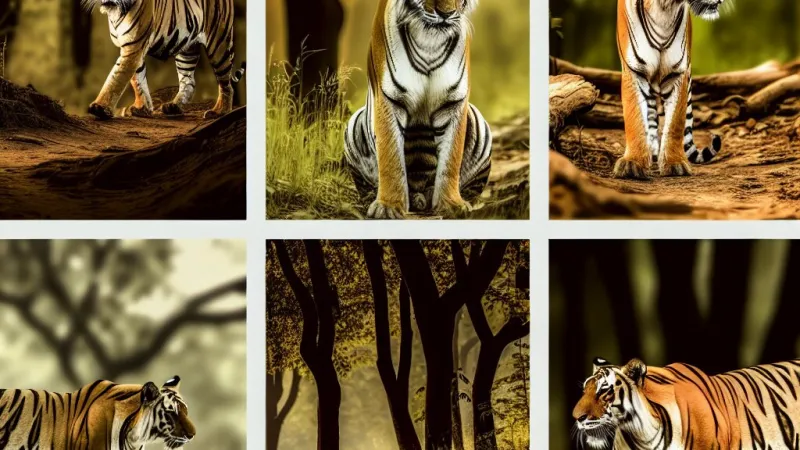
Tigers are the largest members of the cat family. When one imagines a tiger, the image that springs to mind is of a huge and muscular creature, typically stretching up to three metres from head to tail and weighing anywhere between 150 to 300 kilograms, depending on subspecies and sex. The most striking feature of a tiger is its coat: a canvas of deep orange or yellow, marked with bold black stripes. No two tigers share the same pattern, with their stripes as distinctive as fingerprints are for humans. These stripes provide excellent camouflage, helping tigers merge seamlessly with the dappled shadows of grasslands and forests when stalking prey.There is notable difference between males and females. Males are noticeably larger and heavier, adding to their intimidating presence, whereas females, though still formidable, are slightly smaller and more agile. Tigers possess some exceptional anatomical features suited for their predatory nature. Their muscular build enables short bursts of incredible speed, while their retractable claws and powerful jaws, lined with razor-sharp teeth, are perfect tools for hunting. Their senses are finely tuned; they see well in poor light, hear even the faintest rustle, and their sense of smell, though not as developed as their vision and hearing, is still significant for marking territory and identifying prey.
Another fascinating adaptation lies in their love for water—unlike many of their feline cousins, tigers are excellent swimmers. They do not hesitate to wade across rivers or even hunt in water if needed. In the wild, a tiger’s life span is typically 10 to 15 years, but in the safety and comfort of captivity, they can live well beyond 20 years.
---
Habitat and Distribution
The natural home of the tiger is as diverse as the Indian landscape itself. From the dense, moist jungles of the Western Ghats to the dry deciduous woodlands of Central India, and even the tangled mangroves of the Sundarbans, tigers thrive in environments that offer thick cover and adequate water sources. Their preference for such areas is not accidental, as dense vegetation helps them remain concealed while stalking prey.While India supports the largest population of wild tigers in the world, these magnificent beasts once roamed across much of Asia, including regions in Nepal, Bhutan, Bangladesh, Myanmar, Russia (Siberia), China, and Southeast Asia. Each subspecies has adapted uniquely to its surroundings. For example, the Bengal tiger, the pride of India, is found from the Himalayan foothills to the lush mangroves of the Sundarbans. The ice-clad forests of eastern Russia are home to the Siberian tiger, whose body is built to withstand freezing temperatures. Sadly, some such as the South China tiger have become nearly extinct in the wild.
Tigers are intensely territorial. A single adult may command dominion over an area ranging from 20 to 400 square kilometres, marking its boundaries with scent and scratch marks on trees. They are solitary by nature, socialising mainly during the brief mating season or when a mother is raising her cubs. This solitary, wide-ranging lifestyle makes habitat loss and fragmentation especially dangerous to their survival.
---
Diet and Hunting Behaviour
As apex predators, tigers are at the very top of their food chain. They are strict carnivores, relying on the rich wildlife of Indian forests for sustenance. Their quarry includes majestic creatures like sambar deer, chital, wild boar, nilgai, and occasionally even buffaloes. Tigers are opportunistic; if big prey is scarce, they will settle for smaller animals, birds, or even fish.When hunting, a tiger’s approach is the very definition of patience and stealth. It creeps quietly, using its stripped coat to melt into its surroundings, advancing until it is close enough to pounce. With an explosive burst of speed, it seizes its prey, often killing with a powerful bite to the throat or neck. Interestingly, tigers are generally most active at dawn and dusk, aligning their hunting hours with the activity patterns of their prey. However, they do not shy away from hunting during the day if required.
This predatory behaviour hugely benefits the ecosystem. By regulating populations of herbivores, tigers prevent overgrazing and maintain forest health. Their presence signals a robust, well-balanced landscape.
---
Different Subspecies of Tiger
Within the tiger family, several subspecies have evolved, each adapting to its unique habitat across Asia. Among these, the Bengal tiger is the most populous and widely recognised, representing the majority of India’s tiger count. The Siberian tiger, found in the cold forests of Russia, is the largest and has a thicker coat to brave harsh winters. The Sumatran, Indochinese, Malayan, and the critically endangered South China tigers each represent smaller, genetically distinct groups, facing varying degrees of threat.While the Bengal and Siberian tigers still have relatively stable numbers due to conservation work, others like the South China tiger are rarely, if ever, seen in the wild. The loss of any one subspecies would be a loss not only of biodiversity but also of invaluable genetic variation necessary for the tiger’s long-term survival.
---
Ecological and Cultural Importance
The tiger's role extends far beyond the forest. Ecologically, it is a keystone species, its survival essential to the very health of the habitats it roams. By keeping prey animal populations in check, tigers uphold the delicate balance of nature, ensuring no single species dominates and devastates the ecosystem.Culturally, the tiger is deeply woven into the fabric of Indian civilisation. In mythology, the goddess Durga is often depicted mounted atop a powerful tiger, symbolising her strength and willpower. Ancient poems by Kalidasa and classic tales such as Abanindranath Tagore’s ‘Rajkahini’ echo the kingly grace of the tiger. From coins minted by ancient dynasties to motifs in Warli art, the tiger’s imagery is omnipresent.
Furthermore, tigers play a crucial economic role through wildlife tourism. Visitors flock to reserves like Ranthambore or Kanha, eager for a glimpse of this elusive predator, supporting local economies and fostering a sense of stewardship towards wildlife.
---
Threats Facing Tigers
Despite all their might, tigers are today more vulnerable than ever before. Across their range, they confront the twin perils of habitat destruction and poaching. Forests are being cleared for farms, roads, and settlements, shrinking their domain and pushing animals into conflict with humans. Poaching remains a grim threat; tiger skins, bones, and other parts fetch high prices in illegal markets, used in traditional medicines and ornaments.Human-wildlife conflict is another pressing issue. When natural prey becomes scarce or tiger territory is encroached upon, tigers sometimes prey on livestock or, rarely, even attack humans, provoking retaliation from villagers. Habitat fragmentation, with forests being split by roads and cities, isolates tiger populations, making breeding and genetic exchange difficult. Lastly, climate change, especially visible in sensitive habitats like the Sundarbans, threatens both the tigers and their prey with rising sea levels and more frequent storms.
---
Conservation Efforts and Future Prospects
India has taken significant strides to safeguard its tigers. The launch of Project Tiger in 1973 was a landmark move, setting up protected reserves and aiming to revive dwindling tiger numbers. Since then, over fifty tiger reserves have been established, with the network continuing to expand. Active patrolling, scientific monitoring using camera traps and GPS collars, and involvement of NGOs like the Wildlife Protection Society of India have strengthened these efforts.Trans-boundary cooperation with Nepal, Bhutan, and Bangladesh aims to protect migratory corridors. Zoos and breeding centres have also taken on the critical task of breeding endangered subspecies, with the ultimate hope of reintroducing them into the wild. Technology now plays an unprecedented role—genetic analysis ensures the health of populations, while e-surveillance helps catch poachers.
However, challenges remain. Rapid urbanisation, resource-hungry populations, and climate uncertainties demand smarter, more inclusive strategies. Involving local communities is key—projects that offer employment in eco-tourism, handicrafts, or forest-based industries can reduce dependency on forests and promote coexistence.
---
Conclusion
To sum up, tigers are not just spectacular animals but living pillars of India’s ecological and cultural wealth. Their grandeur lies not only in their physical form, but in their significance to forests, to mythologies, to national identity, and to the web of life itself. While their future hangs by a thread, dedicated conservation—backed by knowledge, empathy, and consistent action—offers hope. Each of us bears a responsibility to ensure that the roar of the tiger continues to echo through our forests, inspiring awe and reminding us of the wild beauty that still survives at the heart of India.---
Glossary
- Tigress: Female tiger - Cub: Young tiger - Carnivore: Animal that eats only meat - Apex Predator: Predator at the top of the food chain---
*For future generations to gauge the true richness of India’s natural heritage, the tiger must not just survive, but thrive as the undying symbol of the wild.*
Rate:
Log in to rate the work.
Log in