Digital India: Vision, Achievements and Challenges Explained
This work has been verified by our teacher: 7.02.2026 at 11:34
Type of homework: Essay Writing
Added: 4.02.2026 at 10:43
Summary:
Explore Digital India’s vision, key achievements, and challenges to understand how this initiative is transforming India’s digital future for students.
Paragraph on Digital India
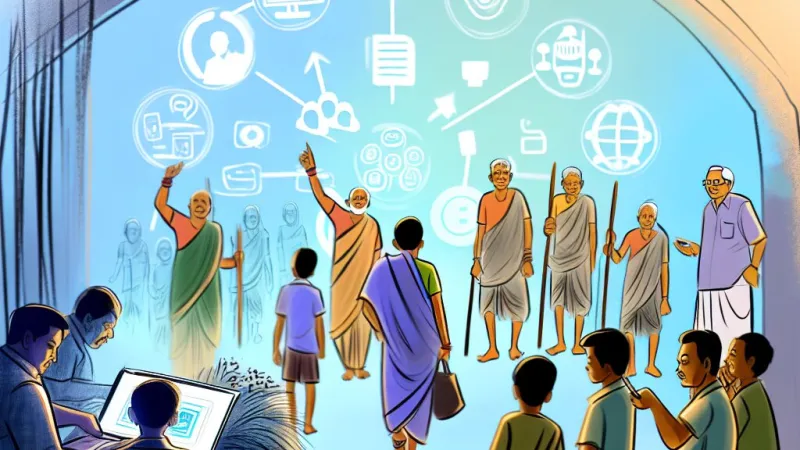
In an age when technology weaves itself into the fabric of our everyday existence, India stands at the threshold of a digital transformation unlike any seen before. The term "Digital India" is not just a slogan; it marks an ambitious nation-wide initiative officially launched on 1st July 2015 by Prime Minister Narendra Modi. This flagship programme seeks to harness the immense possibilities of the digital revolution to empower society, drive economic progress, and bridge deep-rooted divides that have long shaped India’s social and economic realities. As one of the world’s fastest-growing economies and the world’s largest democracy, India’s efforts to digitise governance, commerce, education, and daily utilities are both timely and vital. In this essay, I will explore the driving vision of Digital India, its goals, achievements, ongoing challenges, and the path that lies ahead for making our nation truly digital at heart.
---
Historical and Social Context: Why Digital India Was Needed
Before the dawn of Digital India, the country grappled with glaring technological disparities and sluggish administrative mechanisms. Most of our rural masses depended on handwritten records and manual data entry, whether it was in panchayat offices or health centres. Getting a simple document like a birth certificate could mean endless trips to taluk offices. Connectivity was patchy—patches of villages lost in verdant fields had little or no access to the internet, and sometimes, even electricity. Many of us grew up in households where letters took weeks to arrive, and information was relayed through newspapers or word of mouth.It is important to remember that even as globalisation began to shrink borders, India risked being left behind unless robust steps were taken. The gap between urban and rural India became more obvious—while cities enjoyed the benefits of new technology, large parts of the country were denied these privileges. Recognising this, the government envisioned a digital transformation that would foster inclusion, ensure good governance, and provide opportunities for all citizens, regardless of their economic or geographic background.
---
The Main Objectives of Digital India
The Digital India campaign rests on six key pillars, each uniquely focussed on closing gaps and extending the digital ecosystem to every corner of the nation.1. Bridging the Digital Divide: One of the starkest challenges has been the wide gap between those with access to technology and those without. Digital India aims to bring high-speed internet connectivity to the most remote corners—think of the digital journeys of states like Arunachal Pradesh or Chhattisgarh, where terrain made communication difficult. Affordable access to digital services—whether via cheap smartphones or public Wi-Fi—remains a cornerstone.
2. Promoting Digital Literacy: Knowing how to use the internet is just as important as having access to it. From students in Bihar’s small town schools to senior citizens in Kerala, the government has rolled out various training programmes. Special attention has been granted to empower women, young people, and traditionally marginalised groups—this ensures that digital growth is truly inclusive.
3. Digitisation of Governance (e-Governance): Paper-based files, often caricatured in Indian literature as the ‘red tape raj’, are being replaced by online forms and cloud storage. Government schemes can now be applied for through mobile apps or portals, reducing the harrowing wait times and bribes that plagued the system earlier.
4. Encouraging a Cashless Economy: The sudden demonetisation announcement in 2016 underlined the urgency of moving towards digital payments. With the rise of UPI (Unified Payments Interface), mobile wallets, and platforms like BHIM app, even the small kirana store next door now accepts digital payments. The aim is to tackle corruption and black money while also providing financial inclusion.
5. Boosting Digital Infrastructure: Initiatives like BharatNet aim to provide broadband highways even to Gram Panchayats. Collaborations with government-owned BSNL and private players have accelerated the spread of mobile towers and data centres.
6. Fostering Innovation and Start-Ups: Schemes like StartUp India and Atal Innovation Mission provide a fertile environment for young entrepreneurs. Ideas born in a dorm room in IIT Madras or a garage in Pune find support to become technology providers for the country and beyond.
---
Major Initiatives and Components of Digital India
Digital India is not a single programme but a bouquet of interconnected projects:- Digital Infrastructure as a Utility: Broadband highways, public Wi-Fi, and mobile connectivity empower both cities and villages. - Governance and Services on Demand: Platforms like UMANG (Unified Mobile Application for New-age Governance) allow access to a multitude of government schemes—be it booking gas refills, tracking pension, or paying utility bills. DigiLocker has revolutionised documentation, storing academic certificates or driving licences securely online. - Digital Literacy Programme: The National Digital Literacy Mission has endeavoured to train citizens on ICT (Information and Communication Technology). Even in a remote Sikkim village, a Common Service Centre (CSC) serves as a classroom for elders eager to learn to use a tablet. - Information for All: Government launched portals such as mygov.in, which keeps citizens updated with crucial information about policies, crop prices, and weather. - Public Internet Access: CSCs reach the grassroots, bridging digital access. Villagers in Madhya Pradesh or Assam can access services—paying bills, applying for scholarships, or even video-calling distant loved ones—at their local CSC. - Secure India: As incidents of data theft become common, the government has stepped up with cybersecurity frameworks—CERT-In (Indian Computer Emergency Response Team), for example, monitors threats and develops safety guidelines.
---
Benefits and Positive Impacts of Digital India
If one walks through the bustling markets of Surat or strolls past a rural school in Uttar Pradesh, the transformation is visible.- Enhanced Accessibility: Senior citizens can receive their pension sitting at home; students apply for scholarships on a single portal. Farmers no longer rely on unreliable middlemen for price updates—they get SMS alerts of mandi prices or weather advisories directly. - Transparency and Accountability: Corruption is curbed by reducing middlemen. Online transactions leave verifiable trails. The once-dreaded sarkari office, typified by endless files and waiting, is replaced by quick online procedures. - Economic Growth and Employment: The digital sector is now one of India’s biggest employers. The success of e-commerce platforms like Flipkart and Paytm bear testament. Rural craftspeople, too, sell wares on digital marketplaces nationwide. - Education and Skill Development: E-learning, once elitist, is now accessible through initiatives like SWAYAM and the Diksha app. Students in Ladakh or Nagaland access the same learning material as those in Mumbai. - Agriculture and Rural Development: Telemedicine connects villages to city hospitals; digital Kisan Suvidha apps help improve yields and efficiency. Schemes like Pradhan Mantri Fasal Bima Yojana now have an online presence, cutting out paperwork. - Environmental Benefits: The shift from paper files to digital storage tangibly contributes to environmental health—less paper means more trees and a greener India.
---
Challenges and Limitations
Despite progress, the path to complete digital empowerment is riddled with hurdles.- Digital Divide and Gaps: Many villages in the North East or tribal belts still face power and connectivity problems. Smartphones are yet to become truly affordable for all. - Awareness and Literacy: Older generations, and even some younger ones in remote regions, may not fully trust or understand digital platforms. - Cybersecurity and Privacy: News headlines often report phishing, hacking, and misuse of Aadhaar data. Building robust legal protections remains a work in progress. - Resistance to Change: Tradition-bound offices, sometimes unmoved by innovation, slow the march of digitisation with scepticism and bureaucracy. - Language Barriers: For a nation of 22 official languages and hundreds of dialects, technology solutions must be multilingual and user-friendly. Some digital content remains out of reach for non-English speakers. - Implementation Issues: Coordination between central and state governments can be complicated. Projects sometimes suffer delays or lack sustained follow-through.
---
Case Studies and Success Stories
Certain initiatives shine as models within Digital India. For instance:- DigiLocker: Lalitha, a student in Tamil Nadu, used DigiLocker to share her marksheet with an employer—no courier, no anxiety about lost papers. - UMANG App: Ram Prasad, a retired schoolmaster from rural Rajasthan, used UMANG to track his pension and health insurance, eliminating frequent trips to the district office. - e-Hospital: The All India Institute of Medical Sciences (AIIMS) enables appointment bookings online, reducing long queues.
Villages like Akodara in Gujarat, transformed into India’s first digital village, show that with will and guidance, digital transformation is possible even at the grassroots.
---
The Road Ahead: Future Prospects and Suggestions
To ensure the vision of Digital India touches every citizen, the journey must become more inclusive and sustainable:- Expand broadband infrastructure, especially to the most remote villages and islands. - Mainstream digital literacy from the earliest school years—include practical ICT skills in curricula nation-wide. - Develop vernacular apps and content so that a grandmother in Odisha feels as comfortable as a student in Bengaluru. - Invest in strong cybersecurity laws, shielded from prying by foreign and domestic threats. - Ensure inclusivity for women, differently abled, and the elderly, ensuring digital is for all. - Encourage collaboration between government and private innovators—many breakthrough fintech and edtech solutions stem from such partnerships. - Ongoing training for government officials so that the machinery of governance keeps pace with the digital revolution.
With these steps, India can truly become a digital powerhouse—innovative, inclusive, and future-ready.
---
Rate:
Log in to rate the work.
Log in