Kali Puja: Significance, Rituals and Cultural Importance in India
This work has been verified by our teacher: 5.02.2026 at 15:20
Type of homework: Essay Writing
Added: 4.02.2026 at 12:12
Summary:
Explore the significance, rituals, and cultural importance of Kali Puja in India to deepen your understanding and enhance your homework or essay writing skills.
Kali Puja: Significance, Traditions, and Cultural Relevance in India
India, as a land of festivals, shines with spiritual vibrancy throughout the year, but the autumnal nights acquire a special aura with the onset of Kali Puja. This unique festival, dedicated to Goddess Kali, stands apart for its atmosphere of mystique and devotion, particularly across the eastern states. While much of the country illuminates their homes for Diwali and worships Goddess Lakshmi, in Bengal, Assam, Odisha, and neighbouring regions, devotees await the dark, sacred night to pay homage to the fierce yet protective Mother Kali. This essay delves into the multifaceted significance, traditions, and cultural role of Kali Puja, reflecting on its origins, rituals, symbolism, and continued relevance in Indian society.Historical Background and Mythological Roots
To comprehend the essence of Kali Puja, one must look back into the depths of Hindu mythology. Goddess Kali emerges as one of the ten Mahavidyas—a powerful manifestation of Goddess Durga or Parvati. Known for her fearsome visage, dark complexion, and uncompromising energy, Kali was born of divine necessity: when demons like Raktabija terrorised the heavens, it was Kali who appeared, fighting with a wrath so immense that she used her own tongue to consume every drop of the demon’s blood, ensuring his regeneration ceased.This myth, as told in ancient scriptures like the "Devi Mahatmyam", reflects the perpetual struggle between good and evil, a theme woven into the ritual fabric of Kali Puja. Historically, the worship of Kali found fertile ground in Bengal during the medieval period, influenced by Tantrik spiritual traditions. These practices, often misunderstood, revolve around harnessing the inner strength needed to conquer fear and darkness—both literal and metaphorical.
Geographical and Cultural Context
Kali Puja has found its most fervent expressions in West Bengal, where the festival intermingles with community life at every level. The bursts of red hibiscus garlands, the glow of earthen diyas, and the beating of traditional dhak drums together paint a distinct local colour. Large, elaborate pandals housing the idol of Kali arise across Kolkata, Howrah, and districts like Nadia and Birbhum, attracting lakhs of visitors. Assam and Tripura join in with their own distinct customs, as do parts of Odisha, Jharkhand, and Bihar.These regional variations, whether seen in the artistic style of the Kali idol or the flavour of the sweets offered, speak to the festival’s deep integration with local culture. Families gather for midnight worship, artisans spend months crafting awe-inspiring images of the goddess, and entire neighbourhoods join hands to ensure the success of the celebrations. Kali Puja thus not only shapes personal devotion but also serves as a vibrant thread in the social fabric of eastern India.
Date and Timing of Kali Puja
One of the distinguishing features of Kali Puja is its placement on the new moon (Amavasya) night of the Hindu month of Kartik, which typically falls in late October or early November. Unlike typical day-time worship, Kali Puja rituals begin only after dusk, culminating in the spiritually charged hour of midnight. This is closely tied to the mythology, as darkness is symbolically resonant with the goddess’s ability to dispel evil amidst fear and uncertainty.While Kali Puja falls on the same night as Lakshmi Puja and Diwali, the mood and rituals are distinct. The contrast is fascinating—while one part of India lights lamps to invoke prosperity, another stays awake under the cover of night, seeking the blessings of the warrior-mother for protection and courage.
Symbolism of Goddess Kali
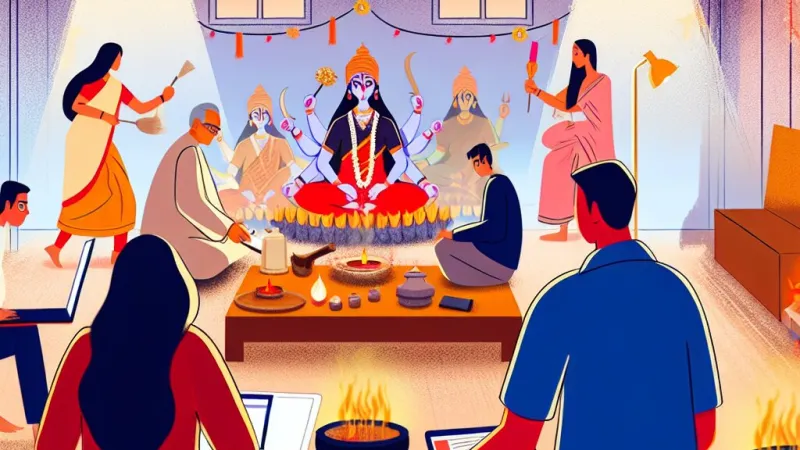
Kali is perhaps the most visually striking of all Hindu deities. Her skin, often painted jet black or blue, reflects the boundless potential of the universe and the mystery of time. She is shown with dishevelled hair, adorned with a garland of severed heads (symbolising the destruction of ego and ignorance), and a protruding blood-red tongue—an image both startling and compassionate.In her four hands, Kali wields powerful weapons and a severed demon’s head—symbols of fearlessness and victory over negativity. She is often depicted standing over the supine Lord Shiva, reminding devotees that even the greatest gods find peace in surrendering to her cosmic dance.
These images are not meant to instil terror. Instead, they serve as reminders that facing and conquering one’s fears is itself divine. Tantric elements like the use of mantras, yantras (sacred geometric patterns), and fire rituals play a key part, guiding devotees towards inner transformation and liberation (moksha).
Preparations and Ritual Practices
Preparations for Kali Puja begin well in advance. Homes and temple complexes are meticulously cleaned; entranceways are decorated with alpana (traditional floor art made of rice paste); pandals rise at street corners, each vying to present the most innovative artistic rendition of Kali. Idol makers in Kumartuli, Kolkata’s historic potters’ quarter, pour months of expertise into sculpting the goddess’s awe-inspiring form.Red hibiscus, known as ‘Java Kusum’, is particularly significant as an offering, believed to be the goddess’s favourite. Additional offerings include sweets, fruits, coconut, rice, and sometimes even animal sacrifices in rural areas, though the latter are increasingly replaced by symbolic representations.
On the night of Amavasya, families and communities gather, lighting dozens of oil lamps and incense sticks, their soft glow fighting back the darkness. Recitations of scripture, particularly from the “Chandi Path”, fill the air. The midnight hour is considered most auspicious, when prayers and offerings reach their spiritual crescendo, and the mystical presence of Kali is invoked with utmost devotion.
While certain communities follow more orthodox Tantric rites—like the use of specific rituals to invoke psychic energies—most focus on heartfelt prayer, meditation, and the hope for blessings from the Mother Goddess.
Cultural Activities and Festivities
Kali Puja is as much a community celebration as it is a religious one. The night thrums with the sound of bells, chants, and dhak drums, drawing large crowds to temple complexes and pandals. Cultural programmes—folk dances, retellings of the mythological tales through theatrical performances, devotional singing—offer families and friends a platform for creative expression.Food, as always, is central: after the rituals, prasad is distributed to all. Popular treats like ‘khichudi’, ‘luchi’, and a variety of sweets unite everyone in a communal feast. In recent years, innovative lighting displays, themed pandals, and fairs have turned Kali Puja into a city-wide festival, with social media helping to amplify its reach and celebrate local creativity.
Significance and Beliefs
For devotees, Kali Puja is an occasion to face and rise above personal struggles, to seek protection and guidance from the Mother figure who wields immense power but loves her children fiercely. The imagery of Kali inspires reflection on the impermanence of life and the ability to overcome negativity—be it personal difficulties, illness, or poverty.In an age increasingly conscious of women’s rights, Kali stands out as an enduring symbol of Shakti, or feminine energy—fearless, nurturing, and just. As Rabindranath Tagore once remarked, the power of the mother is the source from which all creation emerges, and Kali’s worship is a meditation on this eternal feminine strength.
Theologically, Kali embodies the force of time (kala), reminding us all of the cyclical nature of the universe: birth, death, and rebirth. Her worship reinforces the idea that facing darkness—both literal and metaphorical—is essential to spiritual growth.
Comparison with Other Similar Festivals
Although often confused with Durga Puja, Kali Puja differs in significant ways. Durga Puja celebrates the goddess’s victory over Mahishasura, focusing on her maternal aspect, and culminates during daytime with vibrant processions. Kali Puja, on the other hand, is an intense, midnight ritual emphasising the goddess’s destructive power, necessary to restore balance in the cosmos.Similarly, while Lakshmi Puja centres on wealth and prosperity, Kali Puja stresses the need to confront obstacles and negativity. The rituals, iconography, and spiritual mood are more sombre and contemplative during Kali Puja, marking its uniqueness amongst India’s tapestry of festivals.
Challenges and Contemporary Issues
Like many grand celebrations, Kali Puja faces its share of challenges. The growing use of non-biodegradable materials in idol-making and massive crowd gatherings during idol immersion have raised environmental red flags. Urban lifestyles and the pressures of modernity demand shorter, sometimes diluted rituals, while traditional yet misunderstood Tantric practices are occasionally stigmatised or sidelined.Preserving the true cultural and spiritual essence of Kali Puja amid rapid globalisation and commercialisation is an ongoing task. Yet, with thoughtful innovations—like eco-friendly idols, digital platforms raising awareness, and schools involving students in cultural and environmental campaigns—there is hope for responsible, meaningful celebrations that honour both tradition and contemporary sensibilities.
Conclusion
Kali Puja stands tall as more than just another festival in the Indian calendar. It is a night that weaves together echoes of ancient myth, artistic expression, and the aspirations of millions who seek courage and renewal. The festival’s power lies in its ability to bring communities together, inspire introspection, and reaffirm the relevance of centuries-old wisdom.In celebrating Kali Puja, whether by visiting the grand pandals of Kolkata or offering a quiet prayer at home, devotees across generations renew their bond with the divine feminine and their regional heritage. As India strides forward, it becomes more important than ever to embrace not just the spiritual, but also the environmental responsibilities that the festival brings.
To participate in Kali Puja, especially as students or young citizens, is to learn the value of resilience, creativity, and respect for culture and nature. In the radiant, mysterious smiles of Kali’s idol, we find a mirror of our own hopes—to conquer darkness with light, and to remain rooted while reaching for the infinite.
Rate:
Log in to rate the work.
Log in