Kailash Satyarthi: Life and Legacy of a Children's Rights Champion
This work has been verified by our teacher: 17.02.2026 at 17:54
Type of homework: Essay Writing
Added: 14.02.2026 at 5:32
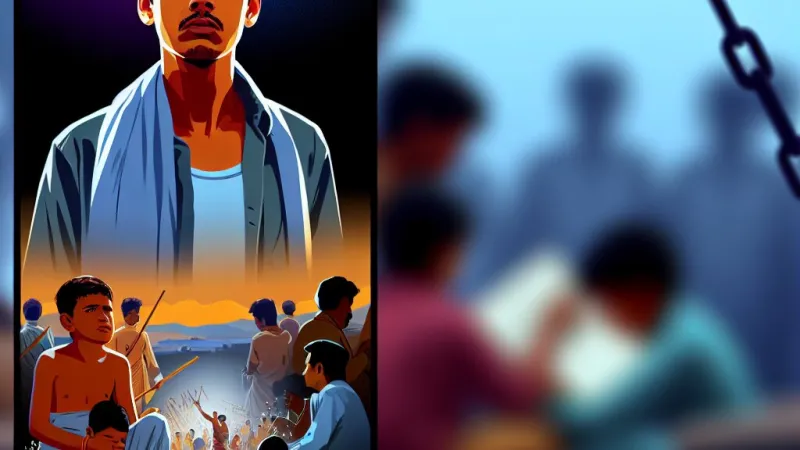
Summary:
Explore the inspiring life and legacy of Kailash Satyarthi, a Nobel laureate fighting child labour and championing children’s rights in India. 📚
The Life and Legacy of Kailash Satyarthi: Champion of Children’s Rights
Children are often referred to as the future of a nation, and this saying holds truer in India than almost anywhere else. With one of the world’s largest young populations, India’s dreams, aspirations, and progress find their foundation in its children. Yet, the vulnerability of children, especially in the face of poverty, illiteracy, and social neglect, remains a major challenge. One person who has fearlessly stood against this tide, fighting for the innocence, safety, and education of children, is Kailash Satyarthi. Recognised globally for his tireless activism and awarded the Nobel Peace Prize, Satyarthi’s journey is not just a testament to personal courage, but also a clarion call to society at large. His life’s work shows how one determined individual can challenge age-old norms, bring hope to thousands, and inspire reform both in India and worldwide.
Early Life and Background
Kailash Satyarthi was born on 11 January 1954 in Vidisha, a small town in Madhya Pradesh. Raised in a middle-class family, Satyarthi’s early life was shaped by the values of empathy and social consciousness. His father was a police constable and his mother a homemaker, both stressing the importance of honesty and kindness. As a schoolboy, Satyarthi was already disturbed by the inequality he saw—while he went to school, many children his age were polishing shoes, selling snacks, or carrying bricks. This disparity left an indelible mark on him.Despite these early influences, Satyarthi took the unbeaten path of pursuing electrical engineering at Samrat Ashok Technological Institute, Vidisha—fulfilling the typical Indian dream for upward mobility. However, his calling proved stronger. The moment that changed his life came in the late 1970s, when he witnessed a small boy working in the neighbourhood, unable to attend school. Satyarthi intervened, only to be told by the boy’s parents that they owed money to the employer. This encounter became the catalyst for his break from engineering to step into the world of social activism.
Understanding the Problem: Child Labour and Exploitation in India
The plight of child labourers in India is not just a story of individual suffering, but a structural problem cutting across communities and regions. Data from the Census and organisations such as CRY (Child Rights and You) indicate millions of Indian children have been trapped in child labour, from brick kilns in Bihar to carpet factories in Uttar Pradesh, and tea plantations in Assam. There are many reasons why children end up working—the poverty cycle, lack of schools, social prejudices, and the apathy of those in power.But the issue is more than just children working. It ranges from trafficking—where children are bought and sold like commodities—to forced labour in hazardous industries, to egregious crimes like sexual exploitation and even organ trafficking. Many of these practices are normalised or hidden under the garb of ‘helping the family’ or ‘apprenticeship.’ Without a strong legal deterrent and societal attitude shift, the challenges of eradicating child labour remain immense.
Kailash Satyarthi’s Vision and Mission
It was in 1980 that Satyarthi founded the Bachpan Bachao Andolan (BBA), which translates to “Save Childhood Movement.” His aim was straightforward yet revolutionary: To ensure that no child is forced to work and that every child gets the opportunity to receive an education. BBA operates on firm principles inspired by Mahatma Gandhi—using non-violence, peaceful protest, and relentless legal activism. The organisation’s model involves not just rescuing children, but also rehabilitating, educating, and empowering them so that they don’t fall back into exploitation.Satyarthi always maintained that to challenge child labour, you cannot work in isolation. His movement has built bridges between the government, police, judiciary, NGOs, and ordinary citizens. The BBA has consistently advocated that education is not a privilege but a fundamental right, echoing the sentiments of Indian leaders like Dr. B. R. Ambedkar who believed in social justice through education.
Major Campaigns and Achievements
One of the most remarkable aspects of Satyarthi’s activism are the large-scale rescue operations conducted by BBA, sometimes in collaboration with state authorities and sometimes with other NGOs. Through courage and careful planning, over 88,000 children have been rescued from bonded labour, trafficking, and sexual abuse under his leadership. These operations have often taken him to the most remote and dangerous places, from dhabas hidden along highways to sweatshop factories in big cities.In 1998, Satyarthi played a pivotal role in organising the Global March Against Child Labour. This unprecedented campaign traversed over 80,000 kilometres across 103 countries, including India, energising the global child rights movement and pushing for the International Labour Organization’s Convention 182 on the Worst Forms of Child Labour. The march stands as proof of the power of collective action.
More recently, Satyarthi’s “Bharat Yatra” in 2017 took the issue of child sexual abuse and trafficking into the heart of India. Covering 19,000 km, the yatra was not just a march but a movement, bringing together NGOs, local leaders, students, parents, and lawmakers. The campaign led to increased awareness and further calls for strengthening existing laws.
Additionally, Satyarthi’s advocacy has influenced significant policy changes in India, including The Right of Children to Free and Compulsory Education Act, 2009, and amendments to the Child Labour (Prohibition and Regulation) Act.
Recognition and Global Impact
Satyarthi’s relentless work did not go unnoticed. In 2014, he was awarded the Nobel Peace Prize, sharing the honour with Malala Yousafzai of Pakistan. It was a historic moment, particularly for India, as it recognised the importance of the battle against child blindness—blindness caused by society’s indifference. Satyarthi’s Nobel lecture, delivered in Oslo, was a clarion call for the world to break its “illiteracy of the heart.”In addition to the Nobel, Kailash Satyarthi has received the Defenders of Democracy Award, the Medal of the Italian Senate, and numerous accolades from India and abroad. He is a member of the UN Sustainable Development Goals Advocacy Group, and his work continues to shape strategies for universal education and children’s rights globally.
Challenges and Risks Faced by Kailash Satyarthi
Fighting for child rights in India has not been without danger. Satyarthi and his colleagues have faced serious threats—physical attacks by factory owners, legal harassment, and social ostracism in places where child labour generates massive profits. In 2011, activists associated with BBA were assaulted during rescue operations. Satyarthi himself has stated in interviews that he sometimes lived under constant risk, but his conviction in the cause kept him undeterred.Societal resistance also remains high. Many communities view child labour as inevitable, and governments often walk a tightrope between enacting strict laws and appeasing those who profit from such practices. This makes Satyarthi’s perseverance—and success—all the more remarkable.
Contributions Beyond Activism
Satyarthi’s work is not confined to protests or rescue missions. He has been a vocal supporter of strengthening education infrastructure for rehabilitated children, setting up transition schools under BBA to ease their shift to mainstream education. He has also penned several books and articles on children’s rights and education in Hindi and English, making the knowledge more accessible.Films and documentaries such as “The Price of Free,” which won the Grand Jury Prize at Sundance, have brought his work to a global audience. Moreover, by interacting with young people across the country—from Jawaharlal Nehru University to small town colleges—he has kindled a spirit of activism in hundreds of aspiring social workers.
The Continuing Struggle and Future Outlook
India has made progress in strengthening child rights in recent years. The enrolment in schools has improved, laws have become more robust, and mass media campaigns have increased awareness. However, new forms of exploitation, such as online trafficking and cyber crimes, have emerged. The COVID-19 pandemic, too, pushed many vulnerable families back into poverty, risking a fresh surge in child labour.Satyarthi continues to expand his mission—promoting partnerships between technology companies, governments, and grassroots organisations. Through the Kailash Satyarthi Children’s Foundation, he supports innovation in tracking and preventing trafficking. His vision of a child-friendly world remains a work in progress, urging each citizen to take responsibility, stay vigilant, and never look away.
Rate:
Log in to rate the work.
Log in