Top 10 Key Points on Conservation of Natural Resources for Students
This work has been verified by our teacher: 28.02.2026 at 10:01
Type of homework: Essay Writing
Added: 26.02.2026 at 16:28
Summary:
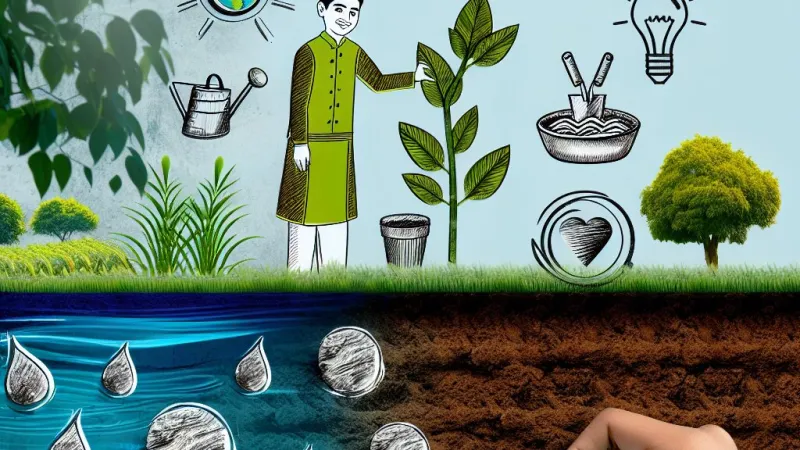
Explore the top 10 key points on conservation of natural resources to understand how students can protect and sustainably manage India's vital resources 🌿.
Conservation of Natural Resources
India, a land blessed with diverse landscapes and rich natural endowments, has always viewed its natural resources as sacred — a sentiment reflected in ancient texts, folklore, and local customs. Natural resources refer to all elements obtained from nature that support life, development, and civilisation. Traditionally, these resources are classified into two main categories: renewable, such as sunlight, wind, water, and forests, which have the ability to replenish themselves over time; and non-renewable, like coal, petroleum, and minerals, which are available only in limited quantities and take thousands or even millions of years to form.
In our day-to-day existence, natural resources are deeply woven into the fabric of survival and economic activity. Water irrigates our fields, fuels our industries, and quenches our thirst. Minerals and fossil fuels power our vehicles, drive machines, and light up homes. Forests cleanse the air, sustain biodiversity, and provide livelihoods in countless rural communities. Yet, with the surging population and rapid urbanisation, the pressure on these resources is escalating at an alarming rate. Depletion of natural reserves, if unchecked, can lead to severe environmental crises, threatening the delicate ecological balance that has sustained life for millennia.
Types of Natural Resources and Their Characteristics
To appreciate the need for conservation, it is important to understand the different kinds of natural resources and their unique features. Renewable resources include sunlight, wind, water, and forests. These resources, if used wisely and responsibly, can structurally renew themselves. For example, the monsoon replenishes rivers every year, and trees regrow if forests are not overharvested. However, even renewable resources have their limits; excessive deforestation or over-utilisation of river water can create imbalances and degrade landscapes.On the other hand, non-renewable resources such as coal, petroleum, and minerals are created over geological timescales and thus are available only in finite quantities. Once consumed, they cannot be replaced within a human lifetime. Take the example of coal mines in Jharkhand — intensive mining over decades has reduced reserves drastically. Over-exploitation of non-renewable resources not only spells scarcity for future generations but also triggers environmental hazards such as pollution and habitat loss.
Thus, conservation strategies for each type of resource differ: renewable resources require sustainable management, whereas non-renewable resources call for mindful usage, recycling, and the search for alternatives.
Factors Causing Depletion of Natural Resources in India
India's ambitious journey towards development, though impressive, has come with substantial costs to its resource base. Rapid population growth increases demand for water, food, and energy, stretching nature’s capacity far beyond sustainable limits. Urbanisation and expanding cities, whether in the bustling streets of Delhi or the fast-growing metros like Bengaluru, consume land and water at unprecedented rates.Industrialisation has further deepened the strain on resources, as seen in mining belts and industrial clusters. In agriculture, practices such as excessive groundwater extraction, monocropping, and overuse of fertilisers have degraded soil and depleted aquifers. Deforestation, particularly in the Western Ghats and northeastern states, fragments wildlife habitats and disturbs rainfall patterns.
Pollution is another major culprit: industrial effluents dumped into rivers like the Yamuna and Ganga threaten aquatic life and human health. Illegal mining activities, sand extraction, and overexploitation of minerals in states like Rajasthan compromise both resources and community welfare. Such neglect, if not addressed, could push ecosystems beyond repair.
Importance and Benefits of Conserving Natural Resources
Why, then, must we conserve? The answer, perhaps, lies in the principle of “Vasudhaiva Kutumbakam”—the world is one family. Conservation ensures that future generations inherit a planet capable of sustaining life, growth, and prosperity. No civilisation can thrive on exhausted fields and barren hills.Healthy ecosystems maintain ecological balance—forests regulate climate and rainfall, while wetlands filter and store water. Biodiversity, our priceless heritage, thrives only if its habitats are undisturbed. For the rural populace, sustainable access to forests, grazing land, and water bodies is crucial for livelihoods. Conservation also makes sound economic sense. For instance, sunlight and wind, harnessed for power, reduce dependence on expensive fossil fuel imports.
A case in point is the Chipko movement in Uttarakhand, where villagers, especially women, hugged trees to prevent their felling. Their actions highlighted not just the emotional attachment to forests, but a deep-seated understanding that wise use today is the foundation for tomorrow.
Methods and Practices for Conservation of Natural Resources
Conservation is not the sole responsibility of governments and large institutions. Every individual can contribute through simple, practical steps. For example, switching off lights and fans when not in use, minimising the wastage of water during baths and dishwashing, and adopting the mantra of “Reduce, Reuse, Recycle” at home and school help reduce our ecological footprint.Opting to walk, cycle, or use public transport lessens fuel consumption and curbs pollution. Digital documents and emails can replace paper use, saving trees. Sensitisation campaigns, nature clubs, and tree plantation drives in schools, such as those conducted by the NCC and NSS, nurture the habit of sustainability from a young age.
The government plays a key role through policies and laws: promoting solar and wind energy, mandating rainwater harvesting in cities like Chennai, and implementing green cover restoration projects across states. Law enforcement against illegal mining and effective regulation of industrial emissions have become essential in recent years. Providing incentives for eco-friendly technology, and supporting rural communities in adopting water-saving irrigation methods, further encourage conservation.
Role of Technology in Resource Conservation
Modern technology holds vast promise in reviving our resource base. The rapid expansion of solar parks in Rajasthan and wind farms in Tamil Nadu are good examples, showing how clean technology can power entire communities sustainably. Drip irrigation and sprinkler systems, especially in drought-prone areas like Vidarbha, minimise water use while ensuring crop health.Innovations in recycling—such as plastic-to-fuel conversion plants and biogas units—reduce waste and provide alternative energy sources. Smart city planning, the use of Geographic Information Systems (GIS) for monitoring forests, and mobile applications for reporting illegal activities empower citizens and administrators alike in the fight to protect resources.
Challenges in Conservation of Natural Resources
Despite progress, challenges persist. Many Indians, especially in rural and remote areas, lack awareness about long-term environmental impacts or access to clean alternatives due to financial constraints. Societal habits—like the excessive celebration of festivals using non-biodegradable materials—or preference for groundwater over rainwater harvesting, often go unchecked.Economic development and environmental conservation frequently clash, especially when projects promise jobs and growth. Enforcement of environmental laws is often lax, and funding remains a barrier in resource-starved regions. Overcoming such obstacles requires not just technological solutions, but also a cultural shift towards respecting our natural inheritance.
Case Studies and Examples from India
India offers inspiring stories of conservation. The widespread adoption of solar energy in Rajasthan has turned sun-scorched deserts into power hubs. The compulsory implementation of rainwater harvesting in Tamil Nadu, especially in Chennai, has recharged depleting aquifers and reduced water scarcity.Government-led missions like Swachh Bharat encourage citizens to link cleanliness with environmental protection. In the forests of Meghalaya, the sacred groves tradition preserves biodiversity through community ownership. The Namami Gange project seeks to restore the purity of the Ganga river using a combination of technology, regulations, and public participation.
Conclusion
The urgency to conserve natural resources is not a matter of choice, but of survival. Our future—environmental, social, and economic—relies on ensuring the sustainability of earth’s finite gifts. Conservation is a shared duty. Individuals, families, communities, governments, and industries must all commit to responsible use, cradle new ideas, and embrace lifestyle changes that respect nature’s boundaries.Let us not wait for crisis to force our hand. By acting today—switching off an unused bulb, planting a sapling, or advocating for cleaner rivers—we edge closer to a future where development and nature beautifully coexist. The Indian tradition of living in harmony with nature should inspire the youth, as caretakers of tomorrow, to take the mantle of conservation seriously.
Additional Tips for Writing or Presentation on the Topic
1. Always support your points with everyday examples, such as conserving water by fixing leaking taps or using bucket baths. 2. Refer to Indian data, such as India being the third-largest producer of solar power, for a stronger impact. 3. Incorporate slogans from campaigns like “Jal Hai To Kal Hai” to add emotional appeal. 4. Present both sides—outline the problems but also suggest practical solutions. 5. Write in simple language, suitable for your class, and keep sentences clear and short. 6. End on a note of optimism, reminding everyone that even small actions—like planting a tree or recycling a bottle—can make a big difference.In the words of Dr. A.P.J. Abdul Kalam, “Let us sacrifice our today so that our children can have a better tomorrow.” Let us take that first step to conserve, preserve, and protect the precious natural resources that have nourished India for generations.
Rate:
Log in to rate the work.
Log in