Qualities That Define an Ideal Student in India
This work has been verified by our teacher: 11.04.2026 at 17:09
Type of homework: Essay Writing
Added: 8.04.2026 at 8:39
Summary:
Explore the key qualities that define an ideal student in India and learn how academic diligence, discipline, and values shape success and character.
Paragraph on an Ideal Student
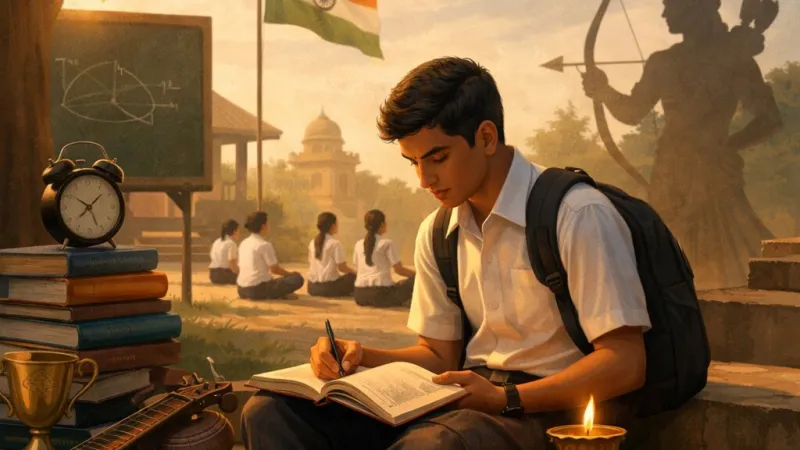
The destiny of any nation is shaped not in its corridors of power or halls of administration, but within the classrooms where young minds take root and grow. Students form the bedrock of every vibrant society, for it is from these fertile grounds that the leaders, thinkers, and changemakers of tomorrow will arise. The student phase, often called Vidyarthi Jeevan in India, is a crucial period not just for the accumulation of knowledge, but for shaping one’s moral, social, and emotional foundation.
When one speaks of an *ideal student*, the first image that may come to mind is of a topper—someone who consistently scores the highest marks. However, Indian experiences and wisdom teach us that being ‘ideal’ is far more than being a rank-holder. It means being a well-rounded human being, excelling academically but also upholding strong values, displaying respect, nurturing empathy, participating actively in society, and nurturing the body and mind equally. This essay seeks to discuss the multifaceted qualities that define an ideal student in India’s educational and cultural context, and how such a student becomes both a personal success and a pillar of societal advancement.
---
Core Attributes of an Ideal Student
Academic Diligence and Curiosity
The most visible aspect of an ideal student is often their academic orientation. But diligence here is not mere rote learning; as Swami Vivekananda asserted, “Education is the manifestation of perfection already in man.” The ideal student seeks knowledge not just from textbooks but from every experience, finding delight in the process of learning itself. Such a student is regular with their studies, develops a habit of self-study, and refuses to swallow information blindly. They are curious, question conventional wisdom when necessary, and seek clarification, echoing the approach of ancient Vedic students who engaged in dialogues with their gurus.Time management is another hallmark—balancing school lessons, tuition, revision, and relaxation requires planning and perseverance. This careful balancing act ensures that learning remains a joyous journey, not a stressful burden.
Discipline and Punctuality
Discipline is an age-old virtue in Indian tradition, often stressed in homes and schools alike. The ideal student maintains a strict routine—punctually attending classes, completing assignments within deadlines, and preparing for exams without last-minute cramming. As Dr. APJ Abdul Kalam often remarked, “Discipline and perseverance are the twin pillars of success.”In today’s digital age, where distractions are plentiful—be it social media, mobile games, or peer influence—practising self-control becomes even more critical. The ideal student sets boundaries, prioritises what truly matters, and upholds the rules set by their school and society.
Respect and Humility
Respect for teachers, elders, classmates, and different perspectives is deeply rooted in Indian thought, summed up by the adage, “Mata, Pita, Guru, Deivam” (Mother, Father, Teacher, God). The ideal student embodies this by valuing every relationship, treating everyone with dignity, and expressing gratitude for guidance received.Humility is equally important. No matter the accolades or triumphs, the ideal student remains approachable and open to learning—admitting mistakes, seeking help, and recognising that growth is always possible. Good manners, polite speech, and the ability to accept criticism constructively set such students apart.
Participation in Extracurricular Activities
All-round development is central to Indian educational philosophy. The Delhi Public School motto, “Service Before Self”, echoes the ethos of balanced growth. An ideal student is not confined to textbooks—he or she participates in sports, cultural programs, debates, drama, and social welfare activities.Physical fitness through yoga, kabaddi, cricket, or even simple PT drills is essential for mental well-being. Artistic pursuits like dance, music, and painting nurture creativity and provide emotional balance. Group projects and leadership in school events foster teamwork, organisation, and communication skills—qualities invaluable throughout life.
Social Responsibility and Helping Nature
In a country as diverse as India, awareness about society’s issues and a desire to help others is crucial. The ideal student helps classmates with studies without selfishness, stands up against bullying or injustice, and participates in social initiatives—whether it is a Swachh Bharat cleanliness drive, a tree plantation campaign, or raising funds for disaster relief.Honesty, integrity, and ethical conduct—standing firm against cheating or shortcuts—are ingrained values. An ideal student understands that real success involves contributing to the well-being of others, not just personal achievement.
---
How an Ideal Student Contributes to Society
Role Model for Fellow Students
The impact of an ideal student extends beyond self. By demonstrating sincerity, commitment, and positivity, such students inspire peers to rise above mediocrity and develop self-belief. Their very actions cultivate a healthy, competitive yet cooperative environment—one where excellence does not come at the cost of ethics or friendship.Bridging Family and School Expectations
Indian families view education not just as academic pursuit but as character building. The ideal student respects these expectations—sharing insights and values gleaned from school at home, and upholding cultural traditions like respect for elders and sharing responsibilities. In effect, they become a bridge between the academic world and family values, helping parents and teachers work together in moulding their character.Long-Term Impact on Nation Building
It has been famously remarked by Chanakya that “Education is your best friend”; it prepares one for life's responsibilities. Today’s ideal students are tomorrow’s responsible citizens—engineers, doctors, scientists, teachers, and artists who carry their learnings into their professions. Their honesty at workplace, empathy in dealings, and leadership in crises contribute immensely to nation-building.Dr. Radhakrishnan, former President and philosopher, believed that “teachers and students together shape the future of the nation”. The ideal student, through innovation and grounded principles, plants the seeds for an India that is not just learned but also wise and just.
---
Formation of Ideal Student Qualities: Innate or Acquired?
It is a common misconception that ideal students are born, not made. In truth, every child enters school with similar possibilities. What shapes their trajectory are the influences of family, teachers, and their own persistence.Family and Teacher Roles
Indian families, even in modest circumstances, strive to imbue values of discipline, respect, and empathy. ‘Samskara’—the gradual moulding of character—begins at home. Parents act as the first teachers, while teachers become guides, mentors, and sometimes second parents, investing time in both the intellectual and moral development of students.Encouragement, positive reinforcement, and honest feedback at home and school help students believe in themselves and cultivate the right habits.
Self-motivation and Personal Effort
Ultimately, becoming an ideal student is a journey of personal effort. Setting goals, embracing challenges, and refusing to be disheartened by failure all contribute to growth. Legendary figures like Dr. B.R. Ambedkar, who overcame humble origins through sheer will and discipline, remind every student that self-motivation and resilience are essential for true success.---
Challenges Faced by Students on the Path to Ideality
Modern life brings its own hurdles. Students today not only face the distractions of digital devices and social media but also the immense pressure of parental expectations and competitive exams. Mental health issues such as anxiety and stress are becoming increasingly common.Access to quality resources—good teachers, libraries, safe environments—remains unequal, especially in rural areas. The challenge of balancing different roles and expectations can be overwhelming. Therefore, an ideal student needs emotional support, constructive guidance, and access to life skills training from schools and families.
---
Tips to Develop Qualities of an Ideal Student
Every student has the capacity to become ideal if they are provided with the right tools and environment:- Time Management: Create a balanced daily routine, allocating time for studies, physical activity, hobbies, and family. - Growth Mindset: Accept failures as lessons and seek feedback to improve. - Healthy Habits: Practice reading beyond the syllabus, eat right, and ensure cleanliness. - Mindfulness: Engage in yoga or meditation, improving focus and reducing stress. - Seek Guidance: Reach out to teachers or friends when in doubt, collaborate in group studies. - Community Engagement: Participate in initiatives like literacy campaigns, NSS, or eco-clubs.
---
Conclusion
In essence, the ideal student is one who seeks knowledge passionately, upholds discipline, respects all, and cherishes not just personal progress but the betterment of others. Student life is the foundation for all later achievements—intellectual, ethical, and social. As India strides into a new era with innovative policies like NEP 2020 emphasizing holistic growth, the qualities of an ideal student become even more crucial.To all students, the message is clear: becoming ideal is not the privilege of a few but the possibility for all. Through conscious effort, humility, and an unwavering commitment to self-improvement, every student can contribute to their own success and the nation’s future. These are the torchbearers who will carry forward the ideals of knowledge, character, and service—making India proud on the global stage.
Rate:
Log in to rate the work.
Log in