Understanding Kanwar Yatra: Significance, Rituals & Cultural Impact
This work has been verified by our teacher: 18.04.2026 at 15:04
Type of homework: Essay Writing
Added: 17.04.2026 at 7:40
Summary:
Explore the significance, rituals, and cultural impact of Kanwar Yatra to understand this vibrant Hindu pilgrimage and its role in Indian traditions.
A Comprehensive Exploration of the Kanwar Yatra: Its Significance, Rituals, and Impact
The Kanwar Yatra stands as one of the most remarkable spiritual gatherings in India, drawing millions each year into a journey that embodies devotion, endurance, and community spirit. Rooted deeply within North Indian Hindu traditions, this annual pilgrimage has blossomed over centuries from a simple act of penance to a symbol of collective faith and cultural unity. In this essay, I will explore the profound relevance, rituals, and multifaceted impact of the Kanwar Yatra, intertwining history, spiritual essence, and the lived experiences of countless Kanwariyas.---
Introduction: What is the Kanwar Yatra?
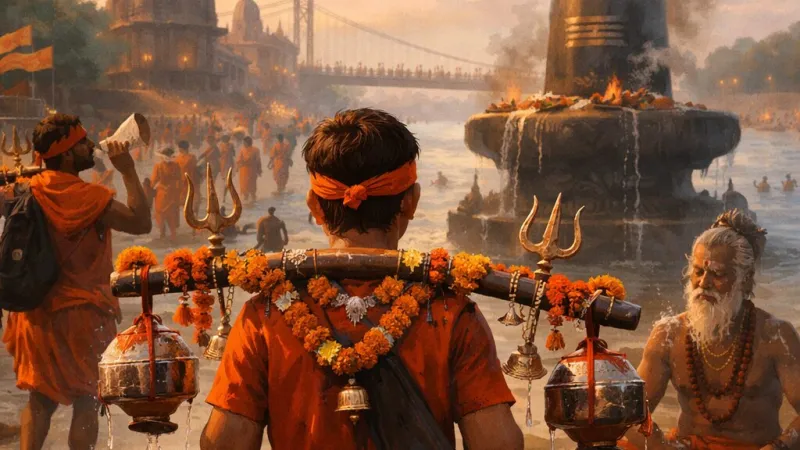
The Kanwar Yatra (कांवड़ यात्रा) is an extraordinary annual Hindu pilgrimage during which devotees of Lord Shiva, known as Kanwariyas, undertake a rigorous journey to fetch sacred water from the Ganga or its tributaries. The yatra is most prominent in the states of Uttar Pradesh, Uttarakhand, Haryana, Rajasthan, Punjab, Bihar, Jharkhand, and even Delhi, weaving through bustling towns and tranquil countryside alike. Timed to coincide with the holy month of Sawan—typically July to August in the Gregorian calendar, when the monsoon breathes life into the land—the event marks one of the highlights of the Hindu religious year.At its core, the Kanwar Yatra is an offering: Kanwariyas, often barefoot and donned in saffron robes, carry the consecrated water in vessels balanced on a bamboo shaft (kanwar) over their shoulders. They undertake this arduous trek with a single intent—to bathe the Shiva Linga at their local ashram or at grand temples such as Kashi Vishwanath in Varanasi, Mahakaleshwar in Ujjain, or Baidyanath Dham in Deoghar. This act is not just a ritualistic observance but a symbol of pure devotion—bhakti, penance, and community coming together in an unspoken vow.
---
Mythological Origins and Historical Evolution
Mythological Connections
The origin of the Kanwar Yatra is lost in the mist of time, yet Hindu scriptures and legends offer vivid narratives. According to the Puranas, during the churning of the cosmic ocean (Samudra Manthan), a deadly poison (Halahal) threatened to engulf the world. It was Lord Shiva (also known as Neelkanth) who selflessly consumed the poison to safeguard creation. To alleviate his suffering, devotees poured the cooling water of the sacred Ganga over Shiva's throat—an act recreated every year in the Kanwar Yatra.Ancient tales relate that mythological sages, and even mighty figures such as King Ravana of Lanka and Parashuram, expressed their unflinching loyalty by offering Ganga Jal to Lord Shiva. This tradition laid the foundation for ordinary devotees, driving home the idea that true worship embraces both ritual purity and heartfelt dedication.
Growth and Modern Transformations
Initially, the Kanwar Yatra was observed by saints and renunciates—simple, private pilgrimages through forests, rivers, and mountains. Over the centuries, particularly since the late 20th century, the event has undergone a massive transformation. Today, it is one of Asia’s largest religious gatherings, rivaling even the Kumbh Mela in scale. Improved infrastructure, supportive administrative mechanisms, and an unmistakable surge in faith-driven enthusiasm have shepherded its evolution into a festival, a spiritual phenomenon, and an engine for local economies.---
Rituals and Preparations: The Physical and Spiritual Journey
Timing and Route
The Kanwar Yatra is held during Shravan (Sawan), the fifth month in the Hindu lunar calendar—believed to be auspicious for offering water to Lord Shiva. Depending on their distance from the Ganga, the journey may range from a few dozen to several hundred kilometres, mainly on foot. Some begin from Gangotri, Haridwar, or Gaumukh in Uttarakhand, while others start from small rivers or tributaries connected to the Ganga.Dress and Discipline
Kanwariyas are recognised by their striking saffron-coloured clothes—an emblem of sacrifice, renunciation, and spiritual fire. Walking barefoot is common, a mark of humility and penance, though in recent times, some use cycles or simple vehicles, especially the elderly or physically vulnerable.Preparation stretches beyond the physical. Days or sometimes weeks in advance, devotees abstain from tobacco, alcohol, non-vegetarian food, and maintain mental purity through prayer and meditation. The journey is not merely to test their physical stamina, but also their resolve and faith.
The Kanwar—A Symbolic Load
The kanwar itself—a lightweight bamboo pole with two pots or containers tied at either end—represents balance and equanimity. This sacred apparatus is never placed on the ground from the moment the holy water is collected until it is poured onto the Shiva Linga. For Kanwariyas, the kanwar is both a burden and a blessing, its weight lightening with every step taken in the memory of "Bhole Baba."---
The Pilgrimage: Route, Experience, and Community
Pilgrimage Routes and Destinations
Pilgrims fan out from origin points like Gangotri, Gaumukh, Haridwar, and Sultanganj, their routes culminating in temples such as Kashi Vishwanath (Varanasi), Mahakaleshwar (Ujjain), Baidyanath Dham (Deoghar), or local Shiva temples. The destinations are decked for the occasion, their sanctums resounding with mantra jaaps and conch shells.Hardships and Overcoming Odds
The journey is fraught with both physical and emotional challenges. Many walk in blistering heat or through monsoon downpours, marching through mud, braving fatigue, hunger, and bruises. Yet, the call of ‘Bol Bam’ or ‘Bum Bhole’—chanted in unison—infuses the group with energy and unity, forging bonds that transcend caste, creed, or region.In recent years, the sight of processions at dawn, saffron trails winding across highways, has become a much-anticipated event in North India. Roadside dhabas and kanwar camps (melas) spring up overnight, arrayed with volunteers offering free food (langar), chilled water, first aid, and even simple foot massages.
Camaraderie and Shared Spirit
Community is at the heart of the Kanwar Yatra. The generosity of strangers, the sound of devotional songs blaring from portable speakers, and the sight of elderly men, women, and youth sharing shelter under tarpaulins create a magical atmosphere. Entire towns participate, as hosts, helpers, or onlookers—turning this spiritual trek into an unifying festival.---
Religious and Socio-Cultural Importance
Spiritual Rewards and Symbolism
Kanwariyas undertake the yatra seeking the blessings of Lord Shiva: good health, spiritual cleansing, prosperity, and forgiveness for past misdeeds. The pilgrimage is an exercise in discipline (tapasya), humility, and surrender (samarpan). By connecting with the sacred, devotees find a pathway to shed worldly anxieties and renew their inner strength.Cultural Integration and Economic Effects
Kanwar Yatra is more than a religious act—it has emerged as a vibrant cultural occurrence. It is an equaliser, welcoming farmers, students, shopkeepers, IT professionals, and even NRIs into a shared experience. Local bazaars, transportation services, and hospitality industries experience a significant upsurge; at the same time, regional songs, folk tales, and rituals are kept alive, being passed from one generation to the next.Inspiring Values in Youth
For young participants, the Kanwar Yatra is an initiation into the heritage and values of India: endurance, empathy, teamwork, and service. Many schools and colleges in smaller towns encourage students to volunteer at kanwar camps, teaching them about logistics, hospitality, and social responsibility. The festival, therefore, helps anchor the younger generation in their roots, giving them a pride in their identity.---
Modern Dynamics: Organisation and Challenges
Management and Support
Given the massive crowds—sometimes more than a crore in a single season—government agencies and NGOs play a pivotal role. Medical camps, police patrols, water stations, and information booths dot the route. CCTV cameras, drone surveillance, and mobile helpdesks have become common sights.Environmental and Safety Concerns
However, the festival is not without its pitfalls. Managing lakhs of Kanwariyas is challenging—occasional accidents, stampedes, and even confrontations occur, usually due to overcrowding or exhaustion. Waste management is an evolving concern; efforts are underway to reduce plastic use and to educate pilgrims about eco-friendly practices, but there is still a long way to go.Technology and Connectivity
Technology is increasingly shaping the experience. From WhatsApp groups sharing real-time updates to mobile apps mapping safe routes and emergency medical contacts—digital connectivity is as vital as the kanwar itself. The media, for its part, broadcasts both the grandeur and the challenges, influencing public perception and highlighting areas for improvement.---
Conclusion: The Enduring Legacy of Kanwar Yatra
The Kanwar Yatra remains a shining testament to India’s living traditions—a journey of faith that has not diminished even as urbanisation and modern pressures rise. At its heart, the pilgrimage is a spiritual odyssey, transforming not only the individual but the entire community. The saffron tide that sweeps over the northern plains each Sawan is more than a ritual; it is a reaffirmation that tradition, devotion, and togetherness can transcend time and change.As the resounding cry of "Bol Bam" echoes from the Himalayas to the plains, the Kanwar Yatra continues to inspire, connect, and uplift. It not only preserves the sanctity of religious practice but also sows seeds of empathy, resilience, and national integration—necessities in today’s fast-changing world.
For every Kanwariya, every volunteer, and every bystander offering water or a smile, the Kanwar Yatra is not just a pilgrimage, but a celebration of Indian spirit—faithful, enduring, and ever-evolving.
Rate:
Log in to rate the work.
Log in