A Brief Essay on Untouchability: Causes, Effects, and Solutions
This work has been verified by our teacher: 21.05.2026 at 17:24
Type of homework: Essay Writing
Added: 19.05.2026 at 10:09
Summary:
Explore the causes, effects, and solutions of untouchability in India to understand its impact and learn ways to promote equality and social justice. 📚
Understanding Untouchability: Roots, Impact, and Eradication in India
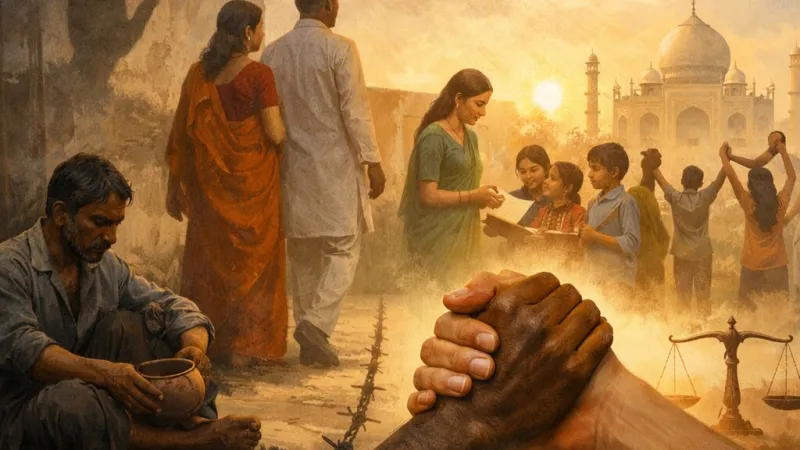
Untouchability, a word both painful and powerful for India, refers to a practice where certain people are treated as “impure” or “less than” simply because of their birth in a particular caste. These people, historically known as “untouchables” and now called Dalits, have faced social exclusion, humiliation, and denial of basic rights for centuries. Untouchability is more than just social exclusion—it violates the dignity and equality promised to every human being. Despite years of struggle and reform, this practice still leaves scars on Indian society. This essay explores how untouchability arose, its damaging effects, legal measures taken for its abolition, the work of social reformers and the government, and the ongoing challenges as well as what each of us can do to create a just and equal India.
---
Historical Origins and Causes of Untouchability
Emergence of the Caste System
To understand untouchability, one must look at the caste system that developed over thousands of years. Ancient India followed the varna system, dividing society mainly into four groups: Brahmins (priests and teachers), Kshatriyas (warriors), Vaishyas (traders), and Shudras (labourers and service providers). Over centuries, this simple division hardened into thousands of birth-based jatis, or castes, each with its own rules, rights, and restrictions. Those considered outside the four varnas, often assigned to menial and “dirty” jobs liked cleaning, leather-work, or manual scavenging, came to be treated as untouchables.Religious and Societal Factors
Certain ancient texts and social customs justified the exclusion of these groups, claiming that physical contact with an untouchable would “pollute” higher castes. This fear of “impurity” meant untouchables were forbidden from entering temples, drawing water from common wells, or even seeing the shadow fall on upper caste people. Superstitions and ignorance strengthened these myths, embedding untouchability deep into the Indian psyche.Economic Factors
Untouchability was also a tool for economic control. Occupations like cleaning drains, cremating bodies, or handling animal carcasses were forced upon untouchables. This ensured that upper castes avoided such work, while untouchables were trapped in poverty and disrespected labour for generations. The system created a vicious circle: poverty and humiliation led to social contempt, and social contempt justified economic exclusion.---
Forms and Manifestations of Untouchability
Social Exclusion
Daily life for untouchables has historically meant being denied access to basic needs—temples, public wells, schools, hotels, and even roads in some villages. Practices such as separate utensils, seats, and quarters were used to keep them apart. Inter-dining and inter-marriage between castes were unthinkable and met with severe punishments.Economic Discrimination
Even in modern India, Dalits often struggle to get “respectable” jobs. Many remain in manual scavenging or agricultural labour, sometimes under exploitative or even bonded conditions. Land ownership, fair wages, and independent businesses remain out of reach for many, with discrimination cutting off the path to upward mobility.Psychological and Cultural Impact
Untouchability is not just an external barrier. It breeds self-doubt, humiliation, and hopelessness among its victims. Generations of Dalit children grow up with a sense of inferiority, internalising the idea that they are less worthy, less capable. Literature like Omprakash Valmiki’s “Joothan,” Bama’s “Karukku,” and the stories of Rohith Vemula—who spoke out against caste before his tragic death—reflect this deep agony.---
Major Consequences of Untouchability
Social Fragmentation
Untouchability creates a fractured society where mistrust, prejudice, and resentment fester between different communities. Even urban areas witness incidents of discrimination, reminding one of how much work remains.Obstruction to National Progress
India cannot truly progress when a large section of the population is denied education, jobs, and dignity. This prevents people from contributing their talents and energy for the nation’s development, holding back our collective potential.Violation of Human Rights
The right to dignity, equality, and freedom is fundamental to any civilisation. Untouchability is a clear violation of these rights. International observers have often criticized India for not doing enough, pushing us to match our actions with our constitutional ideals.---
Constitutional and Legal Measures Against Untouchability
Indian Constitution’s Stance
India’s founders recognised that untouchability is a national disgrace. Article 17 of the Constitution abolishes untouchability in any form, making it a punishable offence. The larger framework of fundamental rights guarantees equality before law and forbids discrimination based on caste.Key Legislations
The Protection of Civil Rights Act, 1955, makes the practice of untouchability a criminal offence, while the Scheduled Castes and Scheduled Tribes (Prevention of Atrocities) Act of 1989 provides stronger safeguards against crimes like violence, exclusion, and humiliation of Dalits and Adivasis.Role of Judiciary
The Supreme Court and High Courts have consistently upheld these laws, issuing verdicts and guidelines to ensure justice. However, enforcement still faces hurdles as some people continue discriminatory practices in subtle or hidden ways.---
Social Reformers and Movements Against Untouchability
Pioneers of Reform
India’s great social thinkers courageously fought untouchability. Mahatma Gandhi called untouchables “Harijans” (children of God) and worked tirelessly to include them in temples and public life. Dr. B.R. Ambedkar, born a Dalit, suffered intense humiliation but rose to become the principal author of our Constitution. His lifelong mission was to secure equality, dignity, and rights for Dalits.Grassroots Movements
Numerous Dalit movements, such as the Dalit Panthers and the Bahujan Samaj Party, have challenged caste oppression in politics, society, and culture. NGOs like Safai Karamchari Andolan have highlighted manual scavenging and sought justice for victims.Cultural and Educational Reforms
Books, films like “Article 15,” and plays have questioned age-old prejudices. Education campaigns and workshops by groups like Ekta Parishad encourage pride and self-worth among Dalit youth, highlighting the need for changing mindsets.---
Government Initiatives for Upliftment
Reservation Policy
To create a level playing field, the government introduced reservations or quotas for Scheduled Castes (SC) and Scheduled Tribes (ST) in schools, colleges, government jobs, and legislatures. This affirmative action ensures that Dalits have fair access to opportunities and representation.Welfare Schemes
Scholarships for students, free hostels, special coaching programs, subsidised housing, and loan support are provided to uplift Dalit communities. Special initiatives, such as the Pre-Matric and Post-Matric Scholarship schemes, aim to reduce dropout rates among Dalit children.Monitoring and Implementation
The National Commission for Scheduled Castes and other institutions regularly monitor the status of Dalits, recommend policy changes, and investigate complaints of discrimination. However, ground realities often lag behind the spirit of these measures.---
Contemporary Situation and Challenges
Persistence of Untouchability Practices
Despite urbanisation and awareness, newspaper reports of violence, humiliation, and even honour killings remind us that untouchability is not just history. Census data and studies reveal that in several villages, Dalits are still forbidden to enter temples or access community wells.Social Awareness and Changing Attitudes
Young people and cities are slowly breaking old barriers. Inter-caste marriages, while still rare and risky, are growing. Campaigns by influencers on social media and documentaries are helping to make discussions on caste less taboo.Intersectionality
Dalit women, especially, face “double discrimination”—because of both their caste and gender. Reports and studies by groups like National Campaign on Dalit Human Rights reveal higher rates of violence and exclusion faced by Dalit women in education, the workplace, and even in their own homes.---
The Role of Society and Individuals in Eradicating Untouchability
Importance of Social Integration
Each of us can help break caste lines by making inclusive friends, celebrating festivals together, or standing up to traditional norms that separate people. Small acts—for example, sharing meals across communities—matter in changing society.Education as a Tool of Change
Children must learn from early years that all humans are equal. Including stories of Dalit heroes, social reformers, and real-life changemakers in textbooks helps build empathy. Youth festivals, college debates, and essay competitions on equality can influence new thinking.Civic Responsibility
It is everyone’s duty to report discrimination where we see it, support victims, and speak openly against injustice. Student groups, youth clubs, and civil society groups have a key role in spreading awareness and supporting reforms.---
Conclusion
Untouchability is one of the darkest legacies India struggles to leave behind. It undermines individuals, poisons society, and embarrasses our national conscience. But India has come a long way—from inhuman discrimination to constitutional guarantees, from silent suffering to proud assertion. Yet, the journey is not over. Laws alone cannot change minds. Real change needs empathy, courage, and constant effort from each of us.The dream of an inclusive India can only be realised when every person—regardless of caste—is treated with respect, opportunity, and love. It is our responsibility to wipe out untouchability, not by force, but by building bridges and understanding. Let us work together, so that in tomorrow’s India, the word “untouchable” reflects only our past—not our present, and never our future.
Rate:
Log in to rate the work.
Log in