Explore river pollution in India: causes, impact and urgent solutions for your geography essay, learn causes, effects, examples and action steps to score well.
Rivers in Peril: The Rising Problem of Water Pollution
“Where the clear river once reflected the sky, today it mirrors our neglect, running grey with waste and debris.” India’s rivers, the veins of its civilisation, now face unprecedented pollution — a silent but dire threat. Once the pure source of life for villages and cities alike, these waterways now struggle under layers of filth, putting at risk not only the environment but the health, livelihood, and culture of millions. The steadily growing pollution in India’s rivers is a complex socio-environmental issue that demands urgent, united action to restore their vitality.
The Importance of Rivers in India
For centuries, rivers like the Ganga, Yamuna, Godavari, and countless smaller streams have formed the heart of India’s existence. They provide drinking water to crores of people and are indispensable to agriculture, supporting lush fields through irrigation, particularly in the fertile plains of Punjab, Uttar Pradesh, and West Bengal. Rivers sustain fisheries and inland transport, supporting local economies and livelihoods, often for the most vulnerable communities. Beyond utility, rivers in India hold great spiritual weight. Rituals, festivals, and daily customs, from Chhath Puja in Bihar to the annual Kumbh Mela, depend on clean river water. India’s literature and folklore — whether in Rabindranath Tagore’s “The Boat Wreck” or the folk songs of the Godavari delta — often celebrate the benevolent presence of rivers. A decline in river health threatens all these dimensions, turning what is sacred and sustaining into a cause for worry.
Signs and Indicators of Growing River Pollution
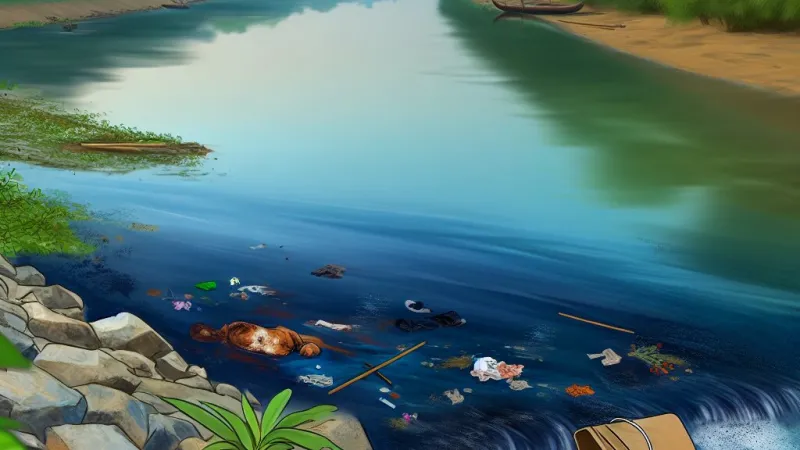
The change in India’s river waters is visible and measurable. Once-clear flows now run turbid with a yellowish or grey hue, often carrying a foul stench. Floating among the reeds and lilies, discarded plastics, foam, and the bodies of dead fish are increasingly common. On the scientific front, water samples reveal soaring biological and chemical oxygen demand (BOD and COD), indicating dangerous levels of organic and chemical pollution. Excessive nutrients like nitrates and phosphates give rise to algal blooms, reducing oxygen for aquatic life. According to the Central Pollution Control Board, significant stretches of rivers now exceed safe levels for drinking or even bathing.
Major Causes of River Pollution
Municipal Sewage
The most persistent villain in this story is untreated sewage from cities and towns. Rapid urbanisation has overwhelmed the capacity of existing sewage treatment plants, resulting in open drains and raw sewage flowing directly into rivers such as the Yamuna in Delhi and the Mithi in Mumbai. While larger cities have some sewage infrastructure, small towns and peri-urban areas often lack even basic systems. The lack of decentralised treatment means that communities are left to cope with stench and disease.
Industrial Effluents
From the textile dyeing units on the banks of the Noyyal to the tanneries of Kanpur by the Ganga, industries discharge hazardous chemicals, heavy metals, and dyes, sometimes bypassing even the minimal treatment. Despite the existence of Common Effluent Treatment Plants (CETPs), weak monitoring and corruption allow untreated or partially treated effluents to mix with river water, harming aquatic life and polluted sediments for years.
Agricultural Runoff
The drive for high yields has promoted excessive use of fertilisers and pesticides. During monsoon rains, these chemicals wash off fields into nearby streams and rivers, fuelling eutrophication — explosive algal growth that chokes out other life. Sediment-laden runoff clouds the water, reducing its suitability for fish and irrigation. Simple solutions like buffer zones, contour ploughing, and judicious use of inputs remain underused.
Solid Waste and Plastics
Urban homelessness, lack of proper waste systems, and ritualistic practices unfortunately conspire to make riverbanks informal dumping grounds. Single-use plastics, food wrappers, and ritual offerings (including non-biodegradable items) clog waterways, causing both visible and long-term hazards.
Thermal and Other Discharges
Industries and power stations often release warm or cooling water into rivers, lowering dissolved oxygen levels and impacting sensitive aquatic species.
Encroachment and Altered Flows
Unregulated sand mining, encroachments on floodplains, and channel straightening for urban development have changed natural flows. These changes impede rivers’ natural ability to recharge and self-purify, making them more vulnerable to pollution.
Natural Causes
While floods and seasonal flow variations bring sediment and debris, human activity has far outstripped these impacts, making anthropogenic causes dominant.
All these factors overlap, magnified by poor regulation, lack of community awareness, and fragmented governance.
Impacts of River Pollution
Environmental Harm
River pollution disrupts delicate aquatic ecosystems, causing massive fish kills and loss of native biodiversity. Algal blooms brick over the surface, choking sunlight, while endangered birds, otters, and even the playful Gangetic dolphin lose their habitats. Wetlands associated with rivers, so crucial for migratory birds and flood control, suffer too.
Human Health Hazards
Millions of Indians consume river water directly or indirectly; polluted rivers spread diseases like diarrhoea, typhoid, and cholera, exacting a toll most severe among slum dwellers and rural poor. Contact with contaminated water causes skin and respiratory diseases; long-term exposures — especially to heavy metals like lead or mercury — carry risks of cancer and developmental disorders. With rivers unfit for use, people sink deeper into groundwater extraction, risking depletion and arsenic poisoning.
Economic Setbacks
Farmers irrigating with polluted water face shrinking yields, while fishermen experience dwindling catches, threatening entire communities in Assam and Odisha. Once-prosperous ghats fall silent as pilgrimage and river tourism shrink, hitting local economies.
Social and Cultural Erosion
Traditions such as the morning snan (bath) in the Ganga or boat processions during Durga Puja become hazardous or lose their appeal. Local conflicts rise when communities downstream accuse those upstream of dumping waste. Villages once bound by a shared river culture find themselves divided by a shared crisis.
An Illustrative Example
Take the Ganga, India’s holiest river. Even after decades of clean-up attempts, including the Ganga Action Plan and Namami Gange, stretches remain unfit for bathing. Despite progress in some towns, illegal discharges and slow project execution mean that much work remains. On a smaller scale, the Palar River in Tamil Nadu became a cautionary tale — relentless tannery waste turned it virtually unusable for crops or cattle, forcing villagers to rely on distant, costly alternatives.
Measures to Tackle River Pollution
Policy and Governance
India must strengthen and rigorously enforce pollution standards, integrate river-basin based planning, and ensure departments coordinate closely. Economic tools such as the ‘polluter pays’ principle and timely environmental fines should deter violators. Setting up empowered river task forces and public accountability mechanisms may lend much-needed momentum.
Infrastructure and Technology
The foremost need is to dramatically expand sewage treatment capacity: large, modern STPs in metros and low-cost, decentralised systems in rural clusters. Clusters of small-scale industries should share Common Effluent Treatment Plants, whose performance must be regularly audited. Nature-based innovations deserve greater focus — constructed wetlands, reed beds, and riparian buffer restoration blend traditional wisdom with scientific progress.
Agriculture and Watershed Management
Adopting organic or precision agriculture, combined with techniques like contour farming and check-dam construction, keeps runoff and sediment in check. Comprehensive soil health card schemes and farm education on fertiliser management can reduce dangerous nutrient leaching into rivers.
Waste Management and Plastics
Door-to-door waste collection and robust segregation at source must become the norm. Communities can establish local composting and plastic recycling centres. Local government must strictly regulate packaging and actively discourage ritual use of non-biodegradable offerings, promoting alternatives like biodegradable diya and cloth.
Public Awareness and Community Participation
School curricula should include river and water stewardship, sparking behavioural change early. Faith leaders and community influencers can play an immense role in promoting eco-friendly rituals. Regular citizen-led river monitoring and clean-up drives — as seen in Pune’s Mula-Mutha project — build a sense of collective ownership.
Monitoring and Transparency
Deploying real-time water quality monitoring, making data public through online dashboards, and encouraging community reporting via mobile apps can bridge the gap between authorities and citizens. Independent audits and participatory hearings must become regular features.
Challenges and Barriers
Despite earnest efforts, challenges like inadequate funding, poor enforcement, and confused responsibilities across agencies persist. Urban poverty and informal settlements mean many people have no choice but to pollute. Political vested interests, corruption, and lack of consistent leadership weaken action plans. Addressing these requires long-term financing, river-basin institutions, capacity building, and meaningful partnerships with the private sector and civil society. Importantly, economic growth must be balanced with environmental preservation through pragmatic, consensus-driven policies.
Conclusion
Rivers are the heart of India’s ecology, culture, and economy. Yet, their growing pollution from untreated sewage, industrial effluents, plastics, and unchecked development is a crisis that affects everyone, from urban professionals to rural farmers. Policy reforms, technological upgrades, community participation, and sincere enforcement are essential. With collective commitment and pragmatic solutions, our rivers can be restored to life and purity, so generations to come can still witness their timeless flow and bounty. The time to act is now — for the rivers, and for ourselves.
Frequently Asked Questions about AI Learning
Answers curated by our academic expert team
What are the main causes of rising river pollution in India?
The main causes are untreated municipal sewage, industrial effluents, agricultural runoff, solid waste dumping, and encroachment altering river flows.
How does rising river pollution in India impact human health?
Polluted rivers spread diseases like diarrhoea, typhoid, and cholera, and exposure to toxic chemicals increases risks of cancer and developmental disorders.
What urgent solutions are suggested for rising river pollution in India?
Urgent solutions include expanding sewage treatment, stricter industrial monitoring, community participation, better waste management, and nature-based restoration methods.
Why are rivers important to India's geography and culture?
Rivers provide drinking water, support agriculture and fisheries, sustain traditions and festivals, and symbolize spiritual and cultural identity across India.
How do industrial effluents contribute to rising river pollution in India?
Industries discharge untreated chemicals, dyes, and heavy metals into rivers, harming aquatic life and making water unsafe for human use and agriculture.
Rate:
Log in to rate the work.
Log in