Key Facts and Significance of the Jhelum River in Kashmir
This work has been verified by our teacher: 25.03.2026 at 10:03
Type of homework: Geography Essay
Added: 23.03.2026 at 16:52
Summary:
Explore key facts and significance of the Jhelum River in Kashmir, its geography, cultural impact, and role in agriculture and hydroelectricity. 🌊
The Jhelum River: Lifeline of the North
The Jhelum, known for centuries as “Vitasta” in Sanskrit, is one of the great rivers that have moulded the geography, history, and culture of the Indian subcontinent. Flowing serenely through the heart of the Kashmir valley and journeying onward to merge with the Indus, the Jhelum is both a witness and a shaper of civilisation – its significance ranges from mythological references found in the Rigveda to sustenance of modern agriculture and hydroelectricity. This essay explores the Jhelum’s journey from its Himalayan origins, tracing its physical course, examining its cultural footprints, discussing its environmental challenges and socioeconomic roles, and considering how it may be preserved for future generations.---
Geographical Origin and Course
The story of the Jhelum begins at Verinag, a pristine spring situated at the foot of the Pir Panjal mountains in Kashmir’s Anantnag district. Revered for its crystal-clear waters and encircled by ancient chinar trees, Verinag is both a natural wonder and a place of pilgrimage; the Mughal emperor Jahangir was so enamoured by its beauty that he ordered an octagonal stone basin to encase the spring, which has become an emblem of the site.From this sacred beginning, the river meanders northwards into the heart of the Kashmir valley, coursing past the city of Srinagar, which relies on the Jhelum both for its beauty and its daily functions. The river gently feeds into Wular Lake, arguably the largest freshwater lake in South Asia. Wular acts as an ecological buffer, moderating floods and supporting dozens of bird species. From there, the Jhelum winds through Baramulla and onward to Uri, hugging terrains both lush and craggy. It finally exits India through the mountains near the Line of Control, entering Pakistan-administered Kashmir and flowing towards the plains.
In Pakistan, the Jhelum traverses the provinces of Khyber Pakhtunkhwa and Punjab, receiving more tributaries and proving vital for millions, before merging with the Chenab and then the mighty Indus. Over its approximately 725 kilometres, the Jhelum carves a basin nurtured by Himalayan glaciers, and its drainage area spreads across about 15,800 square kilometres.
---
Tributaries and Basin
The Jhelum’s powers are magnified by the contribution of several tributaries. The Neelum River (called Kishanganga in its upper reaches) is the most significant, joining the Jhelum just west of Muzaffarabad. Besides this main tributary, smaller streams like the Lidder, Vishav, and Rambi Ara bring melted ice and rainfall from the encompassing Himalayas, feeding the river throughout the year.The river’s catchment is a mosaic of snowy peaks and deep forests, home to an estimated 147 glaciers that act as living water towers for the basin’s perennial needs. Seasonal rhythms shape the river: the snowmelt during spring and early summer fills the river to its brim, while the southwest monsoon adds further surges. These hydrological variations dictate everything from agricultural cycles to tourist activity in the valley.
Along its banks, the ecosystem flourishes: Kashmiri willow, poplar, and herbs used in Unani medicine abound, supported by the river’s rich silt and constant moisture. Fish like the Himalayan mahseer and trout swim in its currents, while migratory birds – geese, ducks, and herons – flock to the wetlands formed by its bends and lakes.
---
Historical and Cultural Significance
The Jhelum is far more than just a river – it is deeply woven into India’s mythic and historical consciousness. “Vitasta” finds mention in the Nilamata Purana and the Rigveda, where it is honoured as one of the holiest rivers. Legends say that Goddess Parvati herself created the river by striking the earth with her trident, which hints at the profound spiritual reverence the river has commanded.Throughout history, the Jhelum has witnessed great events. The famous Battle of Hydaspes between Alexander the Great and King Porus in 326 BCE is believed by historians to have taken place on its banks, near present-day Jhelum in Pakistan. The cultural influence of the river is also evident from towns like Jhelum city in Pakistan and the colloquial name “Vyeth” that Kashmiris affectionately use.
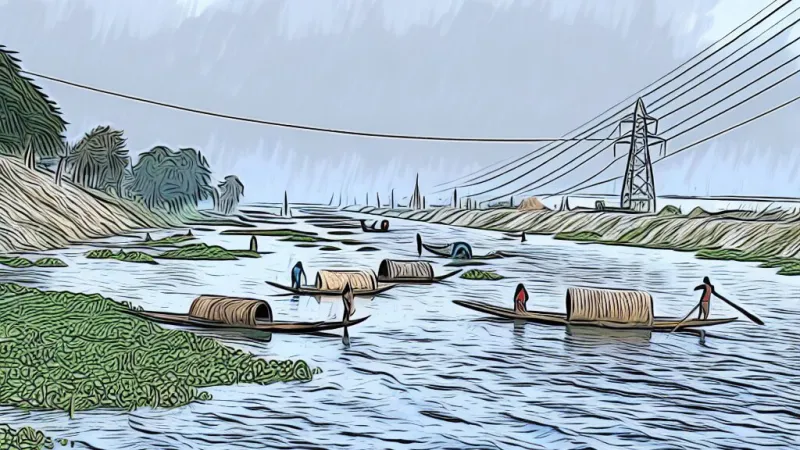
Even today, the ghats and bunds along the Jhelum are the nerve centre of Srinagar’s daily life. The traditional shikara boat rides and houseboats floating on the river have inspired countless poets, filmmakers, and artists – from the verses of Lal Ded and Habba Khatoon to evocative scenes in Kashmiri cinema and literature.
---
Socioeconomic Importance
The Jhelum is integral to the prosperity of the Kashmir valley as well as the plains downstream. In its upper stretches, the river is lifeblood for agriculture, irrigating rice paddies, saffron fields, and apple orchards. Traditional waterwheels and canals draw from the river, enabling multi-cropping and employment for thousands of rural families.The river’s power is also harnessed for generating electricity. The Lower Jhelum Hydroelectric Project, Uri Hydroelectric Project, and the Kishanganga project are vital assets in the region’s energy portfolio. They not only reduce dependence on fossil fuels but also spark debates about equitable water sharing between India and Pakistan.
Besides agriculture and electricity, the river supports fisheries – the Kashmiri trout is especially famous – and is the main water source for several towns’ domestic and industrial needs. From washing to drinking, from pottery to boat-building, countless livelihoods hinge upon the health of the Jhelum.
---
Environmental Concerns and Water Management
Like many Himalayan rivers, the Jhelum faces mounting threats. Urbanisation, unregulated construction on its banks, and unchecked discharge of sewage and industrial effluents, especially near Srinagar, have degraded water quality. Pesticide runoff from fields, especially during the apple and paddy cultivation seasons, further pollutes the ecosystem, endangering aquatic species and making the water unsafe for human use.Climate change is compounding these issues. Western disturbances altering snowfall patterns, and rapidly receding glaciers can drastically alter the river’s seasonal flow. Unpredictable floods (like those of 2014) or droughts can devastate entire communities. Moreover, sedimentation is reducing the depth of Wular Lake, affecting its ability to moderate floods and recharge groundwater.
Given that the river is shared by two countries, water management is complex. The Indus Waters Treaty (1960), which allocates the waters of the Indus and its tributaries between India and Pakistan, stands as a rare success in diplomacy. However, with increasing regional tensions and population pressures, operationalising cooperation over the Jhelum – especially regarding new hydropower projects and conservation – remains a challenge.
---
Conservation and the Road Ahead
Hope for the Jhelum lies in active and collaborative conservation. Local NGOs and community groups, often led by youth, have organised “clean Jhelum” drives in Srinagar, removing tonnes of waste and raising awareness. The government’s initiatives to build sewage treatment plants and monitor industrial effluent are positive steps, but implementation needs to be strict and community-driven.Sustainable development of the basin requires a delicate balance. While electricity and irrigation projects are crucial, long-term planning must ensure environmental flows and fish migration routes are not disrupted. Planting native trees along banks, promoting organic farming, and reviving ancient water management systems, such as community tanks and small check dams, can mitigate floods and improve water quality.
Policy frameworks for “Integrated River Basin Management” that combine scientific monitoring with traditional wisdom of local communities can guide preservation efforts. International cooperation, even amidst political tensions, is vital – after all, the river, like all rivers, recognises no man-made boundaries.
---
Conclusion
In the end, the Jhelum is not merely a watercourse but a symbol of connection between people, cultures, and histories across borders. Its tranquil surface belies the tumult of centuries – of empires rising and falling, farmers sowing and harvesting, poets singing and meditating, children playing on its bunds. From Verinag’s sacred spring to the verdant fields of Punjab, the Jhelum’s story is India’s story: resilient, nurturing, and always flowing forward.If we are to honour this gift of nature, we must all – governments, citizens, and neighbours – strive to keep its waters clean, its banks green, and its traditions alive. Only then will the Jhelum continue to nourish both the land and the spirit of our people for centuries to come.
Rate:
Log in to rate the work.
Log in