10 Key Facts About the Japura River for Geography Studies
This work has been verified by our teacher: 10.04.2026 at 17:53
Type of homework: Geography Essay
Added: 7.04.2026 at 16:32
Summary:
Explore 10 key facts about the Japura River to understand its geography, climate, and transboundary importance for your secondary school geography homework.
Japura River: An In-depth Overview in 10 Points
India is home to majestic rivers like the Ganga, Yamuna, and Brahmaputra, each with their own importance to the nation’s land and people. However, the riverscapes of other continents also hold lessons and inspiration, particularly when we examine remarkable river systems like the Japura in South America. Though geographically distant from India, a study of the Japura River offers valuable insights into environmental diversity, hydrological systems, border cooperation, and sustainable development – themes vital to Indian education and environmental awareness. Here, I present a detailed essay encapsulating ten key aspects of the Japura River, while tying these themes to contexts relatable to an Indian reader.---
1. Location and Origin of the Japura River
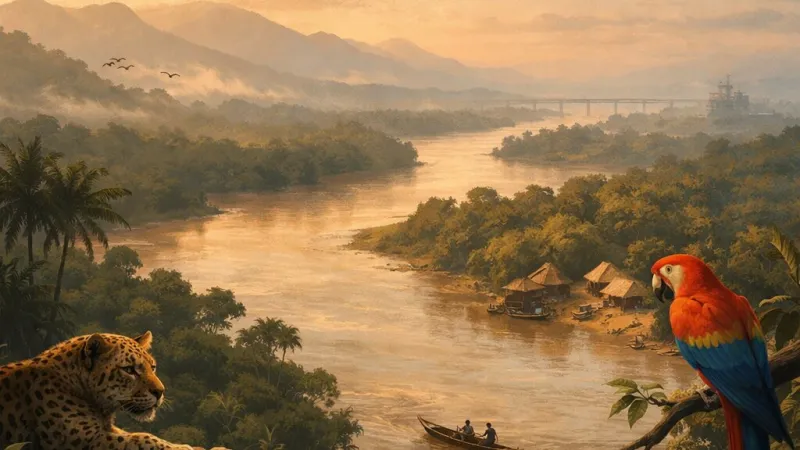
The Japura River, known as the Caquetá River in its upper course, is one of the major rivers of the vast Amazon Basin in South America. Its journey begins high in the Andes mountains of southwestern Colombia – an area of significant rainfall and dense cloud forests. From its source, this river carves a path across Colombia before entering Brazil, where it is eventually called the “Japura.” Just as the Brahmaputra rises in the Himalayas and travels across borders, the Japura too is a classic example of a transboundary river, reflecting the interconnectedness of natural systems across political boundaries.---
2. Length and Basin Area
Stretching nearly 2,800 kilometres from the Andes to its confluence with the mighty Amazon River, the Japura is among the longest tributaries flowing into the Amazon system. The basin it nourishes is vast, covering approximately 2,53,000 square kilometres. It is interesting to note that about two-thirds of the river's basin lies within Colombia, with the remaining section in Brazil, signifying its socio-environmental importance to both countries. This cross-border span echoes India’s experience with river basins shared with neighbours, such as the Ganga-Brahmaputra between India and Bangladesh.---
3. The River’s Course and Tributaries
After emerging from the Andes, the Japura ('Caquetá') flows eastwards through Colombia’s jungles, gathering strength from tributaries like the Apaporis and Yarí rivers. On entering Brazil, it is joined by the Araracuar and Mirim rivers before finally merging with the Amazon near the town of Tefé. The river's path meanders through dense tropical forests, swamps, and winding channels – a striking similarity to the channel-divided courses of the Sundarbans in West Bengal or the floodplain rivers of Assam.---
4. Climate and Hydrology: Patterns of the Water
The Japura River’s flow is ruled by the rhythms of the equatorial rainforest. The region encounters equatorial rainfall, leading to dramatic changes in water level between dry and wet seasons. Monsoon-fed rivers in India, such as the Krishna and Godavari, demonstrate similar seasonal variability, where flooding and receding of water shapes life along the banks. The Japura’s flood pulses rejuvenate the vast floodplains, nourish forests, and replenish wetlands, making it indispensable to the ecological clockwork of the Amazon.---
5. Unique Biodiversity and Ecological Wealth
The Japura River basin is a living museum exhibiting South American biodiversity. Teeming with fish species – from giant catfish to colourful cichlids – it also provides refuge to river dolphins, caimans, turtles, and myriad amphibians and birds. The riverine forests and wetlands, such as varzea and igapó, are as rich as the mangrove forests of the Sundarbans or the Western Ghats’ river valleys. The intricate web of life here plays a crucial role in preserving the Amazon’s status as the world’s greatest carbon sink, which is as vital globally as the Indian Himalaya is locally and regionally.---
6. Human Life Along the Japura
Just as Indian rivers are the backbone of rural life and urban growth, the Japura supports numerous human communities. Towns like La Pedrera in Colombia and towns near Tefé in Brazil depend extensively on its resources. The river’s early settlements were home to various indigenous groups, such as the Huitoto and Bora peoples, whose lives revolve around the river’s generosity. Fishing, small-scale farming, transportation, and traditional practices define human interaction here, giving the river a similar status as the Narmada or the Godavari in India’s heartlands.---
7. Economic and Cultural Importance
For centuries, the Japura has served as a key route for transportation in areas where roads are non-existent, much like the Brahmaputra in Assam and the Sundarbans’ creeks in West Bengal. Small motorboats, canoes, and ferries act as lifelines, ferrying people and goods along sinuous river channels. Reeds from the river’s banks are used for mats and baskets, fish are dried and smoked for village fairs, and the fertile floodplains support the cultivation of rice, maize, cassava – echoing the agricultural rhythms seen in India’s Indo-Gangetic plains.The Japura’s cultural footprint is also deep-rooted. Indigenous myths, dances, and rituals pay homage to the river gods and spirits, a motif familiar to students of Indian folklore, where rivers like the Ganga are personified and venerated during festivals. Historical records also highlight fearless explorers charting the river’s length in challenging conditions, reminiscent of the stories of Sirpur or Hiuen Tsang’s travelogues along India’s ancient rivers.
---
8. Environmental Challenges
The Japura faces numerous threats, many of which Indian students would immediately relate to their own regional issues. Deforestation for timber and agriculture leads to soil erosion and increased sediment load, similar to concerns in the Western Ghats or Northeast. Agricultural runoff, pesticides, and the gradual encroachment of settlements threaten water quality and aquatic life, while overfishing and climate change endanger the delicate balance of life along its banks.Moreover, as a river crossing both Colombia and Brazil, the Japura’s management brings complex challenges, requiring cross-border governance, cooperation, and trust. These are the very themes that engage Indian policymakers regarding river sharing and joint management with Nepal, Bangladesh, and Pakistan.
---
9. Conservation Initiatives and the Way Forward
Efforts are underway to conserve the Japura’s precious ecosystem. Various non-governmental organisations, local collectives, and government agencies work towards sustainable fishing, forest protection, and responsible farming. Community-driven programmes emphasise the importance of protecting traditional knowledge, much as Indian projects have turned to local panchayat systems to enforce river cleanups and responsible exploitation of water resources.There are also environmental education drives along the Japura, teaching children about their heritage and the importance of preserving water quality, fish stocks, and forests. These lessons are vital for all nations, including India, where river-centric studies are increasingly a part of school curriculums.
---
10. Comparing Japura: Lessons for Indian Rivers
When we compare the Japura with other major Amazon tributaries like the Madeira or Negro, we see both unique features and shared challenges – biodiversity richness, long river channels, and socioeconomic dependence. For Indian students, this comparison can sharpen our understanding of the Narmada versus the Godavari, or the Ganga compared to the Indus: every river has its unique history, ecology, and economic significance, but all need careful stewardship and regional cooperation for long-term wellbeing.---
Rate:
Log in to rate the work.
Log in