Exploring the Rich Heritage of Rajasthan’s Mewar Festival
This work has been verified by our teacher: 5.03.2026 at 15:11
Type of homework: History Essay
Added: 2.03.2026 at 9:03
Summary:
Discover the rich heritage of Rajasthan’s Mewar Festival with detailed history, traditions, and cultural significance for your secondary school history essay.
Mewar Festival: Celebrating the Spirit of Rajasthan
India is known across the world for its rich diversity of festivals and traditions, where every region showcases its unique cultural heritage through vibrant gatherings and age-old rituals. One such remarkable celebration is the Mewar Festival, an annual extravaganza which unfolds in the picturesque city of Udaipur, Rajasthan. More than just a festival, the Mewar Festival stands as a testament to the glory, resilience, and creative genius of the people of Mewar. It beautifully brings together communities, revives centuries-old customs, and ushers in the charm of spring. In this essay, we embark on a detailed journey through the origins, significance, rituals, and contemporary relevance of the Mewar Festival, highlighting its indispensable role in the cultural landscape of India.---
Historical Background and Origin of Mewar Festival
The Mewar Festival is deeply connected to the illustrious legacy of the Mewar kingdom, one of India’s oldest and most renowned dynasties. The Sisodia Rajputs, whose rule spanned centuries, are remembered for their indomitable spirit and fierce sense of independence, epitomised by valiant figures like Maharana Pratap. The festival not only commemorates the cultural ideals fostered by these rulers—like courage, honour, and patronage of the arts—but also pays tribute to the enduring social unity of the Mewar community.The timing of the festival is equally significant. Held during the onset of spring, usually in March or April, the Mewar Festival signals the arrival of Basant, often referred to as the ‘king of seasons’. The gentle breeze, blooming flora, and pleasant weather provide the perfect backdrop for people to mingle outdoors after the harshness of winter. For an agriculture-centric region like Rajasthan, the season marks a time of renewal, hope, and gratitude for the bounty of nature.
Interestingly, the Mewar Festival is inextricably linked with the Gangaur Festival, a major ritual observed by women in Rajasthan. Gangaur is dedicated to Goddess Gauri (a form of Parvati), who symbolises purity, marital bliss, and prosperity. The dual celebration underscores the importance of both the region’s royal legacy as well as its deep-rooted spiritual traditions, making the Mewar Festival a uniquely holistic cultural event.
---
Cultural Significance and Traditions of the Mewar Festival
At its heart, the Mewar Festival is a celebration of Mewar’s vibrant heritage. In a world where rapid urbanisation threatens to eclipse local customs, this festival acts as a living showcase of Rajasthani folk arts, music, and crafts. Udaipur, with its enchanting lakes and palaces, provides a captivating stage for a variety of traditional performances. Local artisans display their best works—be it intricate miniature paintings, arresting bandhani textiles, or the famous Thewa jewellery—reminding people of the artistry handed down through generations.Rituals carried out during the festival blend devotion with pageantry. Residents of Udaipur and nearby villages meticulously decorate their homes and temples. Early morning prayers invoke blessings for health, happiness, and prosperity. A highlight is the procession of clay idols—primarily of Goddess Gauri—carried by women dressed in colourful ghagras and odhnis, singing melodious folk songs like “Kesariya Balam”. Men actively participate by organising fairs and overseeing processions involving decorated animals like elephants and horses, giving the celebration a regal touch. Youth and children, too, play their part, ensuring that these customs are passed on to the next generation.
The communal aspect of the festival cannot be overstated. The shared rituals, songs, and feasts foster a profound sense of togetherness and belonging, transcending barriers of caste and class. In a society as diverse as Rajasthan, such festivals serve as vital threads stitching together the tapestry of cultural identity.
---
Key Events and Activities Over the Three Days
The Mewar Festival is typically spread over three lively days, each packed with distinctive events.Day 1 is marked by the lighting of earthen lamps and the decoration of homes and public areas with marigold garlands and rangolis made from vibrant colours and petals. The inauguration, often attended by the Maharana of Mewar Charitable Foundation officials or city dignitaries, is followed by exhibitions showcasing local crafts like blue pottery from Jaipur and inlay work from Nathdwara.
Day 2 brings the festival to its artistic zenith. Audiences throng to open-air pavilions, where masters of Rajasthani folk music play the dholak, sarangi, and algoza, often accompanied by impromptu poetry recitations celebrating the valour of Chittorgarh and Udaipur’s founders. Dancers perform the world-renowned Ghoomar, swirling in synchrony to the beats, and the enchanting Kalbeliya, where performers mimic the movements of snakes. Food becomes art during culinary competitions called “Food Rangoli”, with dishes like dal bati churma and laal maas arranged in creative patterns.
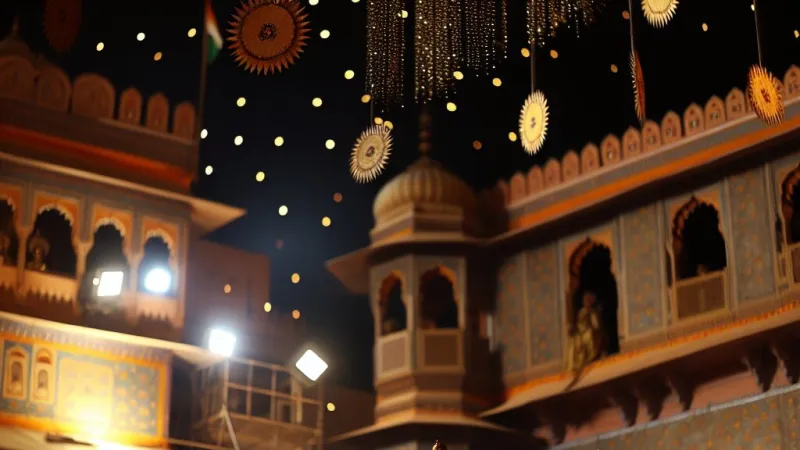
Day 3 is perhaps the most visually splendid. The city pulses with life as a grand procession marches along the banks of Lake Pichola, featuring women carrying idols on their heads, camels and elephants draped in brocade, and musicians playing exuberant tunes. Communities gather for sumptuous feasts, sampling Rajasthani thalis, ghevar, and other sweets. As dusk falls, the festival concludes with a magnificent display of fireworks reflected on the lake, and collective prayers for the well-being of all.
---
Significance to Tourism and Local Economy
Udaipur, often called the ‘City of Lakes’, transforms into a global village during the Mewar Festival. Tourists from Mumbai to Manipur, and even from countries like France and Japan, flock to witness the spectacle. Rajasthan’s tourism department actively promotes the event, offering curated packages that include palace tours, boat rides on Lake Pichola, and participation in festival activities. The festival has become a key driver for cultural tourism, positioning Udaipur among India’s top heritage destinations.The economic ripple-effect is evident in every corner of the city. Artisans, weavers, potters, and local vendors display their wares at bustling bazaars and fairs, earning a significant portion of their annual income. Hotels are booked months in advance, while guides, taxi drivers, and restaurateurs experience a welcome surge in demand. By bringing the traditional crafts to a wider market, the festival encourages their preservation in the face of increasing mass-produced alternatives.
Moreover, for visitors, the Mewar Festival offers an authentic immersion into India’s intangible heritage—far beyond what any museum could provide—thus fostering respect and understanding across cultures.
---
Contemporary Relevance and Challenges
As with many culturally rich festivals, the Mewar Festival grapples with the twin challenges of preserving authenticity and meeting modern demands. On one hand, there are heartening innovations: workshops teach not just miniature painting but also fusion crafts like blue pottery with modern motifs, attracting urban youth. Social media campaigns and blogs now document the festival’s highlights, inviting greater participation and awareness, including among the Indian diaspora abroad.However, the festival also risks drifting away from its roots due to overt commercialisation. The influx of tourists sometimes threatens to turn genuine rituals into mere performances. Balancing vibrant celebrations with core values rests on the shoulders of organisations like the Maharana of Mewar Charitable Foundation. They, along with resident communities, have taken steps to maintain eco-friendly practices—such as banning plastic, promoting organic colours for rangoli, and ensuring that local voices remain central to the proceedings.
By involving school children in essay competitions, painting contests, and drama performances themed on Mewar’s heritage, organisers are gently but surely sowing seeds of cultural pride and sustainability.
---
Conclusion
The Mewar Festival is not merely a string of colourful processions or musical evenings; it is the soul of Mewar, brought to life with every step, song, and shared meal. Its ability to blend spiritual devotion with social celebration, and regal tradition with grassroots participation, makes it a living cultural phenomenon. In every twirl of the Ghoomar dancer and in the laughter ringing out during community feasts, we glimpse the true spirit of Rajasthan—resilient, joyful, and ever-evolving.At a time when the world is rapidly changing, the Mewar Festival reminds us of the richness of our past and the importance of celebrating it. Participation in such festivals nurtures unity, pride, and an awareness of India’s deep cultural roots. For students like me, writing about and experiencing the Mewar Festival is not just an academic exercise but a heartfelt tribute to India’s glorious diversity. As the lamps are lit each spring in Udaipur, may this celebration continue to inspire generations, keeping alive the timeless values of the Mewar legacy.
Rate:
Log in to rate the work.
Log in