How to Introduce Yourself on Fresher’s Day
This work has been verified by our teacher: 16.01.2026 at 19:48
Type of homework: Essay Writing
Added: 16.01.2026 at 18:54
Summary:
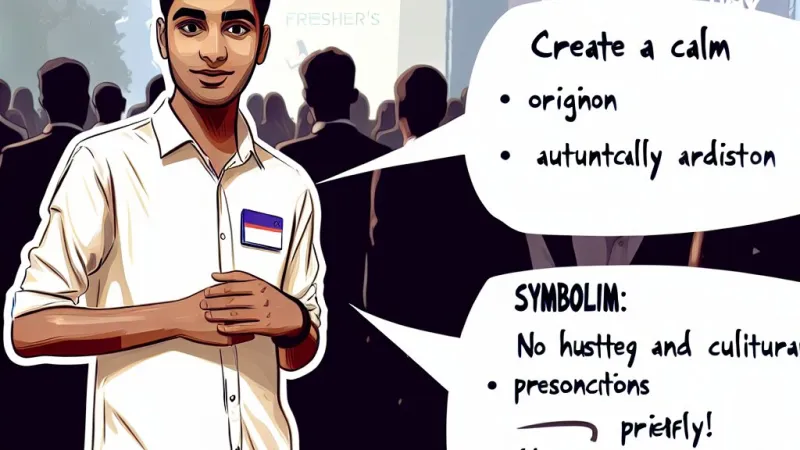
Autoprezentacja na Fresher’s Day: przedstaw się krótko (imię, pochodzenie, zainteresowania, cele), bądź autentyczny, kulturalny, ćwicz i miej pewność siebie. 🎓
Self Introduction for Fresher’s Day: Crafting the Perfect First Impression
The moment the fresher’s day invitation lands in your inbox, excitement tinged with a hint of nervousness sets in. Every year, across Indian colleges and universities, the celebration of new beginnings takes centre stage at the fresher’s event, serving as a vibrant platform for first-year students to present themselves to their seniors, professors, and peers. The importance of this introduction stretches beyond the formalities—it is an opportunity to sketch the very first image of oneself in the vast canvas of campus life. In this essay, I explore the nuances of self-introduction on Fresher’s Day, tailored for the Indian education landscape, blending tradition, individuality, and the drive to belong.---
Purpose of a Fresher’s Day Introduction
The chief aim of a self-introduction on Fresher’s Day is to introduce oneself briefly, memorably, and authentically. While the ritual might appear formulaic at the outset, a well-crafted self-intro goes a long way in establishing rapport with classmates, faculty, and support staff. It is your first handshake of sorts—with words—which can spark friendships, mentorship, and collaborative opportunities in the months to come.An effective introduction should achieve several things: - Present your basic identity clearly. - Share an insight into your interests and background. - Communicate your aspirations and values. - Extend an open invitation for future conversation or support. Above all, it should reflect your true self, balancing humility and confidence.
---
The Importance of First Impressions in an Indian Educational Context
Indian campuses have their own flavour and culture. Whether you are joining a traditional institution like Presidency College in Kolkata, a modern techno-campus like IIT Bombay, or a small-town degree college, expectations may differ, but certain values remain constant: respect for elders and teachers, the desire to blend in while also standing out, and a preference for community. Events like fresher’s day draw from local customs—some programmes might involve lamp-lighting (deep prajwalan), Saraswati Vandana, or a brief classical performance. In such settings, your introduction should be earnest, positively spirited, and culturally aware.Mahatma Gandhi once remarked, “Be the change you wish to see in the world.” Similarly, your self-introduction is your first opportunity to embody the contribution and change you intend to bring into your new institution.
---
Structure of the Ideal Self Introduction
I. Grabbing Attention: The Opening
Begin with an appropriate greeting, adapted to the formality of the occasion. If teachers and the principal are present, a respectful “Good morning, respected Principal, esteemed faculty, and dear friends,” works well. For smaller, peer-only gatherings, you can choose a lighter tone, such as “Hello everyone, I’m excited to join this family today.”Consider adding a touch of personal warmth—a line such as, “My heart is pounding as I face so many bright minds together in one hall—so I’ll keep my words short and sweet,” immediately breaks the ice, softening the mood and inviting attention.
II. The Essentials: Identity and Academic Details
State your full name slowly and clearly, perhaps repeating your nickname if you have one. Mention your hometown—India’s diverse geography ensures that simply saying “from Jaipur” or “from the banks of the Godavari in Nashik” will trigger immediate context or curiosity. If your hometown is lesser-known, share a quirky fact: “I come from Barpeta, Assam—famous for its Bihu celebrations and golden rice fields.” Follow this with your course, department, and year, for example: “I am a first-year student in BSc Microbiology.”Avoid lengthy family histories, unless the college or local culture expects such sharing (in some small towns, a mention of family background is considered polite).
III. Academic Interests: More Than Just Marks
After your basic details, add a line about your previous school and academic stream, as it helps teachers and students to place you academically. For example, “I completed my 12th from Kendriya Vidyalaya, Chittoor, with a focus on Science.”Mention one academic interest or subject you are passionate about. Instead of generic statements like “I love science,” personalise it: “Chemistry fascinates me, especially when I unravel the colours and reactions in the lab—my favourite project last year was preparing natural indicators from hibiscus flowers.” This not only shows your academic engagement but hints at your curiosity and initiative.
IV. Personal Qualities and Extracurricular Flair
Colleges look beyond bookish talent. Highlight two or three qualities relevant to campus life, with short evidence. “I am collaborative by nature—I used to organise maths study groups in school, learning as much from teaching my friends as from teachers.” If you play an instrument, sing, code, debate, dance, or volunteer, mention it, along with your intent for the future: “I love playing tabla and hope to join the college music club—for me, rhythm is as essential as reasoning.”Keep a balanced tone—confidence gives energy, but so does humility: “Though I was captain of my school football team, I look forward to learning from seniors here.”
V. Aims for the Year: Short-Term Goals
Speak of what you hope to achieve in your first year: - “I wish to adapt quickly to the academic pace and participate actively in lectures.” - “I plan to join the debating society to overcome my stage fright and sharpen my public speaking.” - “I look forward to exploring the library’s resources and contributing to the literary club.” Such statements show proactiveness and openness to learning, important qualities in any educational institution. Mention explicitly if you appreciate collaboration or mentorship: “I am eager to seek guidance from my seniors and collaborate on new ideas.”VI. Long-Term Vision
If you have a career path in mind, phrase it as a hope, not as a rigid plan: “In the longer run, I aspire to pursue research in environmental science—this college’s reputation for its eco-initiatives is one reason I chose it.” Or, “I am preparing for civil services, and I hope these next three years will give me broad exposure.”VII. Your Contribution: Giving Back
No college is a one-way street. Express how you plan to serve the community—organising events, assisting in academic clubs, or helping fellow students. “I have experience handling social media for my school’s website, and would love to support our college fests in a similar way.” This signals leadership and approachability—a winning combination!VIII. Concluding Warmly: The Closing Note
Wrap up with gratitude: “Thank you for making us feel welcome. I look forward to creating memories, learning, and growing with all of you.” An easy invitation signals openness: “I would be delighted to connect—please say hello after the event.”---
Cultural and Linguistic Tips for Indian Campuses
Depending on where in India your college is, code-switching into a line of Hindi, Tamil, Bengali, or your mother tongue (if it resonates with the crowd) adds warmth. A soft “Dhanyavaad” or “Shukriya” at the end can win hearts, provided you’re comfortable. Avoid over-formal language or attempts at forced humour—genuine style is remembered best. Dress appropriately, as Indian colleges, especially outside metros, value modest attire for such events.---
Delivery and Stage Presence
A practical introduction lasts 60–90 seconds. Rehearse at home, in front of a mirror or a friend. Emulate the conviction of Dr. APJ Abdul Kalam, whose speeches won crowds not just through words, but through genuine passion and directness. Make eye contact—move your gaze across the hall, acknowledging different sections. Speak audibly, pausing at commas, and stand straight.Avoid cluttering your introduction with jargon or inside jokes. Name badges, if provided, are helpful, as is carrying a small note-card (for reference only—don’t read from it).
---
Common Mistakes to Avoid
- Don’t turn your introduction into a life story. - Balance achievement with sincerity—neither boast nor humble-brag. - Never use slang or jokingly reference teachers. - Stick to your time slot.---
Following Up After Fresher’s Day
The introduction isn’t the end. Share a compact version in online college groups, introduce yourself afresh in smaller club meetings, and seek out those who showed interest during your speech.---
Conclusion: The Three Pillars—Preparation, Practice, Personality
A memorable self-introduction for Fresher’s Day in India is an art. It sits at the intersection of cultural sensitivity, personal clarity, and spirited ambition—a blend best achieved with preparation, practice, and authenticity. Remember, this is not a test to pass or fail, but a door to the friendships and achievements that await you. Craft your introduction with care, deliver it with heart, and step confidently into your college journey—your new beginning is already underway.All the best, and as Rabindranath Tagore said, “Let your life lightly dance on the edges of time like dew on the tip of a leaf.” Let your self-introduction sparkle just as brightly!
Rate:
Log in to rate the work.
Log in