10 Lines on Celebrating National Festivals in India
This work has been verified by our teacher: 23.01.2026 at 17:51
Type of homework: Essay Writing
Added: 21.01.2026 at 10:17
Summary:
Discover 10 lines on celebrating national festivals in India, learning about Independence Day, Republic Day, and Gandhi Jayanti with patriotic insights. 🇮🇳
10 Lines on National Festivals Celebration
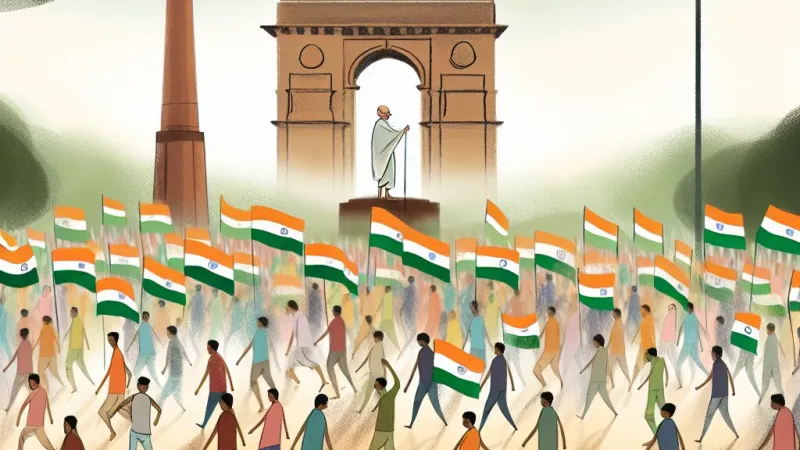
National festivals hold a special place in the heart of every Indian. Unlike regular cultural or religious festivals, national festivals are celebrated by people all over the country, regardless of their language, religion, or region. These festivals are dedicated to remembering the important moments from our country’s past and to honour the leaders who shaped our freedom and democratic ideals. When the tricolour is hoisted high and the air is filled with patriotic songs, every Indian feels a deep sense of pride and belonging.
In India, national festivals are more than mere holidays — they are occasions that remind us of our shared heritage and dreams as a nation. Through these celebrations, we look back at our journey from being under foreign rule to becoming an independent and democratic nation. More importantly, these special days encourage the younger generation to understand and value the sacrifices that give us our freedom.
Among a host of national celebrations, three days are marked as the pillars of our unity: Independence Day (15th August), Republic Day (26th January), and Gandhi Jayanti (2nd October). These festivals are not only about remembering history, but also about looking forward with hope and responsibility.
Historical Background of National Festivals
India’s national festivals are directly tied to major turning points in our nation’s story.Independence Day
On 15th August 1947, India gained freedom from almost two centuries of British rule. This day symbolises the victory of truth, bravery, and unity over oppression. The memories of leaders like Pandit Jawaharlal Nehru unfurling the tricolour at the Red Fort, and the stories of freedom fighters such as Bhagat Singh, Rani Lakshmibai, and Netaji Subhas Chandra Bose, awaken the spirit of patriotism in every citizen. Independence Day is a reminder that the liberty we enjoy today came at a great cost — through the selfless sacrifices of countless sons and daughters of our motherland.Republic Day
Republic Day on 26th January marks the day when our independent nation adopted its *own* Constitution in 1950. It celebrates the birth of India as a sovereign, secular, and democratic republic. The grand parade held at Rajpath in New Delhi, with colourful tableaus, military displays, and folk dances, brings alive the diversity and vibrancy of India. Republic Day stands for our promise of unity in diversity and the rights and duties that come with being a citizen of a free country.Gandhi Jayanti
Gandhi Jayanti, celebrated on 2nd October, is the birth anniversary of Mahatma Gandhi. Revered as the ‘Father of the Nation’, Gandhiji’s principles of non-violence, truth, and simplicity continue to inspire millions. On this day, people pay homage to his teachings by organising cleanliness drives, prayers, and cultural activities focused on peace and social harmony.School Celebrations: Engaging Students in National Festivals
Schools play a crucial role in bringing national festivals to life for the younger generation. Within their classrooms, corridors, and playgrounds, students experience the spirit of these days through active participation.The day often begins with a flag hoisting ceremony, where all students and teachers gather respectfully, singing the National Anthem ‘Jana Gana Mana’ with hands on their hearts. This simple act fills everyone with a profound sense of pride. Speeches, both by teachers and students, shed light on the importance of the day and the heroes who made it possible.
Dramatic enactments and short skits on famous events — like the Dandi March or the Quit India Movement — make history come alive. Dance performances and songs such as ‘Ae Mere Watan Ke Logon’ or ‘Vande Mataram’ remind everyone of India’s struggle and unity.
To further enhance participation, competitions are held — students write essays, paint the tricolour, make creative crafts from saffron, white, and green, and take part in quizzes about Indian history and geography. The National Cadet Corps (NCC) often performs a disciplined march past, epitomising the values of unity and teamwork.
The entire school is usually decked up with balloons and paper cut-outs in the saffron, white, and green of our flag, while students come dressed in ethnic attire or as famous personalities — like Sardar Vallabhbhai Patel with his iconic walking stick, or Sarojini Naidu draped in a graceful saree.
Community Participation in National Festivals
The celebration of national festivals is not limited to schools. Across cities, towns, and villages, people gather in community halls, parks, and at famous monuments. Housing societies organise collective flag hoisting, patriotic singing, and fancy dress competitions where even the youngest children dressed as Chacha Nehru or Jhansi ki Rani receive hearty applause.On Gandhi Jayanti, many neighbourhoods hold cleanliness drives, inspired by the Swachh Bharat Mission. People sweep streets, plant saplings, and spread awareness about hygiene, echoing Bapu’s dream of a clean India.
At a broader level, the President’s and Prime Minister’s addresses are broadcast on television and radio, reaching crores of citizens. These messages often remind us of our responsibilities as Indians and urge everyone to contribute to the nation’s progress.
One of the most beautiful aspects of national festivals is how they bring together people from every background — Hindus, Muslims, Sikhs, Christians, all standing side by side, singing ‘Sare Jahan Se Achha’. Folk dancers representing the colours of Kerala, Punjab, Assam, and Tamil Nadu perform, reflecting the strength of our unity in diversity.
The media plays a vital role too, bringing stories of celebration, sacrifice, and hope into the homes of millions through live telecasts, special programmes, and inspiring interviews.
Significance of National Festivals in Building Patriotism and Unity
The true gift of national festival celebrations lies in what they teach us. For young students in particular, these days are a living lesson in history, ethics, and citizenship.Through the celebrations, children learn to respect the national flag, stand at attention for the anthem, and value the hard-fought independence we enjoy. Stories of youth icons like Shaheed Bhagat Singh or the wisdom of Dr. B.R. Ambedkar inspire a sense of purpose and responsibility.
National festivals wipe away differences — on these days, our common identity as Indians takes centre stage. Caste, creed, language, and religion become secondary, and the message of “Ek Bharat, Shreshtha Bharat” (One India, Best India) is truly felt.
Events like community clean-ups, plantation campaigns, or even group recitations of the Preamble instil habits of service, discipline, and teamwork. Celebrating together is a gentle but powerful reminder that India’s future depends on our collective, everyday actions.
Modern Trends and Challenges in Celebrating National Festivals
As times change, so do the ways we celebrate. With more families living in cities and children often confined indoors, technology has opened up new avenues. Schools and communities now organise online flag hoistings, virtual storytelling and art competitions, and share patriotic messages on WhatsApp, Instagram, and YouTube. During the pandemic, these innovations helped keep the spirit alive from the safety of our homes.However, there are challenges. Sometimes, the focus shifts to buying tricolour-themed merchandise or clicking selfies, rather than reflecting on the festival’s true meaning. It is important that celebrations remain rooted in their real purpose — remembering, learning, and serving.
Despite the hustle of modern life, it is possible to keep traditions strong. Simple acts — standing in silence for the anthem, discussing the lives of great leaders at home, or helping organise a neighbourhood event — go a long way.
Conclusion
National festivals go far beyond being just dates on a calendar. They are the stitches that hold the great fabric of India together. Through celebrations at schools, homes, and in our hearts, we remember our past, cherish our present, and look to the future with hope.As young citizens and the nation’s future, it is our duty to actively take part in these celebrations — not just as spectators, but as proud, responsible Indians. Let us pledge to keep the love for our country alive every day, to uphold the values our leaders stood for, and to carry forward this glorious legacy for generations to come.
May each national festival rekindle in us the spirit of unity, service, and pride, fulfilling Rabindranath Tagore’s dream of a country “where the mind is without fear and the head is held high.”
Rate:
Log in to rate the work.
Log in