10 Important Points on Hand Washing for Kids in India
This work has been verified by our teacher: 14.03.2026 at 12:38
Type of homework: Essay Writing
Added: 11.03.2026 at 13:55
Summary:
Discover 10 important points on hand washing for kids in India to learn why this simple habit protects health and prevents the spread of germs daily.
10 Lines on Hand Wash
In our everyday lives, the use of hands is almost constant – from picking up books to sharing tiffin, greeting elders, or playing with friends. Hands are our bridges to the world, helping us learn, work, and care for others. Yet, as essential as they are, our hands also carry invisible passengers: germs. Hand washing, a habit taught in homes, schools, and even by our elders like Daadi and Naani, stands out as one of the simplest yet most effective ways to keep ourselves and our communities healthy. In the Indian context, where tradition melds with modern health challenges like pandemics, the act of washing hands is more than routine—it is a protective measure, a mark of good upbringing, and a civic responsibility. This essay will highlight, through ten interlinked points, why hand washing deserves a place of pride in our daily rituals.
---
The Role of Hands in Our Health and Daily Life
Our hands touch countless surfaces through the day—doorknobs, notebooks, playground equipment, currency notes, and even animals. In India, where family, festivals, and social interaction are frequent, the risk of transmitting germs through physical contact is especially high. Small children playing gilli-danda or handling street food after touching dusty lanes easily invite germs. Research from the Indian Council of Medical Research (ICMR) has revealed that contaminated hands are a major cause of common illnesses such as diarrhoea, jaundice, and respiratory infections. Even simple acts—touching the face, rubbing the eyes, or eating snacks—can bring germs from fingers directly into our bodies. These invisible microbes, though unseen, have the power to spread sickness quickly across homes, classrooms, and entire communities.---
Understanding Hand Washing: Definition and Need
Hand washing refers to the act of cleaning your hands thoroughly with soap and clean water to remove dirt, grease, and germs. In situations where water isn’t available, alcohol-based sanitizers may be used. While the practice may seem basic, the science is strong—soap molecules break down the fat layers of germs and viruses, making them easy to wash away. Mere rinsing with water, as is often mistakenly done in haste, is not enough. The ritual becomes especially crucial after certain activities: using the toilet, before eating, after blowing one’s nose, handling pets, returning home from crowded places, or after playing outside. In our local context, with street food culture and joint families, hand washing serves as a frontline defence against the spread of infections.---
Method Matters: The Correct Way to Wash Hands
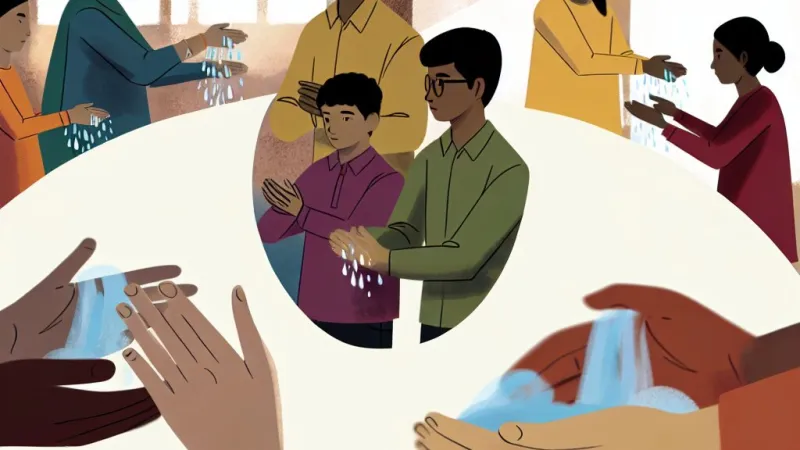
Mahatma Gandhi once said, “Sanitation is more important than independence.” This thought echoes in the precise method of hand washing, which demands not just intention but technique. The effective steps include:1. Wetting hands with clean, running water—ponds or stagnant water should be avoided. 2. Applying enough soap to cover all hand surfaces. 3. Rubbing palms, back of hands, and cleaning between fingers thoroughly. 4. Scrubbing the tips of fingers, base of the thumbs, and wrists as germs often hide in folds. 5. Lathering for at least 20 seconds—about the time taken to recite the Gayatri mantra or sing the first verse of Jana Gana Mana. 6. Rinsing well so no soap or dirt remains. 7. Drying hands completely, preferably with a clean towel or by air-drying.
Often, hands are washed hurriedly or dried on unclean cloth, defeating the purpose. Careful washing, as advocated in many health education campaigns, ensures all germs are eliminated.
---
Benefits of Regular Hand Washing
The benefits of regular and proper hand washing are manifold, especially in a populous country like India where diseases can easily escalate. First, it dramatically reduces the likelihood of gastrointestinal infections—diarrhoea, typhoid, and worm infestations, which are still common in many rural and urban areas. Second, it cuts down cases of respiratory tract infections such as colds, viral fever, and the much-feared Covid-19. Further, it prevents cross-contamination in shared spaces like schools, temples, or offices. By lowering disease transmission, communities spend less on healthcare and children miss fewer school days, supporting both national health and education goals.---
Hand Sanitizers: Where They Fit In
Hand sanitizers—those small bottles we now see dangling from schoolbags or available at metro stations—offer convenience, especially where water supply is erratic. Alcohol-based sanitizers (with at least 60% alcohol) can kill many germs but do not remove physical dirt. They are ideal after handling money, during travel, or in markets where soap and water are absent. However, after contact with grease or visible dirt, only soap and water will suffice. Overuse of sanitizers can cause dry skin or allergies. In India, with varying access to clean water, hand sanitizers are a useful supplement but can never fully replace traditional washing, as reinforced by public health experts.---
Challenges and Common Myths About Hand Washing in India
Despite increasing awareness, there exist persistent challenges. Some believe that a quick rinse with water alone is sufficient, while others avoid hand washing to save time or water. In rural areas, lack of access to clean water remains a real barrier. Old habits like using soil or ash, though traditional, are not as effective as soap. Cultural misconceptions, such as associating hand washing mainly with high-caste rituals before prayer, limit the practice’s acceptance as a health necessity for all. However, government-led campaigns such as Swachh Bharat Abhiyan and midday meal programme hygiene reminders have started to shift mindsets by bringing the importance of handwashing to the forefront of public consciousness.---
The Role of Schools, Families, and Community
India's future rests in the hands of its young generation. Schools play a crucial role in teaching correct hand washing practices through special assemblies, demonstrations, and hand washing stations near kitchens and toilets. Posters in classrooms and competitions during Global Handwashing Day create awareness in playful ways. Families, too, set examples—mothers reminding siblings to wash hands before meals becomes a lifelong lesson. Even community-wide efforts, such as TV advertisements featuring Bollywood icons or health workers doing door-to-door campaigns, have made significant impacts in both rural and urban belts. By making hand hygiene a shared responsibility, societies move towards better overall health and productivity.---
Hand Washing and the Fight Against Covid-19
The coronavirus pandemic reshaped our approach to hygiene. Health organizations like WHO and India’s Ministry of Health repeatedly instructed the public on the “do’s and don’ts” of hand hygiene. During lockdowns, handwashing became a household mantra—an act as vital as wearing a mask. Ration shops and police checkpoints displayed demonstration banners on proper handwashing, and sanitizer dispensers sprang up even in remote railway stations. Now, as we return to normalcy, these lessons must not be forgotten. Sustainable hand hygiene forms the backbone of India’s preparedness against future outbreaks—be it viral diseases, seasonal flu, or bacterial infections.---
Environmental Considerations and Practical Tips
While promoting hand washing, it is important to remember India’s concern with water conservation. Efficient techniques, such as turning off the tap while lathering, using a bowl during scarcity, or carrying a pocket-sized sanitizer, support hygiene without waste. Municipal campaigns educate residents about these eco-friendly practices, showing the balance between health and environmental wisdom.---
Rate:
Log in to rate the work.
Log in