Understanding the Metaverse: A New Era in Digital Innovation
This work has been verified by our teacher: 10.03.2026 at 18:33
Type of homework: Essay Writing
Added: 9.03.2026 at 12:11
Summary:
Explore the metaverse to understand its digital innovation, origins, and impact on education and technology shaping India's future learning landscape.
Paragraph on The Metaverse
In the rapidly changing landscape of technology, the notion of the “metaverse” has emerged as a remarkable innovation, stirring discussions across academic circles, industry forums, and among students in India. The metaverse, essentially a digital universe which merges physical and virtual reality, is much more than a fleeting technological trend; it is being hailed as the next significant leap, akin to the arrival of the internet in the late 1990s. Just as the introduction of broadband and smartphones revolutionised daily life for Indian families—from railway bookings via IRCTC to real-time class notes on WhatsApp—so too does the metaverse promise to redefine not only communication and entertainment, but also education, work, and social connection. To understand what makes the metaverse so pivotal in present times, it is essential to grasp its origins, underlying technologies, applications, and the nuanced way it might shape India’s future.What Is the Metaverse?
The word “metaverse” comes from two roots—“meta” meaning beyond, and “universe”—together pointing to a realm that goes beyond our everyday reality. The metaverse refers to a vast, interconnected virtual world, where people interact not just through screens, but through 3D avatars and immersive environments. Unlike the typical flat internet webpages and social media feeds, the metaverse offers experiences that feel spatially real, enabling users to walk through digital streets, attend classes, visit museums, or meet friends at a virtual chai stall— all while sitting comfortably at home. Technologies like Virtual Reality (VR), which engulf users in a digital world through headsets, and Augmented Reality (AR), which overlays digital imagery on the real world using devices like smartphones and smart glasses, allow the metaverse to come alive in remarkable ways.For example, in India, the popular game “PUBG Mobile” attracted crores of students not just for its gameplay, but for its social experience and sense of connection. Similarly, academicians at IITs have already begun exploring virtual classrooms, where students in rural Haryana or hilly Sikkim can collaborate as if they were all in the same laboratory in Chennai or Mumbai. At its heart, the metaverse is about turning imagination into an interactive space—breaking free from borders, time zones, and even physical limitations.
Technological Pillars of the Metaverse
The grand vision of the metaverse is built upon several technological pillars. Firstly, VR headsets—such as Oculus Quest or locally available options—immerse users into computer-generated worlds. AR tools like Google Lens are already in use in classrooms, letting children see 3D models of plants or science phenomena. All of these demand high-speed internet connectivity; hence, government schemes like BharatNet and the 5G rollout by Indian telecom companies are crucial in making metaverse experiences widely accessible.Moreover, blockchain technology underpins digital ownership in the metaverse. Through blockchain, people can buy and sell digital land, art, music, and even items for their digital characters—transactions recorded securely in a decentralised manner. For instance, Indian artists have begun selling digital paintings as “NFTs” (Non-Fungible Tokens), while startups in Bengaluru and Hyderabad are creating marketplaces for such assets.
Artificial Intelligence (AI) is another critical enabler—it helps design lifelike virtual environments and digital companions who can respond to users intelligently. With advances in Indian IT and software sectors, including contributions from global companies with large Indian teams, these technologies are rapidly finding their way into both commercial and educational applications.
Applications: Beyond Games and Gadgets
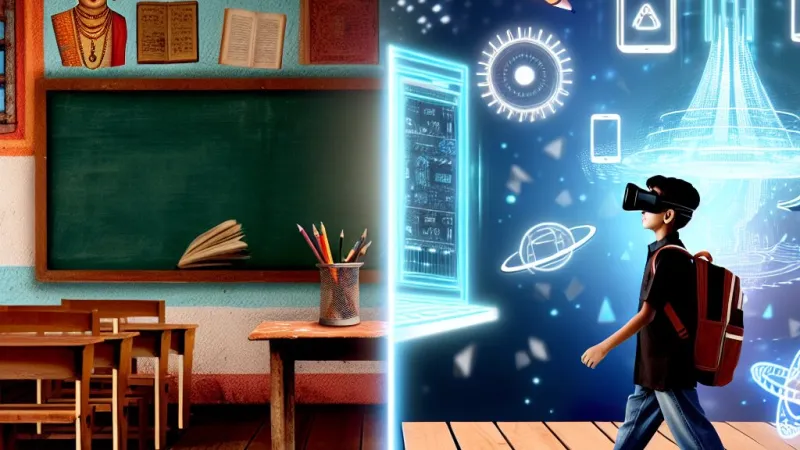
While gaming remains a prominent entry point for most young Indians into the metaverse, its applications extend much further. In education, virtual classrooms can break geographical and economic barriers—imagine a history lesson where students don VR headsets to witness the splendour of the Vijayanagara Empire, or a biology class navigating the human body at the microscopic level. Educational initiatives like Byju’s or Vedantu have shown Indian parents and students the power of digital learning; the metaverse could elevate this to an even more interactive stage.In healthcare, surgeons can practise complex operations on virtual models before performing the actual procedures, reducing risk and increasing confidence. Already, AIIMS Delhi and other top institutes have started using simulations for medical training. Businesses are also experimenting with virtual showrooms—Tata Motors unveiled new car models to remote buyers via 3D experiences, while jewellery brands have started offering customers the chance to “try on” ornaments virtually.
During the COVID-19 pandemic, the need for remote interaction became clear as schools moved online overnight. The metaverse could provide richer, more connected experiences—even rural areas with limited physical infrastructure could host virtual fairs, job seminars, or cultural festivals. For millions of young Indians, including students in the country’s smallest towns, this could be transformational in accessing high-quality education, jobs, and creative opportunities.
Social and Cultural Impact: An Indian Context
The metaverse’s influence on culture and society in India is poised to be significant and complex. On one hand, it allows new forms of cultural celebration and dissemination. Regional art forms such as Kathakali, Yakshagana, or Bihu dance could be showcased to international audiences via virtual festivals, making Indian culture visible on a global stage. Interactive digital exhibits from museums like the Salar Jung Museum or Indian Museum Kolkata can draw millions of visitors, even from remote corners of the nation.Communication is also evolving. Instead of text chats or simple video calls, friends and family can “meet” as lifelike avatars in replicas of places like Connaught Place, Marine Drive, or the beaches of Goa. For persons with disabilities, customisable virtual settings can remove barriers—allowing access and participation in events without physical constraints.
However, there are also critical challenges. Excessive time spent in virtual environments can lead to social isolation. Just as concerns over smartphone addiction are debated in Indian homes, responsible use of the metaverse needs to be guided by parents and teachers. Furthermore, the digital divide in India remains stark—while urban students may access the latest gadgets, many rural or underprivileged children struggle with basic connectivity. This raises important questions about equity and inclusion in the digital future. Privacy and data protection are also concerns; as more personal information is shared in the digital universe, robust regulations and digital literacy become all the more vital.
A Brief History: Charting the Path to Today
While the term “metaverse” was popularised internationally by science fiction novelist Neal Stephenson, its practical development was gradual and often inspired by video games like “Second Life” or “Minecraft,” which enabled players to build and inhabit virtual worlds. In India, games such as “Ludo King” and “Free Fire” illustrated how virtual spaces could bring together users of all backgrounds, ages, and regions.Over time, technological leaps—affordable smartphones (the Jio revolution), cheaper data rates, and the government’s Digital India initiatives—laid the groundwork for more ambitious digital projects. Global companies like Meta (formerly Facebook) have announced big plans for the metaverse, but Indian IT majors and startups are not far behind, developing their own platforms and tools. Indian engineers and designers are at the forefront, adding a unique flavour to how “made in India” virtual worlds will develop.
Looking Ahead: Possibilities and Challenges
The future of the metaverse in India is filled with promise, but it is also fraught with hurdles. With India being one of the world’s youngest online populations—a staggering number of school students are already proficient in digital literacy—there is a natural readiness to embrace new platforms. As sectors like hospitality, tourism, manufacturing, and even governance envision “virtual twin” experiences, job opportunities will spring up in design, software, training, digital commerce, and even virtual event management.However, for this dream to become reality, attention must be paid to infrastructure (faster internet in rural areas), affordable hardware (cheaper headsets and devices), and education (digital skills and ethics). The government’s National Education Policy 2020 already stresses technological integration and digital literacy, placing India in a strong position to prepare its youth for new-age careers.
On the flipside, questions of data security, ethical behaviour in anonymous virtual spaces, and maintaining a balance between online and offline life are not trivial. Regulatory measures, transparency in digital transactions, and active digital citizenship awareness will be key to harnessing the metaverse’s positive potential without falling prey to its dangers.
Rate:
Log in to rate the work.
Log in