Interesting Facts About Gorillas: A School Essay for Students
This work has been verified by our teacher: 15.01.2026 at 20:58
Type of homework: Essay Writing
Added: 15.01.2026 at 20:21
Summary:
Esej opisuje biologię, życie społeczne i zagrożenia goryli oraz podkreśla potrzebę ich ochrony i edukacji na temat ich roli w ekosystemie. 🦍
The Fascinating World of Gorillas: A Comprehensive Study
Introduction
In the grand mosaic of the animal kingdom, gorillas occupy a unique and awe-inspiring place. These magnificent creatures, known for their imposing build and gentle eyes, have long fascinated nature enthusiasts and scientists alike. Gorillas are not just among the largest primates in the world; they are also our distant relatives, sharing a staggering portion of their DNA with humans. This genetic closeness, combined with their crucial role in forest ecosystems and the challenges they face in the wild, makes them a subject of immense interest and concern. As we delve into their physical traits, ways of life, habitats, family bonds, and the ongoing struggle for their survival, it becomes clear how urgent it is to understand and protect these animals. This essay will throw light on various aspects of gorillas, aiming to spark awareness and empathy among students in India and beyond.Taxonomy and Classification
Scientific classification helps us understand where gorillas fit in the grand scheme of living beings. Gorillas belong to the Kingdom Animalia, Phylum Chordata, Class Mammalia, Order Primates, Family Hominidae, and Genus Gorilla. As great apes, gorillas are set apart from monkeys by their larger size, greater intelligence, and by lacking tails. The primate order also includes creatures like monkeys, gibbons, orangutans, and our own species.Gorillas fall under two main species: the Western Gorilla and the Eastern Gorilla. The Western Gorilla has two subspecies – the Western Lowland Gorilla and the Cross River Gorilla. The Eastern Gorilla is split into the Mountain Gorilla and the Eastern Lowland Gorilla. Each of these gorilla types has adapted uniquely to its environment. Interestingly, genetic research has shown that gorillas share about 98% of their DNA with humans – a fact that has often been mentioned by Indian nature documentaries and textbooks, underlining the close evolutionary link between us and these gentle giants.
Physical Characteristics
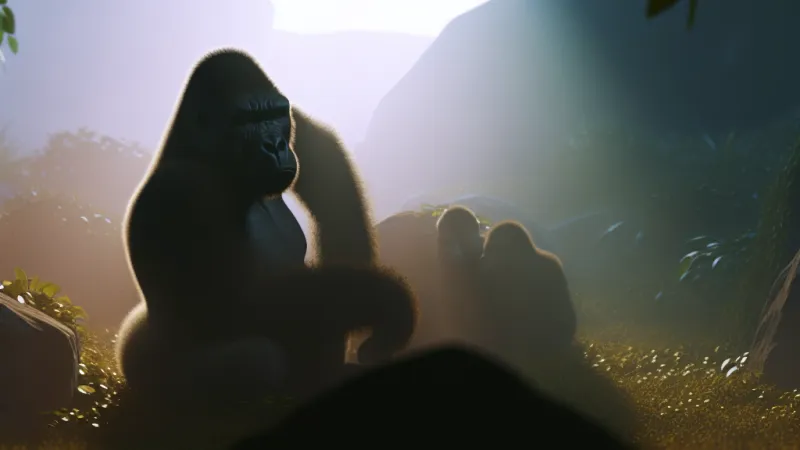
When one imagines a gorilla, the image that comes to mind is of an immensely strong creature, covered in thick, black or greyish fur. Adult gorillas stand about 4 to 6 feet tall when upright, and adult males, especially the silverbacks (named for the silvery stripe running across their backs), can weigh up to 180 kg or even more, which is almost three times the weight of an average healthy adult Indian man.Their long and powerful arms, longer than their legs, serve them well for knuckle-walking – a style of locomotion unique to great apes. You will notice that unlike monkeys seen in Indian jungles, such as the langur or rhesus macaque, gorillas do not have tails. Their faces feature prominent brow ridges, flat noses, and large, expressive eyes, offering a glimpse into their intelligence and emotions.
One of the striking aspects of gorillas is sexual dimorphism. Fully grown males are much larger and stronger than females. The silverback male, with his iconic grey hair on the back, leads and protects the group. Their physical adaptations, such as opposable thumbs and strong fingers, make them capable of manipulating objects and even using basic tools in the wild.
Natural Habitat and Distribution
Unlike the common monkeys and langurs found near Indian temples and forests, gorillas are native to the dense tropical and subtropical forests of Central and West Africa. They roam the remote mountain forests of Rwanda, Uganda, and the Democratic Republic of Congo (DRC), as well as the vast lowland rainforests and swampy regions of Cameroon, Gabon, and neighbouring countries.Each species and subspecies has unique habitat preferences. Mountain gorillas, for instance, live in cooler, high-altitude forests, while Western Lowland Gorillas prefer the warmer, moist lowland forests. The changing seasons affect their movement, diet, and behaviour, much as the arrival of monsoon in India changes the patterns of our local wildlife.
Unfortunately, these habitats are under constant pressure from expanding agricultural land, illegal logging, mining, and settlement encroachment—reminding us of similar challenges faced by elephants and leopards in many parts of India. Such habitat loss greatly threatens gorilla survival, as it brings them into conflict with humans and reduces their access to food and shelter.
Behaviour and Lifestyle
Gorillas live a largely peaceful and communal life. Their days are spent foraging for food, feeding, grooming one another, resting in the shade, and playing – especially the young ones. Unlike the street dogs of Indian villages, gorilla groups are tightly bonded and work together for the welfare of all members.Their diet is primarily vegetarian: leaves, stems, fruits, and flowers make up most of their intake. Rarely, they may consume termites or ants. An adult gorilla might eat up to 30 kg of plant material in a day! Interestingly, like elephants in Indian forests, gorillas help regenerate the forest by spreading seeds through their droppings.
Knuckle-walking is their main way of moving, though they climb trees, especially the younger and lighter gorillas. They communicate using a variety of vocalisations—grunts, hoots, and chest beats—along with gestures and expressive glances. Studies have shown their remarkable intelligence: for example, Koko, a gorilla who was taught sign language, could use hundreds of signs to communicate with her caretakers. This level of intelligence is also observed in India’s own studies of monkeys and elephants.
Social Structure and Reproduction
A group of gorillas, called a troop or band, is typically led by a dominant silverback male. He ensures the safety and discipline of the group, making important decisions like choosing where to feed or when to move. The rest of the troop consists of several adult females, their offspring, and sometimes a few young males.Gorillas have a gestation period of about eight and a half months, not so different from humans. Usually, one infant is born at a time, and twins are a rare occurrence. The mother cares for her baby with boundless affection, carrying it everywhere and shielding it from danger. The silverback male also plays a protective role. As juveniles grow, they learn vital skills by observing elders, much like children learn from their elders in Indian joint families.
In the wild, gorillas can live up to 35 or 40 years. Those in zoos, often under better medical care and protected from predators, may live beyond 50 years.
Role in the Ecosystem
Gorillas play an essential role as “forest gardeners.” By eating fruits and dispersing seeds in their droppings, they help maintain the health and diversity of their forest habitats. This is similar to how Indian elephants open up thick forests for other animals and help new plants grow. Their presence ensures the survival of countless plant and animal species, underlining their status as a “keystone species” in their ecosystems.Conservation Status and Challenges
Despite their strength, gorillas are among the most endangered animals today. The Mountain Gorilla, for example, is listed as endangered, while the Cross River Gorilla is critically endangered according to the International Union for Conservation of Nature (IUCN). Current estimates suggest there are only a few thousand mountain gorillas left, and even fewer Cross River Gorillas.The major threats are habitat destruction due to deforestation, mining, and agriculture—as seen in much of India’s own environmental crises. Poaching, illegal hunting, and the wildlife trade have taken a toll, while diseases like Ebola have decimated entire populations. Human-wildlife conflict, often fuelled by poverty and lack of awareness, further threatens their existence.
However, there is hope. Several national parks across Africa have put strict protection measures in place. Anti-poaching teams, laws against illegal wildlife trade, breeding programmes in leading zoos, community awareness projects, and responsible eco-tourism are showing results. International collaborations (including participation from Indian scientists and NGOs) play a key role in sharing research and raising funds for gorilla conservation. Ultimately, the importance of such conservation efforts needs to reach students across India, cultivating a sense of global responsibility.
Gorillas and Human Culture
Gorillas have inspired countless books, documentaries, and even feature films. In India, television channels such as Doordarshan and National Geographic have aired educational programmes for school children showing the majestic life of gorillas and their struggles. These stories often highlight gorilla intelligence, their family bonds, and their leadership—values that resonate with our own culture. The question of whether gorillas should be kept in captivity is a complex one, stirring debate about ethics, animal rights, and education.More importantly, gorillas serve as global symbols for wildlife conservation. By learning about gorillas, students not only discover the wonders of the natural world but also understand the urgent need to protect it.
Rate:
Log in to rate the work.
Log in