Short Essay on Guru Tegh Bahadur Martyrdom Day for Students
This work has been verified by our teacher: 16.01.2026 at 6:29
Type of homework: Essay Writing
Added: 16.01.2026 at 5:34
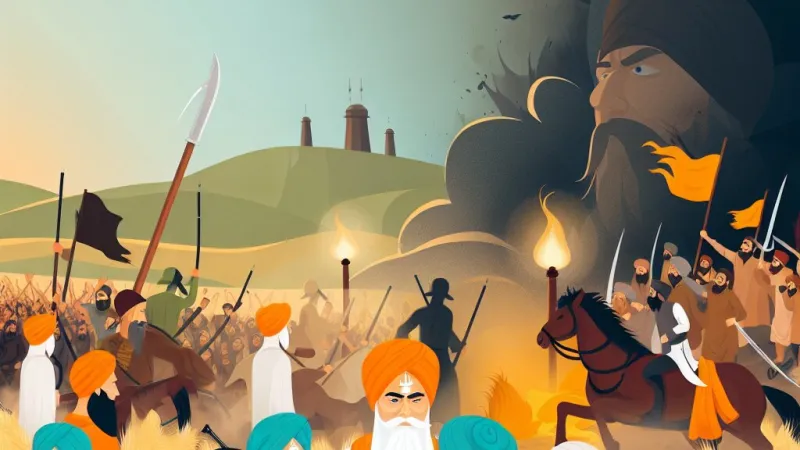
Summary:
Dzień Męczeństwa Guru Tegh Bahadura upamiętnia jego ofiarę za wolność religijną, odwagę i walkę o prawa człowieka w historii Indii. 🕯️
Essay Title: 10 Lines on Guru Tegh Bahadur Martyrdom Day
---Martyrdom occupies a sacred place in Indian history, revered not only for its heroism but also for its power to awaken society’s collective conscience. Across centuries, those who have laid down their lives for the country, for justice, or to defend the oppressed, are exalted as eternal torchbearers of truth. Among such souls, Guru Tegh Bahadur, the ninth Guru of the Sikhs, stands as a beacon of unmatched courage and sacrifice. His martyrdom is not just a chapter in Sikh history; it is a milestone for the whole nation, representing the resilience of the Indian spirit in the face of tyranny. Guru Tegh Bahadur Martyrdom Day is observed to remember and honour his supreme sacrifice for the cause of religious freedom and the protection of human rights—a narrative that deeply influences the Indian ethos even today.
---
Historical Background of Guru Tegh Bahadur
Guru Tegh Bahadur was born on 1 April 1621 at Amritsar, into the illustrious house of Guru Hargobind, the sixth Sikh Guru. His childhood was guided by teachings of spirituality and chivalry, instilling in him the values of fearlessness and compassion. Known initially as Tyag Mal, meaning "one who is detached," he earned the name ‘Tegh Bahadur’—‘the brave wielder of the sword’—due to his valour in battle beside his father. But it was not just martial courage that defined him; his spirituality and poetry enriched the Sikh tradition. As the ninth Guru, he contributed 115 hymns to the Guru Granth Sahib, Sikhism’s revered scripture, emphasising universal brotherhood, humility, and meditation.Guru Tegh Bahadur’s leadership extended beyond religious guidance. He founded Anandpur Sahib in 1665, which soon blossomed into a spiritual and cultural cradle for Sikhs and others seeking solace from social injustice. The Guru’s memory is immortalised in holy sites across India, most notably at Gurudwara Sis Ganj Sahib in Delhi, built at the site of his martyrdom, and Gurudwara Rakab Ganj, where his body was cremated—both standing today as active centres of remembrance and reflection.
---
Context and Reasons for Martyrdom
To truly value Guru Tegh Bahadur’s sacrifice, one must understand the India of his times. The Mughal Emperor Aurangzeb’s reign, spanning the latter half of the 17th century, was marked by religious zealotry and systematic attempts to impose one faith upon all. Policies that engineered forced conversions, especially targeting Kashmiri Pandits and various Hindu communities, created an atmosphere of fear and persecution. Guru Tegh Bahadur emerged as a moral bulwark, firmly refusing to bow to oppression.When a delegation of Kashmiri Pandits approached the Guru, seeking protection from conversion, he chose to stand with them. It was an act of solidarity that crossed religious lines, for he himself was not of their faith. His defiance was bold—he declared that if the Mughal Emperor could convert him, the rest would follow. But Guru Tegh Bahadur remained unshaken in his beliefs. This resistance led to his imprisonment, along with his three devoted followers: Bhai Mati Das, Bhai Sati Das, and Bhai Dayal Das, all of whom were subjected to cruel tortures.
Finally, on 24 November 1675, in the heart of Delhi, Guru Tegh Bahadur was beheaded. His only ‘crime’ was defending the sacred right of every person to follow their faith. His martyrdom became not only a cornerstone for Sikh identity but also a powerful moment in the wider Indian struggle for religious tolerance.
---
Significance of Guru Tegh Bahadur’s Sacrifice
Guru Tegh Bahadur’s life and death carry deep meaning for India’s diverse population. Celebrated as ‘Hind di Chadar’—the shield of India—he stood firm not just for his own people but for all who sought justice. His sacrifice marked one of history’s earliest examples of fighting for universal human rights. The Guru’s commitment to religious liberty set a precedent for standing up against state-sponsored bigotry, providing inspiration far beyond the boundaries of Sikhism.This act of valor left an indelible impact on Indian society. It emboldened the Sikh community, laying the groundwork for the formation of the Khalsa by his son, Guru Gobind Singh, and inspired generations of freedom fighters—leaders like Bhagat Singh and Sukhdev Singh cited Guru Tegh Bahadur as their inspiration in their fight against colonial oppression. In literature, Bhai Vir Singh and other Punjabi poets have sung ballads of his courage, ensuring that his legacy reaches every new generation.
---
Observance of Guru Tegh Bahadur Martyrdom Day
Guru Tegh Bahadur Martyrdom Day, usually marked on 24 November, is set aside as a solemn day of remembrance. The date may shift in the Nanakshahi Calendar, but its spiritual essence remains constant. Across Punjab, Delhi, Haryana, and in Sikh communities across India and the world, the day is observed with deep reverence.Religious gatherings and Akhand Path (continuous recitation of Guru Granth Sahib) fill Gurudwaras, especially at Gurudwara Sis Ganj Sahib, where thousands pay homage at the very spot the Guru attained martyrdom. Langars (community meals) are organised to foster the sense of 'seva' (selfless service) which the Guru preached.
On this day, schools and colleges often hold special programs—talks, essay competitions, and assemblies—educating students on the Guru’s life and the values of courage, sacrifice, and tolerance. In some states, a restricted holiday is observed, allowing communities to participate fully in prayer and reflection.
Leaders from across the political and social spectrum, including the President and Prime Minister, routinely issue statements and pay their respects at Gurudwaras, underscoring the national importance of this occasion. For children, especially in North India, this day is an opportunity to learn about India’s inclusive traditions and the struggle for rights.
---
Lessons and Values Derived from Guru Tegh Bahadur’s Martyrdom
Guru Tegh Bahadur’s legacy teaches lessons that transcend time. He showed that real strength lies in defending what is right, not just for oneself but for others as well. His willingness to make the ultimate sacrifice, knowing that his actions would safeguard the freedom of future generations, illustrates why true leadership is selfless and courageous.One of the most striking aspects of his sacrifice is the concept of standing for justice even when it does not directly affect one’s own group. The Guru’s stand for the rights of the Kashmiri Pandits—despite being a Sikh Guru—embodies India's pluralistic spirit, teaching us to rise above parochial interests for the greater good.
His thought-provoking hymns, such as "Bhai Kahu Kau Det Naahi, Naahi Bhai Manta An," remind us that a true believer is fearless. By upholding the rights of the downtrodden, he has fortified India's secular, multicultural foundation and provided a spiritual guide for all citizens—a principle that finds echoes even in India's Constitution.
In schools, Guru Tegh Bahadur is introduced not only as a historical figure but also as a role model. Students are encouraged to emulate his virtues: steadfastness in principles, empathy for all, and undaunted pursuit of justice. His life asks every generation to fight for human dignity and never tolerate injustice, no matter the source.
---
Conclusion
Guru Tegh Bahadur’s martyrdom stands as a lighthouse in the fog of history: shining forth values of bravery, compassion, and self-sacrifice. His courageous stand against religious tyranny and his unwavering support for oppressed communities gave India an enduring symbol of freedom and humanity. Observing his Martyrdom Day is not just about remembering a leader from the past; it is about renewing our own resolve to stand for justice, strengthen communal harmony, and secure liberty for all.In today’s divisive world, his example teaches us the value of inclusiveness and the power of moral action. Let us remember Guru Tegh Bahadur, reflect on his sacrifice, and carry forward his message of peace, equality, and brotherhood in our lives and society.
---
Additional Notes for Students
To memorise the key points on Guru Tegh Bahadur Martyrdom Day, you may use the following simple lines: 1. Guru Tegh Bahadur was the ninth Sikh Guru, born in 1621 at Amritsar. 2. He stood against Mughal emperor Aurangzeb’s policy of forced religious conversions. 3. He helped protect the rights of people from all religions, not just his own. 4. His teachings are included in the Guru Granth Sahib. 5. Guru Tegh Bahadur was arrested and executed in Delhi in 1675. 6. Gurudwara Sis Ganj Sahib stands where he was martyred. 7. His sacrifice is remembered as ‘Hind di Chadar’ (‘Shield of India’). 8. The day is observed with prayers, hymn recitations, and community service. 9. It teaches the value of courage and standing up for justice. 10. Guru Tegh Bahadur’s legacy inspires Indians to promote harmony and human rights.Students are encouraged to visit local Gurudwaras or read stories about the Guru to deepen their understanding and imbibe his message in their lives.
Rate:
Log in to rate the work.
Log in