How National Nutrition Week Promotes Better Health Across India
This work has been verified by our teacher: 4.02.2026 at 9:13
Type of homework: Essay Writing
Added: 3.02.2026 at 6:19
Summary:
Explore how National Nutrition Week promotes better health across India by raising awareness about nutrition and encouraging healthier lifestyle choices for students.
National Nutrition Week: A Step Towards Healthier India
India, with its vibrant heritage and vast diversity, stands at a critical juncture when it comes to public health. Among its many initiatives to improve the well-being of its people, National Nutrition Week holds a special place. Every year, from the 1st to the 7th of September, this week is observed across the country, aiming to cultivate awareness about the importance of nutrition. This annual campaign is not merely a routine event, but a collective effort to address deep-rooted health concerns, foster healthy habits, and guide the nation toward a more robust and healthier future.Historical Journey of National Nutrition Week
The roots of National Nutrition Week in India trace back to 1982, when the National Food and Nutrition Board (NFNB), then under the Ministry of Women and Child Development, felt an urgent need to address the growing nutritional gaps in the country. The post-independence years had gifted India with Green and White Revolutions, but the shadow of malnutrition, especially among children and women, continued to haunt the nation. With this in mind, the NFNB launched National Nutrition Week as a means to bridge the gap between knowledge and practice.Since its inception, National Nutrition Week has evolved to address contemporary challenges. Early themes revolved around basic nourishment and caloric needs, but today the conversations have expanded to include issues like lifestyle diseases, adolescent health, micronutrient deficiencies, and the dietary needs of the elderly. Campaigns now pay special attention to diverse groups—rural and urban, rich and poor, young and old—reflecting the real face of India’s demographic mosaic.
The Vital Role of Nutrition in Human Health
Nutrition, to put simply, is the foundation of health. Mahatma Gandhi once said, “It is health that is real wealth and not pieces of gold and silver.” The cornerstone of good health is a balanced diet—a meal that contains all the essential nutrients: carbohydrates for energy, proteins for repair and growth, fats for cell protection and energy storage, vitamins and minerals for immunity and development, dietary fibre for digestion, and water as the elixir of life.A well-balanced diet helps build strong bones, sharp minds, and a resilient immune system. In childhood, nutrition is critical as it shapes height, brain development, and learning potential. For example, the Mid-Day Meal Scheme in government schools not only tackles classroom hunger, but has directly improved the nutritional status, concentration, and attendance of lakhs of students.
Neglecting nutrition, however, can have dire short and long-term consequences. Malnutrition manifests as stunting, wasting, or anaemia in children, while undernourishment among adults weakens productivity and exacerbates poverty. Urban India has begun to battle the other extreme—obesity and lifestyle diseases like diabetes and hypertension—often a result of poor food choices. Bad nutrition is linked to weakened immunity, making populations more vulnerable to infections, as highlighted during the COVID-19 pandemic.
Key Objectives and Themes: Spreading the Message
National Nutrition Week is more than just speeches or posters. Its primary aim is to disseminate precise, contextual information that appeals to people across socio-economic backgrounds. Themes have ranged from “Eradicate Malnutrition–Awareness Today, Healthy Tomorrow” to “Feeding Smart Right from the Start,” bringing contemporary context each year.A significant thrust is on reaching the most vulnerable groups. Chronic undernutrition among children and adolescent girls, iron deficiency anaemia in women, the need for exclusive breastfeeding for the first six months of life—these remain recurring campaign messages. Initiatives also focus on the elderly and those with lifelong ailments, acknowledging their unique nutritional needs.
Another essential aspect is food hygiene and safety. In a country where a large section is at risk of water and food-borne diseases, teaching people about safe handling, storing, and preparing food becomes crucial. Clean drinking water, handwashing before meals, and usage of traditional yet effective methods like sun-drying and pickling to preserve nutrients are themes often highlighted.
Celebrating India’s culinary diversity, there is also an emphasis on incorporating local, seasonal produce. For example, using millets like ragi and bajra, known as “nutri-cereals,” is encouraged. This not only improves nutrition but supports rural livelihoods and sustainable agriculture.
Crucial Activities and Campaigns
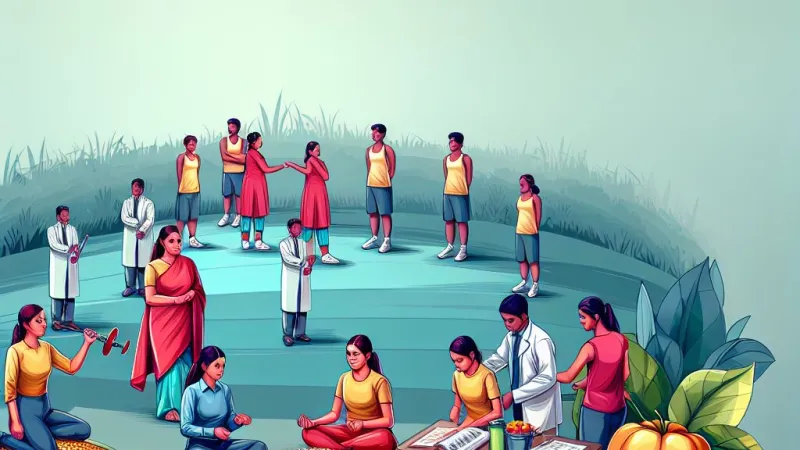
The Government, assisted by organizations such as the Food Safety and Standards Authority of India (FSSAI), mobilizes a range of activities during this week. Health camps, school competitions, kitchen garden demonstrations, and nutritional counselling are organized in anganwadis, schools, and community halls. Sahyogini didis and Anganwadi workers play a vital role, conducting door-to-door campaigns, especially in rural and remote districts.Non-governmental organizations further extend these efforts, often addressing groups that government services find hard to reach. They lead “Poshan Melas” (nutrition fairs), interactive sessions showing how to prepare sprouted moong salad or fortified khichdi affordably, and street plays (nukkad nataks) that creatively debunk misconceptions.
Educational institutions are significant drivers, integrating nutrition lessons in the classroom through storytelling and practical sessions. For example, schools may ask students to bring “rainbow lunches” comprising different coloured fruits and vegetables.
With the penetration of smartphones, social media has emerged as a potent ally. Hashtags like #PoshanMaah (celebrated all September from 2018 onwards), short videos, and WhatsApp messages now bring expert guidance to the fingertips of even the ‘young India’ living in city apartments.
Challenges in Spreading the Message
Despite passionate campaigns, promoting nutrition awareness in India faces several roadblocks. Economic disparity means millions, especially in tribal and remote regions, still struggle to access nutritious food. For a daily wage labourer in a metro or a small farmer in Bundelkhand, healthy food often takes a backseat to basic survival.Some traditional beliefs and taboos can hinder nutritional progress. For instance, misconceptions that certain foods are “hot” or “cold” for children, or the taboo against giving eggs to pregnant women, persist in many families.
Urban areas face a different challenge: easy availability and aggressive promotion of processed fast foods and sugary beverages, coupled with sedentary lifestyles, are leading to rising obesity, especially among the young.
Moreover, efforts often taper off once the week ends. Without sustained follow-up, lasting behavioural change remains difficult.
The Way Forward: Suggestions and Recommendations
Making a real difference necessitates effort on multiple fronts. Firstly, government nutrition schemes must receive increased funding and stronger implementation at the grassroots. Continued collaboration with NGOs and local self-help groups can help overcome last-mile roadblocks.Community mobilization is key. When women in self-help groups become ‘nutrition champions’—growing kitchen gardens, spreading awareness about iron-folic supplements, and busting myths—they inspire others in their mohallas (neighbourhoods) to follow suit.
Local foods should be promoted through folk media, kitchen garden contests, and recipes contests featuring millet or drumstick leaves (moringa). People of all ages must be taught the value of having a “thali” that incorporates all food groups in sensible portions.
Incorporating nutritional education early, through school syllabi, will plant the seeds for lifelong healthy habits. Teachers, health workers, and even religious leaders can play an active role as nutrition educators, providing consistent messaging.
On the individual level, being mindful about what and how much we eat, cooking more at home, and including traditional recipes can go a long way. Nutrition should not be seen as a luxury, but as an investment in one’s future.
Conclusion
National Nutrition Week is not just an observance, but a vital movement. It reminds us—through posters, poems, plays, and plates—that good nutrition is everyone’s right and responsibility. Beyond this week, the duty remains: to encourage healthy practices, support each other, and build a nation where every child, woman, and man has not just enough to eat, but the right nourishment to thrive.India’s immense strength lies in its people. As stories from across the nation prove—whether it is malnutrition in Maharashtra’s Melghat being battled by community kitchens, or urban parents in Bengaluru swapping junk food for homemade roti-sabzi—the change is possible. Let us pledge, not just for one week, but throughout the year, to spread the message of good nutrition. After all, a healthy India is a strong India.
Rate:
Log in to rate the work.
Log in