10 Key Points Explaining the Importance of Joint Families in India
This work has been verified by our teacher: 12.03.2026 at 17:40
Type of homework: Essay Writing
Added: 9.03.2026 at 17:02
Summary:
Explore 10 key points explaining the importance of joint families in India and learn how these family structures support unity, tradition, and social bonding.
10 Lines on Joint Family – A Comprehensive Essay
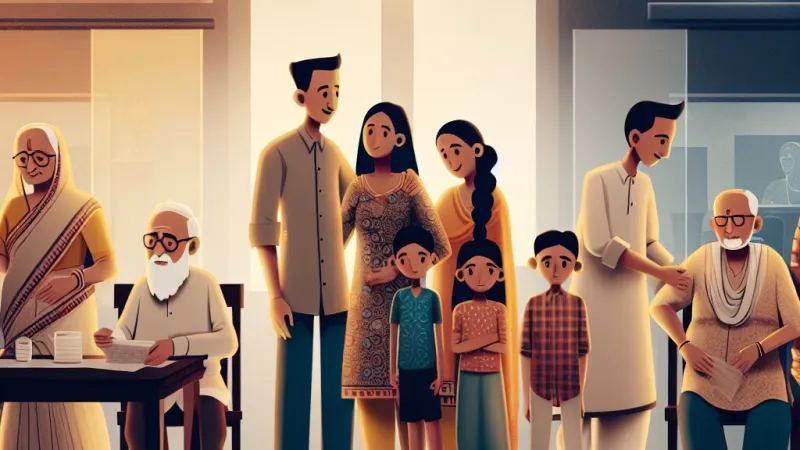
India, a land that reverberates with the laughter of children and the wisdom of elders, is shaped significantly by its family structures. One of the most prominent traditional setups found here is the joint family. Ordinarily, a joint family is an arrangement where several generations—grandparents, parents, uncles, aunts, and children—reside together under a single roof, sharing resources, responsibilities, and lives as one collective whole. While nuclear families have grown in urban India, especially with fast-paced modernisation, joint families continue to hold a special place both historically and culturally. This essay delves into the multifaceted significance of joint families, their composition, benefits, challenges, and their contemporary relevance in the Indian context.
---
Composition and Structure of a Joint Family
A joint family, in its essence, is not merely an agglomeration of individuals but a well-knit social unit. Typically, the head of the family is the oldest male member, often a grandfather, who presides over family affairs. Surrounding him are his sons, their wives and children, unmarried daughters, and sometimes more distant relations. Take, for example, the Gundamma family as shown in old Telugu films, where multiple branches of the same lineage coexist with warmth and wit.Hierarchies, both apparent and subtle, exist; elders command respect and have a major hand in decision-making. In traditional settings, women perform household duties while men are the primary breadwinners, though this is rapidly changing in modern families. With the advent of education and employment opportunities for women, these roles are slowly becoming more flexible and equitable. Children, meanwhile, enjoy the company of multiple siblings and cousins, making for a lively, bustling home.
---
Emotional and Social Benefits of Living in a Joint Family
One of the greatest gifts of a joint family is emotional security. In difficult times, the pooling of support makes facing adversity less daunting. When someone falls ill or struggles emotionally, there is always an uncle, aunt, or elder cousin to hold one’s hand. Festivals such as Diwali, Pongal, or Eid become grander affairs, echoing with collective laughter and rituals that strengthen family bonds. A wedding in such a family is not attended but celebrated—like in the much-loved Bollywood film “Hum Saath-Saath Hain,” which captures the joy and drama of living together.Deep friendships form not only among siblings but also with cousins who often become as close as brothers and sisters. Grandparents play a unique role too, imparting stories, values, and traditions, keeping history alive through bedtime tales or during lazy afternoons. Such camaraderie and warmth guard against loneliness, something that increasing numbers of nuclear families tend to face, especially in urban environments.
---
Educational and Moral Advantages
Children growing up in joint families benefit from a continuous process of observation and learning. Often, values are imbibed not through formal lessons but from how elders interact, resolve disputes, or offer help. The story of Savitri and Satyavan, or lessons from the Mahabharata and Ramayana, are not just read but discussed around the dinner table, keeping cultural roots intact.Discipline is another key aspect. In a household where space and resources are shared, respecting each other’s boundaries becomes necessary. Elders serve as role models, demonstrating patience, sacrifice, and self-restraint. Children learn early the importance of sharing, compromise, and the value of family unity—values echoed in the Sanskrit shloka: “Vasudhaiva Kutumbakam”—the world is one family.
Experience shows that collective decision-making, though challenging at times, fosters negotiation skills and teaches how to balance individual interests with the common good. These lessons are invaluable as children step into the larger world.
---
Economic and Practical Aspects
Apart from emotional and educational benefits, joint families offer solid financial security. The pooling of incomes and expenses means that financial shocks, such as job loss or medical emergencies, are cushioned. For example, if one member faces unemployment, others can come to their aid, preventing distress.Work is usually divided efficiently—one person manages finances, another runs the kitchen, someone oversees children’s studies, while yet another cares for the elders. This division of labour ensures that no one person is overburdened. Traditionally, family assets such as houses or fields are held jointly, providing greater stability and ease of inheritance. Especially in rural India, joint families are the engine of agricultural enterprise, where collective ownership of land supports everyone, as seen in many villages across Punjab and Tamil Nadu.
Care of children and elders is also easier in a joint family, as cousins act as playmates and elders receive company and attention all day.
---
Challenges Faced by Joint Families
Despite their many strengths, joint families are not without challenges. The most common concern is the lack of privacy. When three generations share common spaces like rooms or courtyards, personal time becomes a luxury. Young adults may feel restricted, with their choices and freedoms under constant observation.Differences in outlook further complicate matters. The generation gap—where elders may hold on to tradition while the youth push for change—can cause friction. Stories of family disagreements and property disputes are not uncommon and have often been depicted in literature and cinema.
Consensus-building in decisions can be slow. When many voices are involved, reaching an agreement might require extensive discussion and negotiation, which can delay important initiatives. Sometimes, particular members feel sidelined or underappreciated.
---
Joint Family System vs. Nuclear Family System
The shift from joint to nuclear families in urban India is driven mostly by economic compulsions, urban migration, and the desire for independence. A small family provides more privacy, quicker decision-making, and a chance for personal space. For young couples moving to cities for jobs, managing a nuclear household becomes necessary.Yet, the benefits of joint families—especially in difficult times—are undeniable. They offer a bulwark against loneliness, economic hardship, and loss of cultural continuity. Some Indian families today follow a ‘semi-joint’ model, where members live independently but join during festivals, emergencies, or to manage pooled assets, thus preserving unity while allowing autonomy.
---
The Contemporary Relevance of Joint Families in India
In today’s changing society, joint families remain relevant as a form of social security. They support those who might otherwise be left alone—the elderly, widows, or children whose parents work long hours. In Indian cities, working couples increasingly rely on grandparents for childcare, illustrating the continuing need for familial support.Furthermore, joint families serve as nurseries of language and tradition. Customs, dialects, and recipes are inherited, preventing the loss of unique cultural identities. In a world moving rapidly towards individualism, joint families remind us of the power of community and belonging.
They also help tackle modern issues like urban loneliness and social fragmentation. Living together encourages collective responsibility and empathy, promoting a more inclusive society.
---
Suggestions for Strengthening Joint Families Today
To ensure joint families remain helpful and harmonious, mutual respect and open communication are vital. Elders should appreciate the privacy needs of the youth, just as young people should respect elders’ wisdom. Setting clear boundaries and sharing responsibilities more equitably—especially regarding gender roles—can pave the way for lesser conflicts.Regular family meetings, honest conversations, and willingness to adapt old traditions to modern needs safeguard unity. For instance, festivals can be celebrated in smaller, more manageable forms without sacrificing essence, and work responsibilities can rotate, providing everyone chance for personal growth.
---
Rate:
Log in to rate the work.
Log in