Class 11 Poster Making Guide: Format, Sample Questions & Examples
This work has been verified by our teacher: 6.02.2026 at 14:45
Type of homework: Essay Writing
Added: 5.02.2026 at 6:16
Summary:
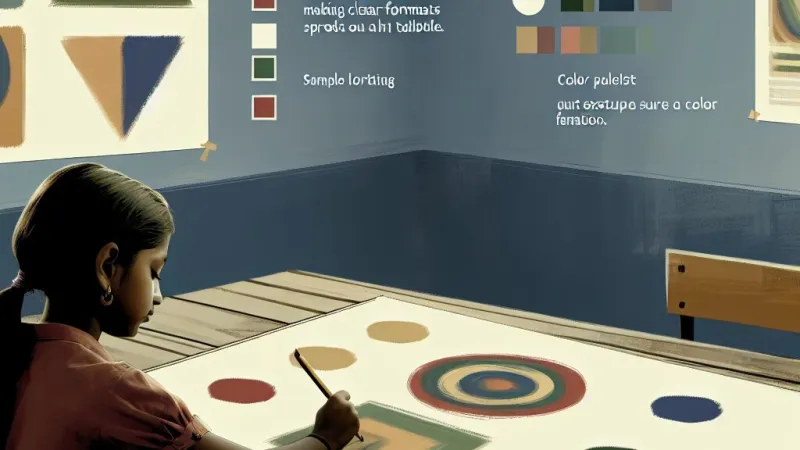
Master Class 11 poster making with clear formats, sample questions, and examples. Learn to create impactful posters for exams and projects effectively.
Poster Making for Class 11: Format, Questions & Examples — A Complete Guide
Introduction
Posters have become an integral part of visual communication in contemporary India. Every day, we encounter posters that urge us to attend an event, support a cause, obey a rule, or simply stay informed. From the vibrant streets of Mumbai filled with festival banners, to public awareness campaigns plastered across Delhi Metro stations, posters are everywhere. These visually compelling tools not only add colour to our daily surroundings but also serve a serious purpose — to deliver messages swiftly and effectively.In the classroom, poster making holds special value, especially for Class 11 students as part of the English writing curriculum. Recognised for building both linguistic and creative skills, poster making is often included in exams to assess students’ ability to communicate concisely and attractively. Beyond exams, this skill finds real-life application in school fests, inter-school competitions, community projects, and social initiatives by NGOs or government agencies. This essay aims to provide a comprehensive guide for Class 11 students in India, helping them master the format, style, and practical nuances of poster making — enriched with contextual examples, exam tips, and cultural relevance.
---
I. Understanding Poster Making
A. What is a Poster, and Why Does it Matter?
A poster is a visually designed announcement, usually on paper or digital platforms, tasked with informing, persuading, warning, or inviting a target audience towards a specific action or attitude. Its core strength lies in combining textual precision with images or symbols, so that even a passer-by can quickly absorb its message. Some great poster examples can be traced to Indian campaigns such as the "Swachh Bharat Abhiyan" (Clean India Mission), which rely on short, loud slogans ("Ek kadam swachhta ki ore") and relatable illustrations.B. Relevance of Audience
A poster's success is often determined by how well it connects with its intended audience. For example, a poster about exam tips in a school corridor should use language and references that resonate with students—not with their parents or teachers. Conversely, a health awareness poster about dengue prevention, designed to be displayed in local community centres, would benefit from straightforward language, vernacular content, and recognizable symbols like a mosquito crossed out in red. Understanding this context determines the choice of words, the urgency of tone, and even the kind of visuals one picks.Posters are not just artistic endeavours; they are bridges connecting ideas with people. Whether you are crafting a call for a tree plantation drive or inviting citizens to a blood donation camp, knowing your viewers — their interests, age group, and needs — makes your message memorable and effective.
---
II. Popular Types of Posters in Class 11 Exams
A. Awareness and Appeal Posters
The most common poster type seen in Indian school exams and society at large are awareness posters. These highlight issues ranging from health (AIDS, malaria prevention, COVID-19 protocols), environmental protection (Save Trees, Ban Plastic), to social concerns (Say No to Drugs, Save the Girl Child). Their main function is to educate or motivate the masses quickly and efficiently.B. Event Posters
Poster-making questions frequently require you to design invitations for school events — Annual Day, Inter-house Debate Competitions, Science Exhibitions, Fetes, or even educational workshops. The best posters in this category list clear details: what is happening, when, where, and why students should attend.C. Warning or Caution Posters
These posters are about asserting rules and precautions: “No Smoking,” “Beware of Dog,” or “Drive Slow, School Ahead.” Such posters use strong symbols and large fonts to grab attention immediately and convey urgency.D. Educational or Informative Posters
Sometimes, posters are about teaching — be it elaborating the three R’s (Reduce, Reuse, Recycle), listing exam tips, or explaining COVID-19 hygiene steps. The focus is on clarity and brevity to ensure that the reader learns something valuable on the spot.---
III. The Essential Format of a Poster
A. Key Components
1. Issuing Authority: Always mention who is organising or issuing the poster – this could be your school, a club, or a government department. E.g., “Modern Senior Secondary School, Chennai” or “NSS Unit, Patna.”2. Tagline: A short phrase (often in larger or bold letters) that captures the main idea. For example, “Save Water, Save Life,” or “Join the Festive Fun!” The tagline should demand attention and instantly convey purpose.
3. Title/Event Name: Clearly state what is being announced — “Blood Donation Drive” or “Inter-School Science Quiz”.
4. Special Attractions (if any): Mention guest speakers, prizes, cultural highlights, celebrity guests, or any other features that could attract more people.
5. Illustration or Symbol: Draw or insert a relevant, simple icon or visual — a drop of blood for a donation camp, a tree for an environmental poster, or a red triangle for warnings. Captions, if used, should be minimal yet descriptive.
6. Details: - Date, Time, Venue: State these details distinctly, e.g., “12th August, 10 a.m., School Auditorium.” - Entry/Registration Fees: Mention, if applicable (“Entry Free” or “Rs. 20 per head”). - Contact Information: For follow-up, queries, or registration (“Contact: Ms. Meena, 98765XXXXX”).
B. Visual Presentation
Presentation is as vital as the message. Use boxes or neatly drawn borders to ‘contain’ the poster for a clean look. Play with headings – use uppercase, underline, or bold for different sections. Select bright, readable colours, but avoid excessive colouring, which can distract rather than inform. Simplicity and neatness are prized in Indian exam settings.---
IV. Language and Style in Poster Writing
A. Conciseness and Clarity
Since most school exams specify a word limit (not more than 50 words), it is crucial to focus on short, direct phrases. Replace wordy explanations with clear commands: “Donate Today!” instead of “We urge everyone to come and donate their blood.” Avoid jargon and keep sentences simple and instructive. Bulleted lists are acceptable as long as they are neat.B. Tone
The tone must be suitable for the purpose: - Events/Invitations: Friendly, enthusiastic (“Don’t Miss Out!”) - Warnings: Serious, emphatic (“No Entry Without Mask”) - Awareness: Persuasive, motivating (“Together, Let’s Eradicate Polio!”)Avoid slang, SMS shortcuts, or overly casual expressions. Excellence in poster language shows through clarity, positivity, and relevance.
C. Grammar and Spelling
Errors in basic grammar or careless spelling can cost you dearly in board exams. Always double-check even small words. For instance, ‘environment’ not ‘enviroment’, ‘occasion’ not ‘ocassion’. Proofreading the poster after writing ensures accuracy and confidence.---
V. The Marking Scheme and Scoring Tips
Typically, the CBSE and most state boards allot 3 marks to poster making, divided as:- Format (1 mark): Was the poster structure correct? Did you include heading, tagline, issuer, and all essentials? - Content (1 mark): Did you answer all the who-what-where-when-why? Is your message complete and relevant? - Expression (1 mark): Are your words appropriate, sentences correct, and presentation neat?
How to Secure Full Marks: - Jot down a checklist of elements before starting. - Keep writing and visual content evenly balanced. - Write legibly and avoid overwriting. - Stay well within the word limit. Remember, missing the organiser’s name, forgetting the date, or a spelling mistake can all lead to loss of marks!
---
VI. Effective Poster Making: Practical Tips
A. Preparation
Practise regularly with last year’s exam questions as well as sample posters from NCERT textbooks or CBSE sample papers. Try different topics to get flexible with themes.B. Visual Design
Use a ruler for neat borders and sharpened pencils for text/illustrations. Colour is good, but too much can make your message unclear. Ensure every visual “adds" to your message rather than distracts from it.C. Exam Strategy
Plan in the margin before you start – list out the promo points in rough. Stick to one side/page, ensure your writing is large enough, and review at the end for completeness.---
VII. Sample Scenarios and Solutions
A. Event Poster Example
Scenario: Your school is organising a Fete cum Blood Donation Camp.*How to approach:* - Heading: “Vivekananda School Fete & Blood Donation Camp” - Tagline: “Enjoy, Donate, Save Lives!” - Details: Date, time, venue, highlights (games, food stalls, doctor on site) - Illustration: Balloons plus a drop of blood
B. Awareness Poster Example
Scenario: Campaign against drug abuse.*How to approach:* - Heading: “Say No to Drugs" - Tagline: “Choose Life, Not Addiction” - Details: Facts (one-liners), helpline number - Illustration: Crossed-out syringe or crumpled cigarette
C. Warning Poster Example
Scenario: Road safety near a school*How to approach:* - Heading: “Drive Safe, School Zone!” - Tagline: “Slow Down – Our Children Matter” - Details: Speed limit, timings - Illustration: Road with speed breaker
---
VIII. Using Digital and Print Resources
With the rise of technology, you can now use online tools like Canva, Adobe Spark, and even MS PowerPoint to practice making digital posters. Many educational websites and government portals provide poster-making templates and infographic resources that can be downloaded and studied for structure and impact.Understanding how pictures and colours support your text is essential. But be careful not to clutter your poster – white space is as important as the graphics!
---
Conclusion
Mastering poster making not only ensures good marks in Class 11 exams but also develops critical communication abilities. Posters teach the art of being brief yet powerful, creative but clear — a skill set valuable far beyond school. Whether you want to spread awareness or organise an event, poster making is an effective, democratic way to reach people.Regular practice, attention to format, and thoughtful use of language and visuals will help students excel in this task. In a world overflowing with information, the ability to organise and present a message attractively is a life skill. So, sharpen those pencils, brainstorm catchy taglines, and become an effective communicator — one poster at a time!
---
Additional Suggestions for Students
- Volunteer as the poster maker for extracurricular clubs and school functions to gain real experience. - Exchange drafts with classmates and offer constructive criticism — you’ll notice new ideas and common errors. - Take feedback from teachers seriously, focusing on both language and attractiveness.Ultimately, poster making is more than an exam question — it is your entry into the world of creative, purposeful communication.
Rate:
Log in to rate the work.
Log in