Top 10 Facts About Plants for Secondary School Students
This work has been verified by our teacher: 18.02.2026 at 10:39
Type of homework: Essay Writing
Added: 16.02.2026 at 7:05
Summary:
Discover the top 10 facts about plants for secondary school students and learn their structure, importance, and the amazing process of photosynthesis. 🌿
10 Lines on Plants: A Comprehensive Exploration
---When we step out into our gardens, walk beside busy city streets, or travel through the lush countryside, what is the one thing we always see? Plants. They peep from cracks in the pavement, form cool, green canopies overhead, and carpet entire hillsides. From the mighty banyan tree, with roots like ancient arms, to the tiny, delicate marigold growing in a flowerpot, plants are everywhere. Their presence is not just for beauty; plants are the silent foundations of life itself. This essay will explore the world of plants—what makes them unique, how they support life, their deep-rooted significance in Indian society, and why we must protect these green wonders.
---
What Are Plants? Understanding Their Nature
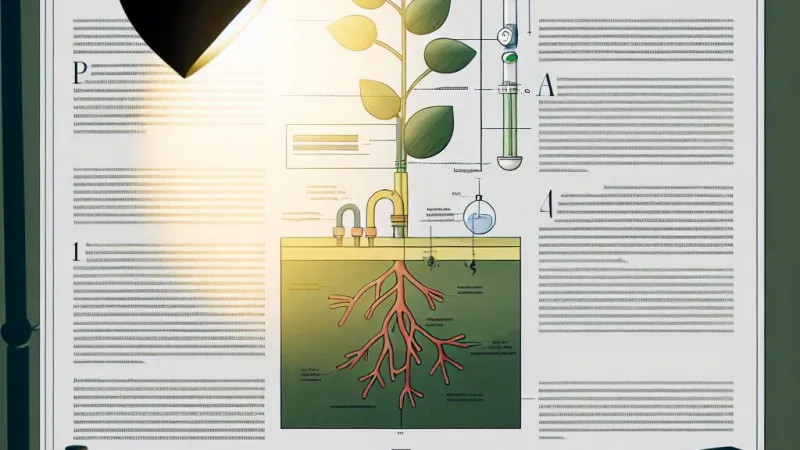
Plants are living beings, or organisms, that have special characteristics. Unlike animals, they cannot move from place to place, but stand proudly rooted in one spot. The basic structure of a plant often includes roots (which hold the plant in the soil and absorb water), stems (which support leaves and transport nutrients), leaves (where food is made), flowers (which help in reproducing), and sometimes fruits and seeds.If you observe carefully in your own surroundings, you’ll find many types of plants—herbs like coriander in your kitchen, shrubby hibiscus in parks, huge peepal trees on busy roadsides, slender grasses in the fields, and even creepers like money plant climbing up your neighbour’s balcony. Despite their differences, all plants have one thing in common—they make their own food, which brings us to a magical process called photosynthesis.
---
The Miracle of Photosynthesis
Photosynthesis is like a chef in the kitchen, but the chef is the leaf, and the kitchen is the plant itself. During this process, plants use sunlight, water (from the soil), and carbon dioxide (from the air) to prepare their own food, producing glucose (a type of sugar) and oxygen in the process. The green pigment called chlorophyll present in leaves captures sunlight—think of it as nature’s solar panel.This process is the first step of almost every food chain. For example, a sheep eats grass, and in turn, a lion might eat the sheep. The original energy has come from the plant, thanks to photosynthesis. Also, the oxygen released by plants is what animals and humans need to breathe! Thus, plants are quite literally the lungs of our planet, continuously purifying the air around us, storing carbon, and giving us a chance to live.
---
The Role of Plants in Nature
Plants are not just food makers or oxygen generators—they knit the web of life. By forming forests, jungles, and grasslands, plants provide homes for birds, insects, monkeys, and countless other creatures. Recall the Sundarbans, a unique mangrove ecosystem stretching across India and Bangladesh—here, the mangrove trees protect the land from flooding and are home to the Bengal tiger and hundreds of bird species.Roots bind the soil, holding it together and preventing phenomena like soil erosion (especially important during the Indian monsoons). Plants also help in recycling water through transpiration, a process where water travels from roots to leaves and eventually escapes to the air, forming clouds and bringing us rain. Forests regulate local weather, prevent droughts, and keep the climate cool—one reason why cities with abundant trees feel less hot compared to those with more buildings and roads.
---
The Economic and Medicinal Value of Plants
Throughout the ages, plants have been central to Indian livelihoods. Walk through a crowded bazaar and notice—the baskets brimming with pulses, neatly stacked wheat, the fragrant bundles of fresh coriander, and sacks of rice. All these are the beautiful gifts of plants. Staple crops like rice and wheat feed over a billion people in our country alone!India’s Ayurveda is built on the healing powers of plants. Neem twigs are used for brushing teeth in rural areas; tulsi is given to sore throats; turmeric is mixed into warm milk for coughs. In fact, many modern medicines also come from plant compounds—for example, quinine for malaria comes from the cinchona tree.
Industries depend on plants for timber (from teak or sal), natural fibres like jute (used for making ropes and bags), rubber (from the rubber tree of Kerala), and oils (like coconut and mustard). Even today, floral garlands decorate temples, and intricately carved sandalwood items are prized in markets.
---
The Incredible Diversity and Adaptation of Plants
India alone is home to a staggering range of plants, from the high-altitude rhododendrons in the Himalayas to the bizarre cactus in Rajasthan’s Thar Desert. Did you know that bamboo, commonly seen across northeastern states and even in South India, is the fastest growing plant in the world? Some bamboos can shoot up by more than 90 cm in just one day!Plants have adapted to survive extreme conditions. Cacti store water in their thick stems, while aquatic plants like lotus float with broad leaves. The pitcher plant of Meghalaya traps insects to supplement nutrients unavailable in the soil—a marvel of evolution. There is also the sacred peepal, known to release oxygen even at night, providing shade and shelter in busy towns.
---
Challenges Facing Plants and Conservation Efforts
However, not all news is pleasant. Growing cities, pollution, deforestation, and overuse of natural resources are pushing many plant species to the brink of extinction. As forests vanish to make way for roads and buildings, animals lose homes and humans lose vital resources. The disappearance of even one kind of tree can impact hundreds of birds and insects.India has recognised this problem and taken many steps. National parks like Jim Corbett, Kaziranga, and the Nilgiris Biosphere Reserve strive to protect plant biodiversity. The Chipko Movement of Uttarakhand, where villagers hugged trees to protect them from being cut, is a famous example of people-driven conservation. Governments and schools often organise tree plantation drives—each sapling planted is a gift for the future.
---
Plants in Indian Culture and Festivals
Plants are woven into the very fabric of Indian traditions. The banyan and peepal trees are considered sacred and are often seen in temple courtyards, worshipped during religious ceremonies such as Vat Purnima. No Hindu home is complete without a tulsi plant, whose leaves are believed to purify both the body and soul.Festivals like Pongal in Tamil Nadu celebrate the harvest of rice and sugarcane. During Makar Sankranti, people cook dishes using freshly harvested sesame seeds, jaggery, and rice, all plant products. Even in yoga and Ayurveda practices, herbs form the base of oils and medicines.
---
Practical Tips: Caring for Plants
Looking after plants is easy and rewarding. School students can start with hardy species like money plant (pothos), aloe vera, or tulsi—these require minimal care. Ensure the pot has a hole for drainage, water when the soil feels dry, and place the plant where it gets enough light.Observe how new shoots emerge, leaves change colour with the seasons, and flowers bloom at different times. Encourage your school or community to keep gardens clean, save rainwater for watering, and participate in events such as Van Mahotsav (Tree Planting Festival).
If you love nature, even a small effort counts.
---
Conclusion
To sum up, plants feed us, heal us, shelter us, and shape the very air we breathe. They bring life and colour to our country’s fields, forests, and festivals. Today, as our environments face difficulty, it is our duty to respect, protect, and learn from the green world around us. Remember, every seed planted, every sapling nurtured, and every tree saved is a step towards a healthier and happier India. Let us grow together with our plant friends, ensuring a brighter future for all.---
Glossary
- Photosynthesis: The process by which plants make their own food using sunlight. - Chlorophyll: The green pigment in leaves that traps sunlight for photosynthesis. - Ecosystem: A community of living and non-living things interacting in a specific environment. - Botany: The scientific study of plants.---
Frequently Asked Questions
Q1: Why are plants called the 'lungs of the earth'? A1: Because they release oxygen which is essential for the survival of humans and animals.Q2: Can plants grow without sunlight? A2: Most plants cannot, as they need sunlight to make food. However, some special plants can survive in low light for short periods.
Q3: What is the national tree of India? A3: The Banyan tree (Ficus benghalensis).
---
Common Myths
- Myth: "Cactus does not need water at all." Fact: Cactus stores water and needs less frequent watering, but it does require some water to survive.- Myth: "Plants only release oxygen during the day." Fact: Most plants do, but some like peepal give off oxygen even at night.
---
May we always cherish the green universe around us, for plants are not just a part of our world—they make our world possible.
Rate:
Log in to rate the work.
Log in