Effective Self-Introduction Tips for Retail Job Interviews in India
This work has been verified by our teacher: 26.02.2026 at 10:49
Type of homework: Essay Writing
Added: 23.02.2026 at 5:42
Summary:
Master effective self-introduction tips for retail job interviews in India. Learn how to impress interviewers with confidence, cultural awareness, and key skills.
How to Introduce Yourself Effectively in a Retail Job Interview: An Indian Perspective
Securing a job in retail, whether as a sales assistant in Big Bazaar, a cashier in Reliance Fresh, or as a floor manager in Lifestyle, requires more than just academic qualifications. The first challenge is often the self-introduction during the interview, which shapes the interviewers’ initial impression and can set the stage for the rest of the discussion. In India's rapidly changing retail landscape, being able to present oneself concisely, confidently, and with cultural awareness is invaluable. This essay aims to guide Indian students and job aspirants on structuring a compelling self-introduction for retail interviews, discussing what makes an introduction effective, how to reflect essential retail qualities, and the best way to bring in personal and cultural nuances.
---
Understanding the Indian Retail Interview Context
Retail in India is not only fast-growing but also uniquely diverse. We see everything from small kirana shops run by families to multi-store outlets operated by corporate giants like Tata and Reliance. Within this, the competition for jobs—for roles like sales executive, stock keeper, or cashier—is intense, and interviewers look for more than just degrees. They expect the candidate to be energetic yet polite, knowledgeable about the products, and above all, capable of creating a welcoming environment for customers from all walks of life.Interpersonal skills are critical. As seen in stories like R.K. Narayan’s "Malgudi Days," where the shopkeeper connects with every customer on a personal level, Indian retail thrives on relationships. The ability to speak a local language, greet customers with the right amount of warmth (a respectful 'Namaste' or a gentle 'Good Morning'), and adapt behaviour based on the customer’s background, are all vital skills. Indian retail interviewers, therefore, look for candidates who are presentable, reliable, and eager to help, and these traits must shine through right from the self-introduction.
---
Preparing to Introduce Yourself: Laying the Groundwork
Preparation is half the battle won. Before entering a retail interview, a candidate must research the company—understanding what they sell (is it ethnic wear like Fabindia, groceries and daily essentials like D-Mart, or electronics like Croma), their core values, and the clientele they cater to.Candidates should reflect on their own backgrounds to identify qualities that align with the retail sector. Even if one has not worked formally, helping parents run their own shop, participating in college fairs, or managing society canteen funds are experiences worth mentioning. For students from commerce backgrounds, a familiarity with accounts, GST billing, or inventory records is valuable. Similarly, those from other streams can highlight communication skills, leadership, or problem-solving abilities illustrated through classroom or community activities.
In India, mentioning your hometown or state (like “I come from Nashik, famous for its grapes,” or “I belong to Chennai, where hospitality is a way of life”) makes the introduction warm and relatable, embracing the rich diversity of the country. Adapting your tone to be both formal and friendly—'shubh prabhat, madam,' or a polite 'Good afternoon, sir'—is another Indian nuance that goes a long way in face-to-face interviews.
---
Structuring the Self-Introduction: Step-by-Step Approach
A self-introduction in a retail interview should ideally cover the following points, in a logical and smooth flow:1. Opening Greeting
Start with a respectful and pleasant greeting. In Indian settings, “Good morning, sir/ma’am,” or even “Namaste,” conveys respect and sets a formal tone. Maintaining eye contact and a gentle smile adds warmth.2. Personal Background
Briefly state your name and, if customary, your age. Mentioning your city or state not only establishes your roots but can sometimes create an immediate connect. For example, “My name is Arpita Das, I am 21 years old, and I am from Guwahati, Assam.”3. Educational Qualifications
Highlight your most relevant degree or course. For retail, B.Com, BBA, or even a diploma in retail management or sales is noteworthy. You may mention notable achievements if they're significant. For instance, “I completed my Bachelor’s in Commerce from Symbiosis College, Pune, with a specialisation in accounts.”4. Work Experience
If you have prior work experience in retail, mention it specifically: “I worked for six months as a sales promoter at Westside, where I assisted customers, managed cash counters, and organised display racks.” If inexperienced, mention internships, voluntary work, or leadership roles in college events.5. Skills and Strengths
Focus on skills relevant to the position: communication, patience, bilingual or trilingual abilities, ability to stand for long hours, or knowledge about specific products (like fashion trends, gadgets, or organic foods). An example: “My strength is my ability to communicate fluently in Hindi, English, and Marathi, which helps me connect with different customers.”6. Motivation for Retail
Why do you wish to work in retail? Interviewers appreciate sincerity, so a statement like, “I enjoy helping customers find products that suit their needs,” or “I find satisfaction in providing good service and ensuring customers leave the store happy,” is far better than a generic response.If you’re passionate about what you sell—be it ethnic wear, electronics, or beauty products—mention it. “As someone who has always followed Indian handloom trends, I feel passionate about guiding customers towards eco-friendly fashion.”
7. Closing Statement
End with a positive, grateful, and forward-looking note: “I am eager to contribute to your store’s success and learn from the experienced team members here. Thank you for the opportunity to introduce myself.”---
Language and Tone: Expressing Yourself the Indian Way
In India, clarity and simplicity are appreciated, especially in customer service. Avoid using jargon or complex vocabulary. Use active verbs to bring your experience alive—"I managed inventory," "I assisted customers," or "I resolved billing issues efficiently." Confidence should come through, but humility is equally important. Avoid over-selling yourself; rather, let your sincerity show. Remember, a well-timed 'smile' and respect for the interviewer's position go a long way in Indian culture.---
Personalising Your Introduction: Going Beyond the Basics
To stand out, relate your hobbies and interests back to the retail role. For example, “I have a personal interest in skincare, which is why I have a good understanding of beauty products.” Emphasise adaptability: “I am comfortable with changing shifts and working on weekends, which I know is often required in retail.” If you have handled difficult customers or situations (even informally, helping family or friends), mention this as your ability to understand and respond to customer needs. Being multilingual (say, knowing Tamil, Hindi, and English) adds tremendous value in India’s multi-lingual society.---
Common Mistakes to Avoid
- Being too brief or too lengthy: Try to keep your introduction between 1 to 2 minutes—brief enough to keep attention, detailed enough to be memorable. - Reciting memorised lines: Practice your introduction, but keep it natural and conversational. - Highlighting irrelevant achievements: Focus on skills and experiences directly linked to retail or customer service. - Adopting a negative tone: Never apologise for lack of experience or express doubts. Instead, present yourself as ready to learn.---
Practice Makes Perfect
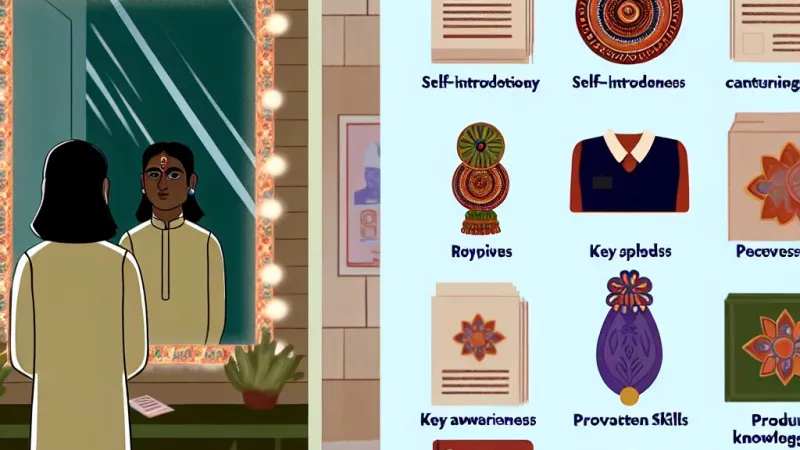
Rehearse your introduction in front of a mirror or with friends and family who can give feedback. Record yourself to observe your posture, gestures, and tone. Adapt your style to the setting—virtual interviews may require you to speak a bit slower and check your body language on camera. Prepare to elaborate on any point you mention, as interviewers may ask for details.---
Sample Frameworks for Different Profiles
- Freshers: Emphasise enthusiasm and willingness to learn. “Although I am a fresher, my experience as the class representative has taught me how to communicate with different people and solve conflicts, skills that I believe are useful in retail.” - Experienced candidates: Highlight previous achievements. “In my previous role managing a textile shop, I increased daily sales by suggesting festive bundling offers.” - Niche passions: If applying to a bookstore, “I have been an avid reader since childhood and enjoy helping others find books based on their interests.”---
Conclusion
In conclusion, a strong self-introduction in a retail interview is not just a summary of your education or work—it is your opportunity to create a human connect, show your enthusiasm for customer service, and position yourself as the right fit for India’s dynamic retail environment. This first few minutes can open the door to more in-depth conversations and ultimately, your desired job. Sincere, well-prepared, and culturally sensitive introductions make all the difference.---
Rate:
Log in to rate the work.
Log in