Effective Self Introduction Tips for Kids Across Ages and Classes
This work has been verified by our teacher: 9.03.2026 at 16:51
Type of homework: Essay Writing
Added: 6.03.2026 at 14:44
Summary:
Learn effective self introduction tips for kids of all ages and classes to boost confidence, improve communication, and master social skills in Indian school settings.
Self Introduction for Kids and Children of Different Ages and Classes
Self-introduction is far more than just stating one’s name in front of strangers; it is one of the earliest, most vital social skills we learn as children. In a culturally rich society like India, where social gatherings, family functions, school ceremonies, and classroom interactions are a frequent part of life, the ability to introduce oneself confidently is essential. It enables children to form new friendships, express their individuality, and begin their journey as communicators.
In Indian schools, whether a small town government school or a reputed city institution, students face occasions like morning assemblies, elocution contests, and even casual classroom interactions where self-introductions are required. These situations not only help children become comfortable in social settings but also encourage them to discover their distinct personalities. Moreover, Indian etiquette, such as greeting elders with “Namaste” or using respectful forms of address, adds an extra layer to the art of introducing oneself.
This essay explores how self-introduction skills develop from early childhood to adolescence, discusses teaching methods tailored to Indian cultural contexts, and offers practical examples and tips for every age group. By the end, we will also see how this foundational skill shapes communication, confidence, and overall personality development in children.
---
Understanding Self-Introduction for Different Age Groups
A. Preschool and Early Primary Classes (Ages 3-7)
At the youngest ages, children are only beginning to grasp the power of words. Typically, their vocabulary consists of familiar terms like their name, colours, family members, and favourite foods or games. A self-introduction for a five-year-old in a LKG classroom or at a birthday party is charmingly simple: “My name is Aarav. I am 5. I love mangoes.”At this stage, the focus is on: - Stating their name, age and possibly, class or teacher’s name. - Mentioning parents, siblings ("I have a baby sister"), and likes (“I love to play hide and seek”). - Simple greetings (“Good morning”) taught as part of Indian classroom culture.
The primary objectives here are to develop clarity of speech and confidence in talking to a group, even if it is just the immediate family. Cultural nuances, such as starting with a ‘Namaste’ or addressing elders as ‘uncle’ and ‘aunty’, naturally find space in introductions. Teachers and parents play a crucial role, gently coaxing shy children and ensuring that the child’s introduction feels natural, not merely memorised.
Overcoming stage fright is the biggest challenge at this age. Activities like storytelling, show-and-tell, and role-play in the mother tongue or English can help children become accustomed to speaking before others.
---
B. Middle Primary and Upper Primary Classes (Ages 8-11)
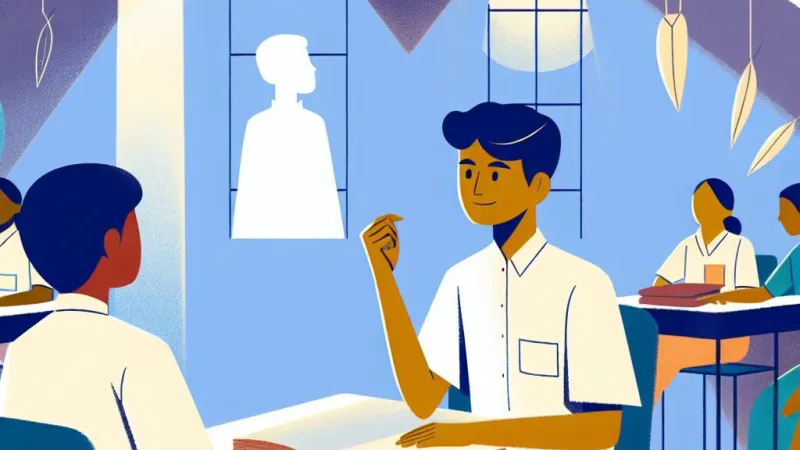
As children progress to classes 3 to 6, their world grows wider. They can now use more complex language and express ideas about their hobbies, interests, and opinions. An introduction in these years may include specific details about the child’s likes, their school, and even dreams for the future: “I am Kritika from Class 5, Modern School. I enjoy playing chess and reading Amar Chitra Katha comics.”At this developmental stage, children may speak about: - Their school, class, and teachers. - Family background, including parents’ professions, siblings. - Favourite subjects (like ‘Mathematics’ or ‘Environmental Studies’). - Hobbies such as painting, cricket, or dance (Bharatanatyam or Kathak find frequent mention). - Simple aspirations, often influenced by stories or real-life role models (“I want to become a doctor like Dr. APJ Abdul Kalam”).
Indian education values polite, respectful language. Students are encouraged to use “Good morning, respected teacher and my dear friends” at the start and “Thank you” at the end – a format notable in Indian assemblies.
Common pitfalls include speaking too quickly, mentioning too many irrelevant facts (“I have 11 pencil boxes!”), or forgetting to make eye contact. Teachers can guide students to structure their talk: greeting, name, schooling, interests, family, and a closing line.
---
C. Adolescents (Ages 12-16)
By the time children move to higher classes (Class 7 and above), their thinking becomes more nuanced. Here, self-introduction becomes both self-expression and a reflection of their unique identity. Adolescents may be asked to introduce themselves at inter-school events, interviews for student council positions, or even Model United Nations platforms.A typical introduction now includes: - Full name, age, school name, and current class. - Particular interests: advanced subjects, ongoing projects, participation in competitions (debates, Olympiads, etc.). - Engagement in social causes (“I volunteer at the Red Cross” or “I tutor underprivileged children” is common among urban students). - Family background and values, but in a concise way. - A mention of personal strengths and future goals (“I aspire to be a journalist and contribute to society through stories”).
At this age, students should develop skills like: - Maintaining appropriate body language – standing upright, holding eye contact, avoiding fidgeting. - Adjusting tone and vocabulary depending on the audience (informal with friends, formal for teachers or elders). - Using personal anecdotes to make their introductions memorable (e.g., “After failing my maths paper once, I learnt the power of perseverance”).
Adolescents may grapple with nervousness, self-doubt, or a fear of being judged. Practice, positive feedback, and watching public speakers from varied Indian backgrounds can help, such as listening to speeches by Dr. Shashi Tharoor or following former President Kalam’s addresses.
---
The Process of Teaching Self-Introduction to Kids
A. Role of Parents and Teachers
Both parents and teachers play a foundational role. At home, parents can ask simple questions and encourage children to talk about their friends, school, or day. Teachers should create a supportive classroom atmosphere, encouraging participation without fear of mockery.B. Incorporating Interactive Methods
Role-plays, games (such as ‘Pass the Parcel: Say Your Name’), group activities, and even puppet shows can be used to make the learning enjoyable. Drawing assignments, where children sketch themselves and then describe the drawing, can also help, especially for children more comfortable with visuals than words.C. Importance of Cultural Sensitivity
Given India’s diversity, self-introductions may need to respect local vernacular and traditions. For example, using “Sat Sri Akal” in Punjab or “Vanakkam” in Tamil Nadu, or sharing festivals the child celebrates (Diwali, Eid, Onam). Encouraging the use of mother tongue, alongside English or Hindi, nurtures cultural pride.D. Use of Technology
Teachers can show short videos on self-introduction or help children record and play back their own introductions on a phone. This allows self-correction and helps overcome hesitation. During the pandemic, many teachers encouraged children to email short introductory videos – a practice that can continue.---
Practical Tips for Different Ages
For Younger Kids (3-7)
- Keep sentences brief and relevant. - Encourage gestures (like waving or using ‘Namaste’). - Practice with a parent or in front of the mirror. - Celebrate efforts with praise rather than correcting mistakes bluntly.For Middle Class Kids (8-11)
- Teach the classic Indian structure: Greeting, Name, Class, School, Interests, Family, Thank you. - Use familiar examples (“Like Chacha Chaudhary, I also love reading comics”). - Encourage moderate speaking pace. - Ask them to listen to friends’ introductions for inspiration.For Adolescents (12-16)
- Advise reflection: What makes me unique? What do I care about? - Practice modifying introductions for formal interviews versus informal gatherings. - Encourage use of brief stories or incidents. - Practice public speaking in front of peers, with constructive feedback.---
Sample Self-Introductions: Indian Examples
Age 5: “Namaste! My name is Aarohi. I am 5 years old and study in UKG at Little Flowers School. My favourite food is dosa. I love dancing with my cousin. Thank you!”Age 9: “Good morning, respected teacher and friends. My name is Soham, I am 9 years old and in class 4 at Queen Mary’s School. My hobbies are sketching and playing kabaddi. My family includes my mother, father and elder brother. I want to be a pilot when I grow up. Thank you.”
Age 14: “Respected Sir/Madam, my name is Nishant Joshi. I am 14 years old, studying in class 9 at Kendriya Vidyalaya, Pune. I am passionate about science and represent my school in the inter-school mathematics Olympiad. Besides academics, I play tabla and am part of the Scouts group. My goal is to become an engineer and join ISRO. Thank you.”
---
Benefits of Mastering Self-Introduction at a Young Age
Learning how to introduce oneself early in life lays the groundwork for several critical life skills:- Improved Communication: Expressing ideas clearly, choosing appropriate words, and forming sentences improves language ability. - Social Skills: Making friends, participating actively, and respecting social etiquette begins with confident introductions. - Preparation for Future: Whether it’s a boarding school interview, a college group discussion, or even a corporate job, first impressions matter; habit formed in early years helps lifelong. - Personality Development: Children who can talk confidently about themselves are often more self-aware, resilient, and comfortable with their identity, embracing their heritage with pride.
---
Conclusion
From a toddler shyly mumbling their name to a teenager articulating their dreams, the journey of mastering self-introduction reflects the broader journey of growing up in India. Each stage – from basic phrases to spirited self-presentation – is a stepping stone towards confidence, communication, and self-esteem.Parents and teachers should encourage children to see self-introduction as an opportunity, not a task. With patience, cultural awareness, and creative approaches, this simple skill can open many doors. As India marches towards a global future, young citizens able to introduce themselves confidently in any forum, in any language, are certain to shine. The art of self-introduction is not just about speaking out – it’s about discovering and presenting who we are, with pride and clarity.
Rate:
Log in to rate the work.
Log in