Meaning and Importance of the Saying ‘Charity Begins at Home’
This work has been verified by our teacher: 12.03.2026 at 16:04
Type of homework: Essay Writing
Added: 10.03.2026 at 16:16
Summary:
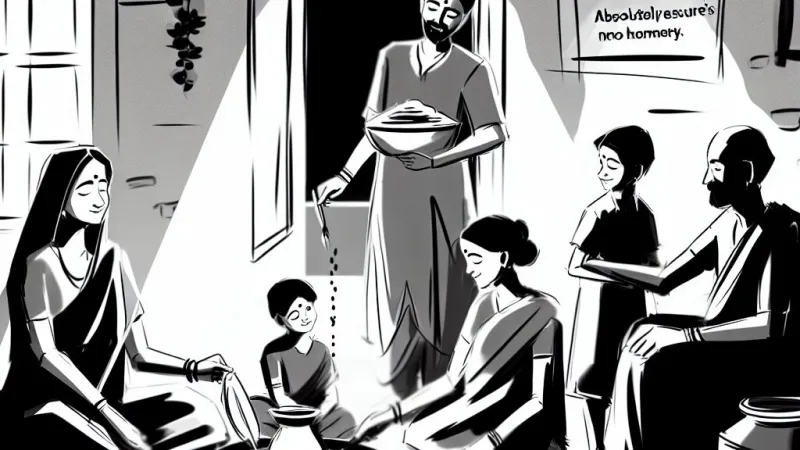
Explore the meaning and importance of the saying charity begins at home, learning how it shapes values and kindness within Indian families and society.
Charity Begins at Home
Charity is a virtue that is celebrated in every culture and religion. In India, a country known for its strong family bonds and rich traditions, the proverb “Charity begins at home” carries significant weight, both in letter and spirit. This essay explores the deeper meaning behind this phrase and explains why it has been central to our way of life for generations. By delving into Indian cultural context, sharing practical examples, and reflecting on moral studies, I will explain why charity’s true foundation lies at home, and how propagating this notion creates a more harmonious society.---
Understanding the Proverb: What Does “Charity Begins at Home” Mean?
At its core, the saying “Charity begins at home” reminds us that before we set out to improve the world, we must first ensure goodness, kindness, and compassion thrive in our immediate family circles. Here, “charity” does not only refer to wealth or material donations. Rather, it includes loving care, sharing, understanding, and offering support in times of need.For centuries, Indian culture has been built upon the idea that the family is the most important unit. Stories from the Ramayana and the Mahabharata, or the teachings of saints like Sant Kabir, underline how personal character and moral duties start with family conduct. Historically, rulers like Raja Harishchandra demonstrated charity by upholding truth and fairness, even if it began with personal sacrifices for their own loved ones.
---
Defining Charity: Beyond Money and Gifts
The usual perception of charity is giving money to the poor or lending hand to orphans. Yet, charity is much broader. True charity can be:- Emotional Care: Being there for a family member or friend when they are sad or lonely. - Time and Presence: Helping out with chores during festivals like Diwali, so the work is shared equally. - Moral Support: Asking a sibling about their problems after a tough day at school, and encouraging them. - Teachings from Indian Scriptures: The Bhagavad Gita and the Upanishads discuss ‘Seva’ (selfless service) as a form of charity. Even Kabir’s dohas (couplets) teach that caring for those closest to us is a moral responsibility.
Thus, charity is not just about wealth, but about showing love, offering time, and taking part in another’s life.
---
Why Charity Should Start at Home
The Foundation of Values
The family is the first temple where a child learns values. In a joint family, common in Indian society, children see their elders caring for one another, making sacrifices, and sharing both joys and sorrows. For example, during festivals like Raksha Bandhan, the celebration is not just about tying rakhi, but about caring for siblings throughout the year.Responsibility to Loved Ones
How can one help the entire world if their own parents, siblings, or grandparents are struggling? Gandhiji once said, “If we can’t serve our own home, how can we serve our motherland?” Meeting the basic needs, be it education, food, or emotional support, must first happen at home. If every family were healthy and supportive, society as a whole would benefit.Practical Benefits
A happy home acts as a safe retreat. When parents are loving and children feel secure, everyone develops confidence which ultimately helps them serve society better. For instance, a student who looks after his siblings learns responsibility and empathy, qualities that will shape how he treats others in society.Learning By Example
Children do not learn charity through lectures, but by watching parents and elders show it in everyday life. If a child sees his parents help an elderly grandparent, he will naturally grow up to be kind and generous. In this way, “charity begins at home” becomes the root from which all other acts of charity sprout.---
Balancing Family Care and Social Responsibility
Extending Beyond the Family
Indian history is filled with examples where householders balanced family care and social service. Take the example of Vinoba Bhave, who, after ensuring his own family's needs, set out for the Bhoodan Movement, collecting land for the landless. Likewise, people who first care for their parents are best equipped to care for others.The Risks of Neglecting Home
Helping others while neglecting your own family can be hypocritical. If a person spends all his time volunteering at NGOs, but ignores his own parents’ illnesses, there is a clear disconnect in values. Real charity is about balance—a healthy home first, followed by outreach.Making Charity a Family Venture
Families in India often cook extra food on festivals and distribute it to the needy. Many schools encourage students and their parents to participate in drives like ‘Swachh Bharat Abhiyan’, so charity becomes a communal activity.---
Modern Interpretations and Challenges
Digital Age Charity
With social media appeals and online fundraisers becoming more common, it is tempting to send money to strangers before checking if help is needed in our own household. For example, during the COVID-19 pandemic, many families came together for the first time in years, making sure their elderly were safe, before joining efforts like community kitchens for the needy.Self-care as Charity
Modern psychologists remind us that taking care of one’s own mental health is a form of charity too. When we look after our parents or siblings and are emotionally balanced, our ability to contribute to society multiplies.Indian Examples
Issues like elder neglect, dowry disputes, or lack of support for differently-abled children are best solved not just by laws, but by cultivating a home environment of charity and acceptance.---
Common Misunderstandings
Not an Excuse for Selfishness
Some people misinterpret the proverb, thinking it means *only* helping one’s own family. Rather, the message is to strengthen the base so we can radiate goodness outward. It is like lighting a lamp at home; only then can you use it to help others find their way.Balancing Wider Duties
While charity does begin at home, it should not end there. Indian spiritual thought, taught by Swami Vivekananda and others, emphasises “Atmano Mokshartham, Jagat Hitaya Cha”—for one’s own salvation and for the welfare of the world.---
Practical Ways to Practise “Charity Begins at Home”
- Listening and Spending Time: Set aside time each day to talk to family members and understand their needs. - Support During Difficult Times: Whether it is a younger brother’s board exams or a grandmother’s illness, offer help freely. - Share Resources: Before making donations outside, ensure your family is not in need. - Teach by Example: Involve children in rituals like distributing sweets during Ganesh Chaturthi, or organising charity drives in schools. - Volunteer as a Family: Participate together in community clean-ups, tree plantation, or blood donation camps. - Celebrate Together: Festivities like Pongal, Eid, and Christmas become meaningful when the whole family joins hands, not just in prayers but also in service.---
Rate:
Log in to rate the work.
Log in