A Joyful Family Picnic: Celebrating Togetherness Outdoors
This work has been verified by our teacher: 15.03.2026 at 18:53
Type of homework: Essay Writing
Added: 13.03.2026 at 13:29
Summary:
Discover how a joyful family picnic strengthens bonds outdoors with planning tips, cultural insights, and memorable moments for Indian students to explore.
Paragraph on a Picnic with Family
: Rediscovering Joy in TogethernessIn the heart of every Indian family lies an unspoken yearning to break free from the monotonous routine, even if just for a day, and rediscover bonds amidst nature’s gentle embrace. A picnic, in the Indian context, is not simply about eating under the sky; it is the orchestration of laughter, storytelling, and togetherness, set against the backdrop of rustling leaves or a historic fort’s grandeur. With rapid urbanisation and hectic schedules, cherished moments with loved ones are often relegated to the background. Therefore, seizing the opportunity to go on a family picnic becomes all the more significant. Whether it is a serene morning in the Lodhi Gardens, a splash by the banks of the Yamuna during winter, or exploring the sprawling green lawns of Cubbon Park, a picnic transforms an ordinary outing into an unforgettable celebration of relationships. In this essay, I will recount the planning, enjoyment, and lasting happiness that come from a family picnic, drawing from the rich palette of Indian customs, foods, and familial bonds.
---
Laying the Groundwork: Planning a Family Picnic
Every successful picnic is born from thoughtful planning, a process as enjoyable as the event itself. In most Indian households, this begins with a lively discussion, with each member proposing potential picnic destinations. Choices abound: one could opt for a well-kept public garden like Kolkata’s Maidan, the timeless allure of a historical locale like Humayun’s Tomb, or even the familial charm of a rural ancestral farmhouse. The final selection usually factors in the collective interests—little ones lobbying for zoos or lakes, elders yearning for tranquil temples surrounded by greenery.Once the destination is fixed, the next step involves rallying the family. Indian gatherings rarely confine themselves to the nuclear unit; a true picnic brings along grandparents, uncles, aunts, and cousins, making the day a mini family reunion. The anticipation grows as WhatsApp messages or phone calls fly back and forth, confirming availability and assigning small jobs—from gathering outdoor games to preparing the indispensable thermos of chai.
Transportation too requires forethought. Larger families might hire a tempo traveller, complete with laughter and music on the way, while smaller groups may hop on cycles or take local trains, reminiscent of the classic scenes in Satyajit Ray’s “Pather Panchali”—a journey as memorable as the destination itself.
The soul of an Indian picnic, however, remains its food. Days before, family members debate the menu. Will it be aloo parathas wrapped in foil, spicy poha, samosas, and imli chutney? Or a potluck featuring homemade pulao, tangy chaat, and coconut barfi? Packing is a collective affair: mothers bustling in the kitchen, siblings sneaking bites, fathers arranging water bottles and steel tiffins, and children asked to carry light items—giving them a sense of responsibility. Practicalities such as reusable cutlery, cloth napkins, trash bags, and a first-aid kit are never forgotten, reflecting the Indian regard for both hospitality and the environment.
---
The Main Event: Activities and Shared Pleasures
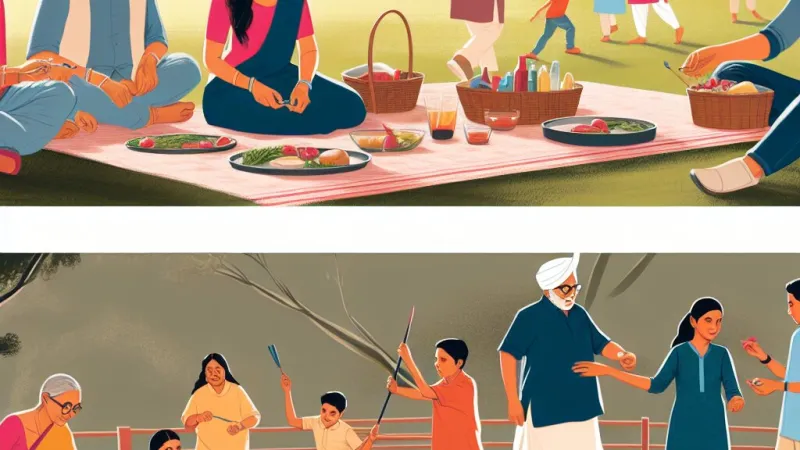
Upon arrival, the first joy is discovering the perfect patch—a shaded spot beneath a banyan tree or by a lotus-filled pond. Spreading out colourful mats and arranging the baskets, the setting itself exudes homeliness. The morning air, filtered through neem branches or swirling with the scent of wet earth after a monsoon drizzle, sets the stage for a day brimming with delight.Picnics in India are vibrant with activity. Age-old games like kho-kho, antakshari, and frisbee bring everyone together. Few sights are more endearing than a huddle of cousins squabbling over carrom, or elders forming impromptu cricket teams, their laughter echoing across the lawns. For the more adventurous, there may be kite-flying competitions, a tradition especially popular during festivals like Makar Sankranti. Hide and seek, or simply running barefoot in the grass, lets even city-dwelling children feel the earth under their feet.
Nature walks to spot birds, short treks to a nearby stream, or explorations of an ancient fort’s passages lend the outing an educational twist. Picnics become the classroom beyond walls, as children marvel at a kingfisher’s dive or listen awestruck to their grandmother’s stories about Mughal emperors or village legends.
An essential element is the post-lunch rest under shade, when stories flow as freely as the afternoon breeze. It might be a retelling of hilarious family incidents, a melodious session of bhajans, or the sharing of riddles and jokes—an intergenerational bonding beyond gadgets and screens.
---
A Personal Account: Our Day at the Botanical Garden
Last winter, my own family planned a picnic to the city’s well-known botanical garden. We chose this venue for its scenic walking trails and proximity—only a short drive from home, making it convenient for elders in our joint family. Preparations began the night before, with my mother marinating paneer tikkas and my grandmother making her signature coconut laddus. We packed in reusable steel dabbas, avoiding plastic as much as possible, and remembered to carry blankets, playing cards, and a portable speaker loaded with old Hindi songs.The morning of the picnic dawned rosy and cool. All of us, from my youngest cousin to my grandfather, piled into our family’s SUV, singing songs and swapping stories. The excitement was palpable—my little brother peered out eagerly, counting trees and monkeys along the way.
As soon as we reached, we picked a shady spot under a tall gulmohar tree. The garden shimmered with winter sun; Bougainvillea bushes blushed pink and white all around. After laying out our mat, the elders unpacked breakfast—hot theplas with mango pickle and sweet tea that tasted better than in any restaurant. We played carrom and badminton, pausing only for gulps of nimbu-pani and to share jokes. My cousin taught me to spot a coppersmith barbet, while my uncle pointed out medicinal herbs growing wild in the corners.
Lunch was a lavish affair: pulao, aloo sabzi, mango slices, and coconut laddus. The flavours mingled with the smell of grass and distant agarbattis burning near a temple adjoining the garden. After eating, we lay down to watch drifting clouds, listening to my grandfather reciting lines from Harivansh Rai Bachchan’s childhood poems. The day ended with us carefully collecting our waste, ensuring no trace was left behind except laughter echoing in the trees. During our return, the car hummed with tired but happy voices, each of us holding onto small, quiet memories—the kind that outlast even the most vivid photographs.
---
The Lasting Value: Why Family Picnics Matter
A family picnic, simple as it might seem, brings a wealth of intangible benefits. It is the furnace in which family affection is rekindled, burning away resentments and misunderstandings that daily life can sow. Sharing food, recounting stories, and collectively rejoicing under open skies create memories more precious than any material gift.From a psychological perspective, picnics offer much-needed respite from relentless academic or professional pressure. The freshness of the open, natural environment can be rejuvenating—helping reduce stress, instilling calm, and lifting spirits. Physical activities not only encourage exercise but also teach children to value a healthy, active lifestyle.
Educationally, these outings remind children of India’s natural heritage, cultural stories, and the sanctity of communal living. A child chasing butterflies or climbing a mango tree learns more about biology and teamwork than any textbook can impart. Respect for nature—picking up litter, not disturbing animals—instills lifelong environmental ethics.
Significantly, family picnics ground us in tradition without requiring elaborate expenditure—echoing the wisdom of Sanjeev Kumar’s character in "Angoor," who finds laughter and joy in simple things, irrespective of wealth.
---
Making Picnics Enjoyable: Simple Yet Key Tips
- Pick the right season: In most parts of India, winter and spring are ideal; summers can be too harsh, and monsoon outings, though romantic, demand extra caution. - Prioritise hygiene and safety: Carry sanitisers, mosquito repellents, emergency medicines, and consider food allergies. - Sustainable packing: Use reusable containers, avoid disposables (especially plastics), and ensure the site is left cleaner than found. - Be present: While photos are wonderful souvenirs, living in the moment creates deeper memories. - Engage everyone: Assign small tasks, choose inclusive games, and make sure all voices—from child to grandparent—are heard.---
Rate:
Log in to rate the work.
Log in