Significance of National Flag Adoption Day and the Story of the Tiranga
This work has been verified by our teacher: 16.03.2026 at 11:18
Type of homework: Essay Writing
Added: 13.03.2026 at 5:39
Summary:
Explore the significance of National Flag Adoption Day and the story of the Tiranga to understand India’s unity, history, and patriotic spirit. 🇮🇳
National Flag Adoption Day: Celebrating the Spirit and Symbolism of the Tiranga
Every nation has its own unique collection of symbols that unite its people – an anthem, an emblem, or an architectural marvel. Yet, among these, the national flag holds a place of exceptional reverence. For Indians, the Tiranga – the tricolour national flag – is not just a piece of cloth fluttering atop government buildings or during parades. It is a living symbol of our independence, the courage and resilience of our freedom fighters, and the dream of a new, united India. The National Flag Adoption Day, celebrated on 22nd July every year, commemorates that pivotal moment in 1947 when our Constituent Assembly chose the design that would go on to represent the country both at home and around the world.
This day is more than a marker on the calendar; it is an opportunity to remember how the Tiranga embodies our unity and diversity, the profound sacrifices made for freedom, and the hopes we place in future generations. By reflecting on the history, symbolism, and ongoing relevance of the Indian national flag, we gain a deeper appreciation of our responsibilities as citizens and our place in India's journey.
---
The Historical Journey of the Indian National Flag
Colonial Rule and the Cry for Symbols
India's long struggle for independence is woven with tales of courage, sorrow, and a resolute desire for self-determination. The British colonial regime, in addition to exploiting our resources and people, undermined traditional identities and stifled expressions of nationalism. In this environment, symbols became rallying points – they were visual affirmations of resistance and self-assertion.During major movements led by leaders like Lokmanya Tilak, Mahatma Gandhi, and Subhas Chandra Bose, national symbols unified people across provinces, castes, and creeds. From the spinning wheel (charkha) to patriotic slogans, every emblem or banner had a meaning. However, nothing had the power to mobilise and inspire like a flag.
The Development of the Tiranga
The genesis of the Indian flag traces back to the early twentieth century. In 1906, a tricolour with green, yellow, and red stripes was hoisted in Calcutta as a symbol of unity. But it was Pingali Venkayya, a freedom fighter and a visionary from Andhra Pradesh, who is remembered as the architect of our modern flag. Over many years, he designed and proposed various forms, making sure each colour and symbol represented an integral value woven into India's fabric.By 1921, a version bearing red and green (representing Hindus and Muslims) was introduced to Mahatma Gandhi, who later suggested the addition of white to represent other communities and peace, and the spinning wheel as a symbol of self-reliance. This design continued to evolve, reflecting the need to encompass India's diversity.
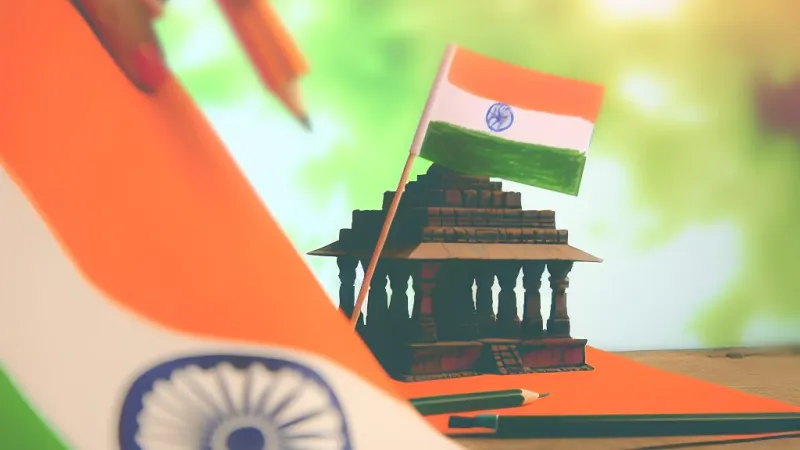
On 22nd July 1947, with independence at the doorstep, the Constituent Assembly adopted the present tricolour: saffron on top (signifying courage and sacrifice), white in the middle (standing for truth and peace), and green at the bottom (symbolising faith and fertility). The spinning wheel was replaced with the navy-blue Ashoka Chakra at the centre, inspired by the Lion Capital of Ashoka at Sarnath. The 24 spokes represent the path of righteousness (dharma).
The Flag as India’s Identity
The adoption of the Indian national flag marked a moment of unprecedented unity. At a time when the country was fragmented by language, religion, and regional aspirations, the Tiranga rose above all differences – binding people into one nation. It was hoisted first by Pandit Jawaharlal Nehru, and ever since, it stands as a beacon of hope and pride in every corner of the land.---
The Deeper Significance of National Flag Adoption Day
Reaffirming National Pride and Unity
National Flag Adoption Day serves as an annual reminder that India's greatness lies in its ability to integrate diversity into unity. The flag is flown everywhere – from government offices in bustling Delhi to tiny villages in Nagaland or Kerala. Regardless of dialect, faith, or attire, the sight of the Tiranga evokes a sense of shared belonging.In the words of Dr. S. Radhakrishnan, India’s second President and eminent philosopher, the flag “represents not only our independence but the freedom and spiritual ideals for which India has lived and sacrificed.” Every time we hoist the flag or sing "Jana Gana Mana," we reconnect with these elemental truths.
Teaching Meaning to the New Generation
The flag’s significance must be consciously passed on to children and youth, who may not have witnessed the struggles of the past. Through school lessons, stories of freedom fighters like Bhagat Singh, Rani Lakshmibai, or Matangini Hazra, and projects on the constitutional values, young Indians begin understanding that our flag stands for all of us, including those whose voices were often excluded.The Flag Code of India, enforced in 2002, also highlights the importance of respectful flag etiquette. Programmes in schools and colleges on Adoption Day help students imbibe these values in letter and spirit.
Celebrating Sacrifice and Responsibility
The adoption of the flag is inseparable from the sacrifices made by millions who fought, suffered, and even died for India’s independence. On this day, we salute their memory and internalise the message that freedom is as much about rights as it is about duties – to serve society, uphold constitutional values, and work for communal harmony.Cementing National Integration
From Himachal to Kanyakumari and Assam to Gujarat, Indians differ in language, appearance, and traditions. But the Tiranga is a constant across regional festivals, local tongues, and ancestral customs. The flag Adoption Day reinforces that our primary loyalty is to the nation, above all narrower identities.---
Observance and Celebrations Across India
National and State-Level Events
On 22nd July, official ceremonies are held at Rashtrapati Bhavan, Parliament House, and state assemblies. The day typically begins with a solemn flag hoisting, followed by the singing of the National Anthem. Leaders, ex-armed forces officers, and social figures deliver speeches highlighting the spirit of the flag and the sacrifices of the past.Messages from the President and Prime Minister are broadcast, touching upon the flag’s history and the duties of every Indian.
Role of Educational Institutions
Schools and colleges across the country transform the day into a spirited celebration. Staff and students assemble in courtyards for flag hoisting. Children prepare patriotic skits, recite inspiring poems like “Jhanda Ooncha Rahe Hamara,” and enact scenes from the life of Pingali Venkayya or Jawaharlal Nehru.Poster-making and essay competitions encourage creative engagement. In some states, such as Maharashtra or West Bengal, students participate in quizzes about the flag's history, fostering healthy competition and learning.
Community Involvement
In housing societies and community centres, residents contribute by decorating entrances with rangolis in saffron, white, and green, and by organising mini-parades. In the culturally rich state of Punjab, the day includes local bhangra and gidda performances, while in Tamil Nadu, flag processions are accompanied by traditional drums.The Reach of Technology and Media
In today’s digital age, technology allows for flag-themed mobile wallpapers, virtual quizzes, and spreading awareness via Instagram reels or WhatsApp statuses. Government and private TV channels broadcast documentaries about the flag's creators, and online campaigns educate people about proper flag disposal.The COVID-19 pandemic has shown adaptability too: virtual flag hoisting, remote essay contests, and online addresses have ensured people remain connected to the day, even if physically distant.
---
Honouring the Tiranga: Our Duty as Citizens
Respect and Proper Etiquette
Every Indian must learn the norms of flag display. For example, the flag must never touch the ground, be used as clothing, or printed on disposable items. These seemingly simple actions show our respect for this symbol the way our ancestors revered the Ganga or the scriptures.Participation and Encouragement
By enthusiastically joining celebrations and involving younger family members, we ensure the tradition continues. Students can motivate their peers by forming flag study circles or conducting awareness drives on flag history.Creative Expression
Youngsters can express their feelings for the flag through poetry in Hindi, Urdu, Tamil, or Assamese, or by designing digital artworks. Sharing stories of unknown heroes like Kanaklata Barua or Babu Genu, who died protecting the flag, can kindle patriotism even in the digital space.Living the Flag’s Ideals
Real homage is not limited to ceremonies. When we help a neighbour, stand against injustice, or foster harmony in our communities, we honour what the flag stands for. Voluntary work, environmental clean-ups, or helping the underprivileged on this day reflect the real meaning of “Jai Hind.”---
Contemporary Relevance and Challenges
The Flag in the Contemporary Indian Mind
With globalisation, many Indians are exposed to competing identities and influences. Nevertheless, moments like the Olympics, Republic Day parades, or a successful ISRO launch show the Tiranga's resonance among modern youth. The challenge is to reinforce its relevance through education and example.Guarding Against Disrespect
Cases of the flag being misused or commercialised on items like plastic or paper demand vigilance and strict adherence to the flag code. Schools must sensitise students and authorities must enforce guidelines, ensuring the flag’s dignity is never compromised.Championing Democratic and Constitutional Values
On Flag Adoption Day, the flag urges us to rise above differences, champion justice, and adopt fellow citizens as equals. In celebrating the flag, we commit to shaping India’s future: voting, volunteering, and standing for the Constitution.---
Conclusion
From its birth in the turbulent days before independence, the Tiranga has served as India’s moral and emotional anchor. National Flag Adoption Day reminds us of the struggle, the dreams and sacrifices that shaped our land, and the responsibilities that freedom entails.Honouring the flag must not be an annual ritual but a continuous pledge. Whether we are students, homemakers, or professionals, we must strive to uphold its principles: unity, peace, and courage. Let us remember that the Tiranga is not just a flag – it is a living testament to our shared past, a challenge for our present, and a light guiding us towards a glorious future.
Rate:
Log in to rate the work.
Log in