Top 10 Key Points on Plastic Pollution and Its Impact
This work has been verified by our teacher: 3.04.2026 at 9:47
Type of homework: Essay Writing
Added: 31.03.2026 at 10:16
Summary:
Discover the top 10 key points on plastic pollution and its impact, helping students understand causes, effects, and solutions for a cleaner India 🌿.
10 Lines on Plastic Pollution
Among the many environmental issues troubling our world today, plastic pollution has grown into a menace that directly threatens both current and future generations. At its core, plastic pollution refers to the accumulation of plastic materials—like bags, bottles, wrappers, and containers—in our surroundings, where they linger for decades or even centuries. While plastic’s invention revolutionised modern life, making things more convenient and affordable, its excessive and careless usage now poses severe risks. With India’s population and urbanisation on a steady rise, the problem is particularly alarming in our country. In the next sections, I will discuss how plastic pollution arises, its consequences on people and nature, as well as ideas for reducing and managing plastic waste.
---
What is Plastic and Why Do We Use It So Much?
Plastic is a synthetic material made mainly from petrochemicals. Unlike natural products such as paper, leaves, or wood, plastic is almost impossible for nature to break down. A single plastic bottle, for example, can persist in the environment for at least five hundred years. The oldest plastic items produced in India may still exist, scattered in landfills or littered streets.Our lives are filled with plastic. From the wrappers on our snacks and the bottles of water we drink, to kitchen containers, buckets, toys, and even the pipes that carry water in our homes, plastic offers lightness, sturdiness, and inexpensiveness. Shopkeepers prefer it for packaging goods, and hospitals use it for syringes, gloves, and many medical tools. Plastic spread rapidly because it is easy to make, lasts long, and can be moulded into endless shapes and uses.
---
Causes of Plastic Pollution
Excessive Production and Use
The 21st-century lifestyle is fast-paced, and people prefer convenience over caution. India, home to more than a billion people, produces thousands of tonnes of plastic waste every day. Our reliance on “use-and-throw” products, such as single-use bags, cups, and straws, increases waste. Festivals and weddings generate heaps of disposable plates and spoons, which are often left unrecycled.Faulty Waste Disposal
Cities like Delhi, Mumbai, and Chennai have overburdened waste management systems. Municipal workers must handle huge quantities of garbage, much of it mixed with plastic. In smaller towns and villages, the problem is worse — open dumping and littering is common, plastics choke drains, and burning waste releases dangerous smoke.Inadequate Recycling
Although plastic is technically recyclable, only a fraction of it is actually recycled in India. Mixing of wet and dry waste at the source makes recycling tough. Lack of proper recycling plants, and the presence of different types of plastics, mean a large amount ends up dumped or incinerated.Lack of Awareness
Many do not realise that throwing a plastic wrapper on the road has consequences beyond mere untidiness. Convenience takes priority, and awareness about long-term damage is low.---
Environmental Impact of Plastic Pollution
Plastic waste has seeped into every part of our environment.Soil Degradation
Discarded plastic bags and wrappers often end up scattered in fields. They form a layer over the soil, preventing water from seeping down and making it less fertile. Harmful chemicals from plastic can also leak into the earth, harming crops and the microorganisms that live there.Water Contamination
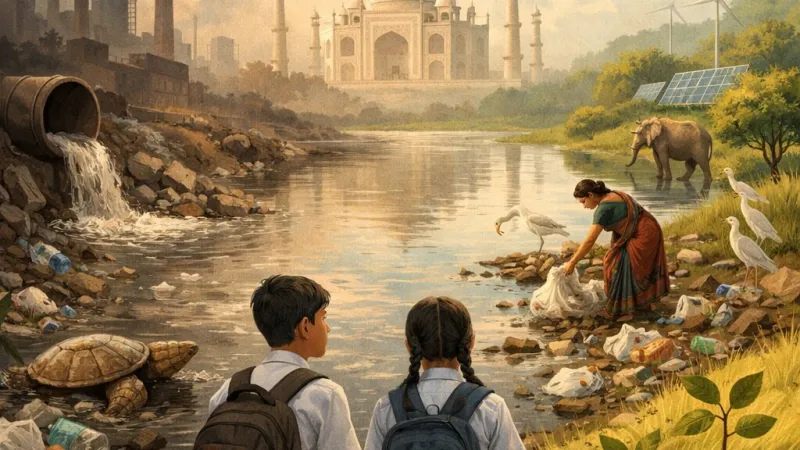
Rivers such as the Ganga and Yamuna are frequently clogged with plastic bottles, bags, and even polystyrene plates. During monsoon, plastic-choked drains result in citywide flooding, bringing disease and disruption. Floating plastics break down into microplastics—tiny particles that enter the water supply and the bodies of fish and even humans.Hazard to Animals
Cows, buffaloes, and stray dogs in cities are often seen nibbling at plastic bags found in garbage dumps, mistaking it for food. Consuming plastic can cause their digestive systems to block and even lead to death. In oceans, turtles and fish suffocate after swallowing or getting entangled in plastic waste. Over time, this reduces biodiversity and damages fragile ecosystems.Air Pollution
Burning of plastic waste, especially in open air by waste collectors or in localities without proper garbage disposal, releases extremely harmful gases. This pollutes the air, causing breathing difficulties and raising the threat of serious diseases like cancer.Long-Term Ecological Threats
Plastics do not simply disappear with time. Instead, they break into smaller pieces, but never truly degrade. These microplastics collect in soil and water, gradually entering food chains and potentially reaching human plates.---
Health Hazards Due to Plastic Pollution
Beyond harming nature, plastic pollution poses risks to our health.Toxic Chemicals
Plastics contain chemicals like BPA and phthalates, which are known to disrupt hormones. When hot food is stored in plastic, or when plastic is burnt, these toxins can get into our food, water, and air.Disease and Disorders
Long-term exposure to such chemicals is linked with cancers, allergies, and developmental issues in children. Workers in plastic industries face even more direct and severe health hazards.Vulnerable Groups
The threat is highest for those with weak immune systems: children, pregnant women, and elderly people living near landfills or waste-burning sites.---
The Indian Perspective: Scale and Initiatives
Every day, Indian cities generate about 26,000 tonnes of plastic waste, according to government studies. The visible impact is evident: during the monsoon, Mumbai’s drains overflow with plastic rubbish, while the Ganga and Yamuna are frequently shown on television covered in floating debris. Even in remote Himalayan villages, plastics appear alongside the region’s natural beauty.Government Response
In recent years, the Indian government has taken strong steps, banning certain single-use plastic products and urging all states to implement proper segregation of waste. Campaigns like Swachh Bharat Abhiyan have helped raise awareness and improve cleanliness, while local administrations in places like Sikkim and Maharashtra have successfully imposed plastic bans.Community and NGO Efforts
Many schools now teach children to segregate wet and dry waste, and NGOs organise clean-up drives at beaches like Versova and Marina. In Kerala, green protocol mandates weddings to be plastic-free, inspiring communities to adopt cloth and plant-based alternatives.---
Solutions to Tackle Plastic Pollution
The fight against plastic pollution needs everybody—government, businesses, and citizens—to play their part.1. Reduce Usage
Using cloth bags, steel tiffins, and glass bottles reduces our dependence on disposables. Carrying a reusable water bottle or saying no to plastic straws makes a difference.2. Reuse and Recycle
Segregating dry plastic waste at home and handing it to kabadiwalas (scrap collectors) boosts recycling. Responsible companies can invest in better recycling plants and innovate to make recycling more efficient.3. Stronger Waste Management
Cities and villages must set up door-to-door garbage collection and safe disposal units. Technologies such as compressed biogas and safe incinerators can help manage non-recyclable plastic.4. Stringent Laws
Implementation of plastic bans must be strict, with steep fines for violations. Companies should be rewarded for producing biodegradable packaging and punished for polluting.5. Education and Awareness
Schools and colleges need to teach students about the harms of plastic from a young age. Media, folk artists, and local leaders can use street plays, posters, and social media to spread the word.6. Individual Action
Participating in clean-up events, refusing excess packaging, and inspiring neighbours and relatives can create ripple effects leading to larger societal change.---
Future Path: Towards a Plastic-Free India
Innovation is key to a sustainable future. Indian scientists are working on biodegradable alternatives, such as cutlery made from rice bran or plates from areca leaves. Adopting a “circular economy”—where products are reused and recycled repeatedly—is essential. Digital technologies, such as apps for reporting illegal dumping or locating recycling centres, can make community participation easier. As global citizens, Indians can share our solutions and learn from countries that have managed to drastically reduce plastic use. Together, we can pave the way towards swachh (clean) and sundar (beautiful) Bharat.---
Conclusion
To summarise, plastic pollution is a grave issue born from our overuse and careless disposal of a once-innovative material. Its impacts are everywhere—from the rivers that sustain our civilisation to the most remote forests, from the air we breathe to the food we eat. But the power to bring about change lies in our collective hands. If each of us makes conscious choices at home, school, and work, we can help build a cleaner, safer world for ourselves and generations to come. As our ancient scriptures say, “Prakriti rakshati rakshita”—Nature protects those who protect her. Let us pledge today to reduce plastic in our lives and be guardians of this planet.---
Rate:
Log in to rate the work.
Log in