The Vital Role of Doctors in Society and Health Care in India
This work has been verified by our teacher: 2.05.2026 at 16:44
Type of homework: Essay Writing
Added: 1.05.2026 at 9:09
Summary:
Discover the vital role of doctors in India’s society and health care, exploring their impact, challenges, and dedication to saving lives and improving public health.
Paragraph on Doctor
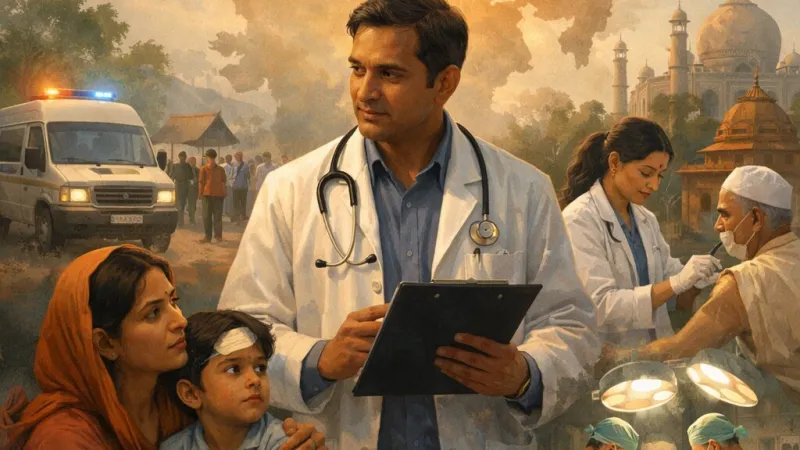
In every phase of our lives, moments arise when health becomes the foremost concern; it is at these moments that we turn, invariably and instinctively, to the steady hands and wise minds of doctors. Whether it is a child’s fever during monsoon, an elderly person’s struggle with diabetes, or a sudden accident on the streets, doctors stand as sentinels at the threshold between illness and well-being. A doctor, in the Indian context, is far more than a person in a white coat: they are healers, advisors, caretakers, and, sometimes, the last hope for families in distress. This essay explores how doctors impact individuals and society, the intricate journey of becoming a medical professional in India, and their unyielding influence on the health of our nation.
Doctors as Pillars of Society
Doctors occupy a revered position in our society, closely associated with hope and healing. From the stories of Sushruta—the ancient Indian surgeon whose pioneering work is mentioned in the Sushruta Samhita—to the fever clinics operated by local physicians in small towns today, the medical profession has always played a central role in the public consciousness. Health camps in rural villages, mass polio vaccination drives championed by government and private practitioners, and swift responses to dengue or cholera outbreaks all illustrate that the health of a community hinges upon its doctors. During the coronavirus pandemic, Indian doctors demonstrated unmatched resolve: senior consultants in AIIMS braving risk, young residents in Taluk hospitals, and even general practitioners in remote areas became lifelines for millions. Their commitment in such times of crisis reminds us why doctors are often called "jaan bachane waale farishte" (angelic saviours of life) across India.Not only do doctors fight visible illnesses, but they also foster health through prevention. By administering routine vaccinations, advising on hygiene, explaining nutrition, and correcting common myths (such as those around tuberculosis or hepatitis), doctors play a critical part in improving quality of life. Their education campaigns—in both cities and villages—on diseases like malaria, HIV, and lifestyle-related disorders have saved innumerable lives over the years.
The Demanding Journey to Become a Doctor in India
Becoming a doctor in India is not simply about clearing exams, but about devoting one's mind and heart to lifelong learning and service. The process begins with a fiercely competitive entrance exam (like NEET), followed by five and a half years studying for a Bachelor of Medicine and Bachelor of Surgery (MBBS), which includes a compulsory year-long internship. But that is only the beginning. The real test lies in specialisation—whether pursuing MD/MS seats in government or private medical colleges, or advanced fellowships such as those in cardiology, neurology, or oncology.What sets medical professionals apart is their spirit of discipline, sacrifice, and empathy. Anecdotes abound of medical students working sleepless nights in government hospitals, spending hours in busy outpatient departments (OPDs), and braving the emotional burden of critical surgeries or terminally ill patients. Yet, their learning never ends. Medicine is an ever-evolving field, and doctors continuously attend seminars, compulsory continuing medical education (CME) sessions, and workshops on the latest advancements. For instance, in the last decade, rapid progress in minimally invasive surgeries, telemedicine, and genetic therapies has demanded constant skill upgradation. This lifelong pursuit of knowledge is enshrined in the very ethics of the medical profession—drawing on the ancient Indian value of Dedication (Nishtha) taught by the Gurus of Ayurveda.
Diverse Specialisations: The Many Facets of Medicine
A common misconception is that all doctors treat all ailments, but in truth, medicine has become a vast ocean, with many distinct domains. General physicians (family doctors) act as the first point of care in our daily lives, adept at managing everything from seasonal flu to blood pressure. They often know families for generations and provide holistic advice, making them almost a part of the household in many Indian communities.For more serious or specific issues, patients are referred to specialists: paediatricians handle infancy and childhood illnesses, guiding parents through the crucial years of growth immunisation; cardiologists manage heart attacks and chronic hypertension, now increasingly common in our urban centres; gynaecologists help women through the complex journeys of pregnancy, childbirth, and related health; surgeons—whether orthopaedic, neurological, or general—perform intricate operations, often turning clinical knowledge into the art of saving lives with their hands; dermatologists address ailments of hair and skin, such as vitiligo and eczema; and psychiatrists provide support for mental health conditions, a topic gaining overdue recognition in Indian society today. The collaborative nature of healthcare, with timely referrals and teamwork across these specialities, ensures patients get the best possible care.
The Daily Realities and Challenges of Doctors
A day in the life of a doctor is a lesson in balance and grit. Their work stretches from early mornings, attending OPDs and making hospital rounds, to late nights dealing with emergencies—sometimes receiving calls in the middle of family meals or festivals like Diwali or Holi. In government hospitals, doctors often face overwhelming crowds, limited infrastructure, and acute resource shortages; in contrast, private clinics may pose different challenges such as administrative burdens or demanding patients. This duality is well-captured in Dr. K. S. Santhanam’s autobiography, where he describes delivering twins in a power-less primary health centre, using torchlight, and then spending his afternoon on paperwork.In rural India, doctors traverse long distances, sometimes on foot or by bicycle, to reach small villages, where they might be the only healthcare provider for hundreds of families. There are also emotionally fraught moments: breaking news to families, fighting stigma (for example, helping HIV+ patients), and tackling administrative hurdles. Yet, by drawing on empathy, communication skills, and inner resilience, doctors bridge the gap between science and suffering.
Transforming Lives—One Patient at a Time
Doctors are best measured not merely by their academic degrees but by the countless lives they touch. There are innumerable stories—from surgeons in Mumbai’s Tata Memorial Hospital offering hope to poor cancer patients, to paediatricians in Kerala volunteering during the Nipah outbreak, to the GP in your own neighbourhood who calmly reassures panic-stricken parents. The timely intervention by a doctor during a road accident, or advocating for routine blood pressure checks, can change the course of families across generations. Many health crises—like the significant reduction of polio cases in India—are a testament to doctors’ ability to bring about tangible public health transformations.Doctors also work beyond prescription, advocating for preventive healthcare. They counsel patients on balanced diets, the importance of regular exercise, quitting tobacco, and stress management. Initiatives like school health check-ups and community counselling sessions—common in states like Tamil Nadu and Maharashtra—demonstrate their wider influence in building a healthier, more aware society. Increasingly, doctors lend their expertise to shape government health policies and medical research, helping to develop strategies for eradicating endemic diseases and improving maternal health outcomes.
Rate:
Log in to rate the work.
Log in