Short Essay on Railway Station: Importance and Role in India
This work has been verified by our teacher: 4.04.2026 at 16:54
Type of homework: Essay Writing
Added: 1.04.2026 at 9:36
Summary:
Explore the importance and role of railway stations in India, understanding their structure, functions, and impact on connectivity and society. 🚉
Railway Stations in India: Gateways to Connectivity, Culture, and Change
Railway stations are much more than mere points where trains halt. In a vast country like India, they serve as throbbing arteries, carrying the movement of millions across diverse landscapes. From the crowded lanes of metropolitan Kolkata to the serene outskirts of rural Kerala, railway stations knit villages, towns, and cities into a single, unified network. The Indian Railways, often described as the backbone of the nation's transport, owes much of its efficiency and spirit to these stations. Every day, stations facilitate not only travel and trade but also the coming together of stories, cultures, and aspirations. In this essay, we will delve into the heart of Indian railway stations, exploring their structure, functions, types, facilities, everyday life, challenges, modernisation, and their broad impact on our society.
---
What is a Railway Station?
A railway station is a specially designated place where trains pause so passengers and goods can be boarded and alighted safely. It acts as an interface between railways and people, ensuring that travel isn’t just speedy but also accessible. The significance of a station lies in its ability to bring together diverse activities under one roof: buying tickets, waiting for trains, managing luggage, or simply watching the world pass by. From the grand Chhatrapati Shivaji Maharaj Terminus in Mumbai to a tiny halt in a remote Jharkhand village, every station plays a crucial role in scheduling train halts, operational coordination, and, above all, making journeys possible for ordinary Indians.---
Anatomy of a Railway Station: The Physical Structure
Indian railway stations, though diverse in size and appearance, usually share some common physical features:- Platforms: These are the raised lengths of concrete alongside the tracks where trains stop. A small station may have a single platform, while giant hubs like Howrah boast over twenty. - Ticket Counters: While traditional windows still cater to many, e-ticketing kiosks have rapidly become the norm, reflecting the shift towards digital India. - Waiting Halls and Sheds: To shield passengers from sun and rain, waiting areas offer seats and shelter—a feature that distinguishes a well-equipped station from a basic halt. - Station Building: This is the nerve centre, housing station master offices, railway police booths, public announcement systems, and sometimes canteens or bookshops. - Foot Overbridges and Elevators: To help people move safely from one platform to another, foot overbridges (now more often equipped with escalators or lifts at major stations) are essential. - Parking and Vehicle Stands: Areas where autos, taxis, and two-wheelers line up, ensuring last-mile connectivity. - Stalls and Vendors: Tea sellers, samosa and vada pav stalls, bookstalls—these bring a unique flavour to every Indian station. - Safety Arrangements: CCTV cameras, public address systems, and alarm chains are commonly found, especially at busier stations.
Together, these features transform a station from a mere stop to a bustling community space.
---
Types of Railway Stations in India
Given the vastness of the Indian Railways, stations are categorised based on their function and scale:- Terminal Stations: Ends or beginnings of long train journeys. Examples include Chennai Central and Howrah, where trains terminate or originate. - Junction Stations: Places where multiple lines cross, making transfers possible. Allahabad Junction, Vijayawada, and Katpadi are such nodes in the network. - Suburban Stations: Often numerous in big cities like Mumbai, these largely serve daily office-goers and students, for example, Dadar or Borivali stations. - Roadside Halts and Flag Stations: Found in smaller towns or remote villages, here, trains stop only on signal, and facilities are limited to a simple shelter and nameboard. - Classification Factors: Volume of passengers, revenue generation, and strategic location. For instance, A1 category stations have higher earnings and facilities compared to E-category rural stops.
---
Services and Facilities Rendered by Stations
A railway station in India is designed to cater to a variety of services, each critical for a smooth rail journey:- Booking & Reservation: From queuing up for tatkal tickets to using IRCTC kiosks for online reservations, stations help passengers secure seats for their journeys. - Waiting Facilities: Air-conditioned or regular waiting rooms, restrooms, and retiring rooms provide much-needed comfort, especially during delays. - Baggage Handling: Porters (coolies, mostly identifiable by their red uniforms), trolleys, and sometimes automated conveyor belts help passengers with their luggage. - Goods Handling: In stations like Durgapur or Nagpur, vast goods sheds and sidings are visible, where coal, fertilizers, and other freight are loaded and unloaded. - Information Services: Announcements in multiple languages, digital boards, and enquiry counters guide passengers through the often-complex schedules. - Passenger Security: Railway Protection Force (RPF) and state police personnel patrol the platforms, while security cameras keep watch over crowds. - Accessibility: Ramps, tactile paths for visually challenged travellers, and specific assistance counters are part of ongoing efforts to make Indian railway stations barrier-free. - Connectivity: With autos, cycle-rickshaws, metro stations, and bus stands nearby, stations serve as intermodal transport hubs.
---
The Lively World of Indian Railway Stations
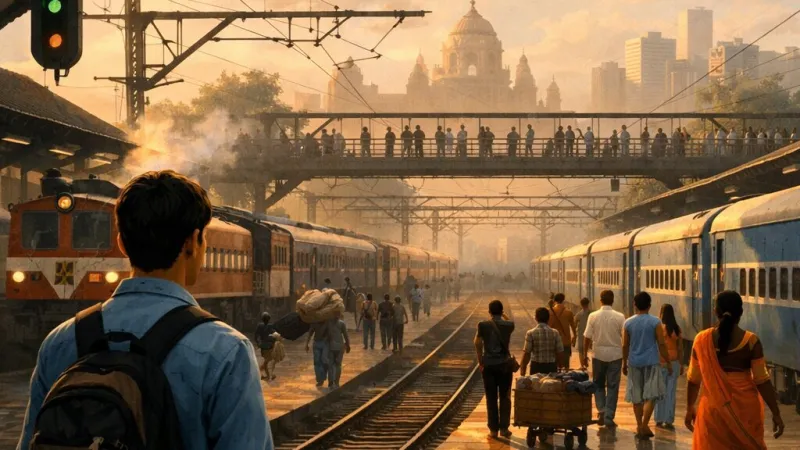
To stand on a busy platform is to witness a microcosm of India: saree-clad women balancing shopping bags, school children giggling on benches, and vendors shouting their wares. The atmosphere is constantly in flux—early morning quiet is shattered by the arrival of an express train; afternoons see pausing pilgrims resting; evening brings shouts, laughter, and the hurried footsteps of office-goers returning home. Reunions, tearful farewells, and the happy commotion of college friends going on a trip—railway stations are theatres where human emotions play out in real time.In addition, commercial activities thrive. Stalls selling chai, vadai, samosas, or piping hot jhalmuri; porters swiftly darting through the crowd with mountains of luggage on their heads; even shoe shiners and mobile charger providers—all find a place on the platform. At the same time, challenges like littering, noise, overcrowding, and occasional law-and-order concerns persist. Despite these issues, the lively pulse of a station is unmatched.
---
Modernisation and Innovations
The Indian Railways has consciously embarked on an ambitious journey to modernise its stations:- Digital Revolution: The introduction of ticket vending machines, QR code-based waiting room entry, and even facial recognition security at pilot stations mark a technological leap. - Comfort-centric Upgrades: Revamped stations such as Rani Kamalapati (formerly Habibganj, Bhopal) boast features like air-conditioned lounges, LED-lit platforms, bio-toilets, and purified water dispensers. - Security Improvements: Extensive CCTV coverage, baggage scanners, and regular drills ensure greater protection for passengers. - Green Initiatives: Many large stations—Secunderabad, Visakhapatnam, for instance—have solar panels, rainwater harvesting systems, and active waste management protocols. - Connectivity: Free Wi-Fi (launched at Mumbai Central in 2016 and expanded across hundreds of stations), and ample charging points have made journeying more convenient, especially for students and young professionals.
Despite these advances, traditional charms—like the familiar "chai garam" calls—persist, making modern stations a blend of old and new.
---
Socio-Economic Impact of Railway Stations
Railway stations are engines of local and regional development. They enable farmers from remote Bihar villages to send their produce to faraway Delhi markets. Students from small towns can now commute daily to universities in cities like Chennai or Pune, while an ill villager from Assam can reach medical facilities in Kolkata.Trade flourishes around major railway junctions, and local businesses catering to passengers prosper—whether it’s Mysore pak at Mysuru station, or Bengali sweets at Sealdah. Tourist hotspots like Agra, Puri, or Haridwar owe much of their prosperity to convenient rail connectivity, drawing pilgrims and travelers from all across India. Railway employment—porters, vendors, maintenance workers—not only creates jobs but sustains entire families.
Perhaps most importantly, stations help bridge the urban-rural divide, transporting hope, opportunity, and change into even the smallest towns.
---
Persistent Challenges
No fair essay can ignore the problems plaguing railway stations:- Overcrowding: Peak seasons and festival times see unmanageable crowds, leading to discomfort and sometimes tragic stampedes. - Maintenance Woes: Overflowing bins, dirty platforms, and poorly maintained restrooms tarnish the traveler’s experience. - Security Threats: Pickpocketing, theft, and occasional harassment remain issues, especially in large, poorly lit stations. - Infrastructure Shortcomings: Many stations still lack sufficient platforms, clean waiting rooms, and accessible entryways for the differently-abled. - Environmental Burden: Noise pollution from announcements and engines, plastic waste, and unauthorised encroachments by hawkers are persistent hazards.
Tackling these issues will require consistent government intervention as well as public awareness.
---
Conclusion
Indian railway stations, from the grand heritage domes of Mumbai CST to the humble mud-and-brick halt in interior Odisha, anchor the lives of millions. They are not just stops for trains, but vital social, economic, and cultural centres. In their clamour and colour, their chaos and bustle, one hears the heartbeat of the nation.As India aspires towards greater modernisation, it must remember that in making its railway stations efficient, clean, sustainable, and inclusive, it is investing not just in infrastructure, but in progress itself. As every train departs and arrives, railway stations will continue to stand as enduring symbols of India's unity in diversity, carriers of dreams, and custodians of connection.
In the words of Rabindranath Tagore, who once evoked the poetry of journeys and destinations, Indian railway stations truly are the crossroads of the nation's aspirations, hopes, and memories.
Rate:
Log in to rate the work.
Log in