Sant Ravidas Jayanti: Significance and Traditions Celebrated in India
This work has been verified by our teacher: 29.04.2026 at 9:22
Type of homework: Essay Writing
Added: 27.04.2026 at 7:32
Summary:
Discover the significance and traditions of Sant Ravidas Jayanti celebrated in India, learning about the saint’s role in social reform and spiritual equality.
Paragraph on Sant Ravidas Jayanti
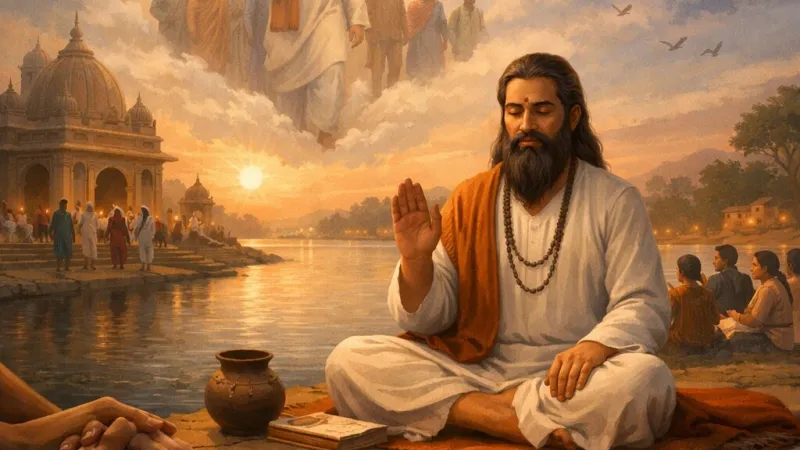
Festivals in India are not merely colourful occasions for community celebration, but deep reminders of the country’s spiritual heritage and collective values. Some festivals go beyond rituals and sweets—they awaken our conscience to the stories of great souls who questioned society and changed its course through compassion and wisdom. Among such occasions, Sant Ravidas Jayanti holds a unique position. It marks the birth anniversary of Guru Ravidas, a mystic poet-saint of the Bhakti movement, who lived between the 15th and 16th centuries. Born into humble beginnings in Seer Govardhanpur near Varanasi, Sant Ravidas grew to become a towering symbol of social reform and spiritual equality in India. This essay aims to explore the origin, rituals, and continuing significance of Sant Ravidas Jayanti, while highlighting how the festival inspires ideas of equality, devotion and social justice in contemporary India.
Historical Background of Sant Ravidas
Early Life and Context
Ravidas was born around 1377 CE in a family engaged in leatherwork, a profession traditionally relegated to the so-called lower castes. His birthplace, Seer Govardhanpur, now a significant pilgrimage spot, was then steeped in the rigid norms of caste-based discrimination. Despite societal constraints, young Ravidas showed rare wisdom and empathy, challenging unjust customs from a young age.Mystic Poet and Social Reformer
As part of the Bhakti movement—a widespread spiritual wave that swept across India—Sant Ravidas used poetry to reach common people. Bhakti saints like Kabir, Mirabai, and Guru Nanak were his contemporaries, and all shared the common urge to break barriers between the soul and God, and among humans themselves. In hymns written in simple Braj Bhasha, Ravidas spoke of God's love, equality of all beings, and a vision of a society without divisions: “Begampura shehar ka naam”—his imagined city where sorrow and discrimination are banished.Religious Influence
Sant Ravidas's teachings did not remain confined to his immediate followers. His verses found a place in the Guru Granth Sahib, the primary scripture of Sikhism, indicating respect from the Sikh Gurus. Over time, a distinct religious community, the Ravidassias, developed, drawing spiritual and moral guidance from his life and writings. His message of spiritual awakening and social harmony continues to resonate among various groups.Significance of Sant Ravidas Jayanti
Spiritual Importance
The essence of Sant Ravidas Jayanti is spiritual renewal. Unlike some festivals anchored in elaborate ritual, this Jayanti celebrates a Guru who urged people to find God within themselves and see divinity in all. Followers gather in homes, temples and community halls to chant his shabads (verses), seeking to absorb his message of love, humility and direct communion with the divine.Cultural and Social Impact
Sant Ravidas Jayanti is not only a day of devotion but also a statement against caste-based prejudice. By honouring the birth of a saint who was born into a ‘lower’ caste but became a revered Guru, the festival embodies the triumph of merit, devotion, and inner purity over social hierarchy. Schools, colleges and public organisations often commemorate the occasion with seminars and cultural functions, discussing themes of social inclusion and respect for human dignity.Religious Observance
For the Ravidassia community, this Jayanti is a spiritual anchor, renewing their identity, history and ethical code. Devotees of all backgrounds, regardless of religion or caste, participate in joyous gatherings that include reading from sacred texts like ‘Amritbani Guru Ravidas Ji', reinforcing the idea that spiritual knowledge is open to all.Date and Timing of Celebration
Magha Purnima and the Hindu Calendar
Like many Indian festivals, Sant Ravidas Jayanti is set by the lunar calendar. It falls on Magha Purnima—the full moon day in the month of Magha, which usually falls in January or February. The date varies annually when converted to the Gregorian (solar) calendar because of the lunar cycle’s shifting structure.Significance of Magha Purnima
Magha is regarded as a spiritually auspicious month in Hindu tradition. It is a period marked by religious rituals, holy dips in the Ganga and other rivers, and increased acts of charity. The timing creates a powerful backdrop, as the full moon symbolises purity and completeness.Rituals and Traditions of Sant Ravidas Jayanti
Religious Activities
Devotional gatherings begin with early morning prayers. Temples dedicated to Guru Ravidas, particularly in states like Punjab and Uttar Pradesh, host special aartis and communal reading of his hymns. Musicians often recite his poetry accompanied by the harmonium and tabla, filling the air with an atmosphere of devotion. In some temples, devotees read from the ‘Amritbani Guru Ravidas Ji’ throughout the day.Processions and Community Gatherings
A key feature of the day is the Nagar Kirtan—a colourful procession carrying the portrait or idol of Sant Ravidas. Children and adults alike join in singing bhajans, waving flags and sharing prasad (blessed offerings). Streets and temples are decorated with marigold garlands and vibrant rangoli, while cultural programmes include folk dance, plays and recitations highlighting the Guru’s life.Pilgrimage and Holy Bath
Many devotees travel to Seer Govardhanpur, considered Sant Ravidas’s birthplace. Others participate in ritual bathing in rivers, especially the Ganga, believing that such actions at Magha Purnima purify both body and soul.Festive Atmosphere
The festival also serves as a social gathering. Local fairs with stalls, music and traditional foods create a lively environment. The central message, however, remains the same—community service, compassion and respect for all.Regional and Community Variations
Sant Ravidas Jayanti is particularly prominent in northern Indian states—Uttar Pradesh, Punjab, Madhya Pradesh, Rajasthan, and Maharashtra. In Punjab, with its significant Dalit Sikh and Ravidassia populations, the event is marked by elaborate processions and sometimes even state holidays. Each region incorporates local customs: in Uttar Pradesh, folk songs in Avadhi or Bhojpuri are sung; in Maharashtra, processions might include the dhol-tasha, a traditional drum ensemble.The Ravidassia community follows distinctive rituals, placing particular emphasis on their sacred text, the ‘Amritbani Guru Ravidas Ji’, and conducting initiations or vows (Amrit Sanchar) for new followers. Despite these local customs, all celebrations are united by the shared principles of Sant Ravidas’s teachings.
Rate:
Log in to rate the work.
Log in