Why Saving Earth Is Crucial: Our Shared Duty to Protect the Planet
This work has been verified by our teacher: 6.04.2026 at 13:59
Type of homework: Essay Writing
Added: 3.04.2026 at 7:50
Summary:
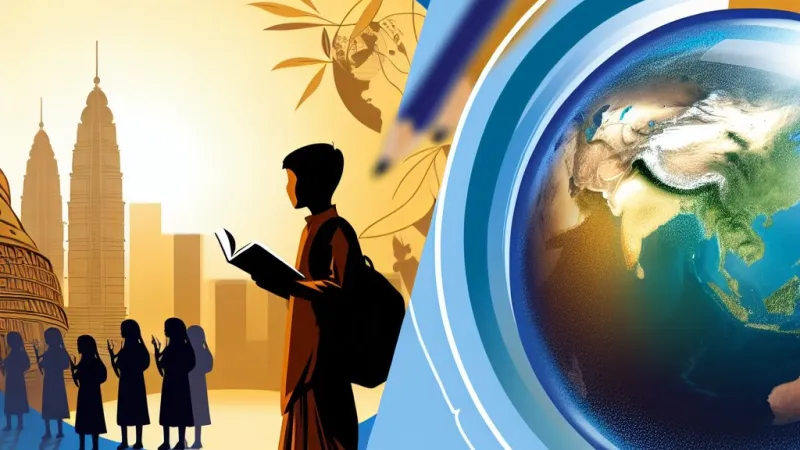
Explore why saving Earth is crucial and learn how students in India can protect our planet by understanding its challenges and shared responsibilities. 🌍
Save Earth: A Collective Responsibility for Our Common Home
Earth is much more than just a planet spinning in the vastness of space; it is our only home, nurturing a glorious variety of life. From the snowcapped peaks of the Himalayas to the sunlit coasts of Kanyakumari, every inch of our planet overflows with wonders and possibilities. Yet, the cry of “Save Earth” echoes ever more urgently through schools, assemblies, and the media. This phrase has become a global mantra, not just because it is a catchy slogan, but because the need to defend our delicate environment has never been more critical.
As the only known habitat where countless species, including humans, animals, plants, and the smallest microorganisms, can thrive, Earth is irreplaceable. Our well-being is intricately linked to the health of this planet; if we allow it to degrade, our own survival comes into question. Thus, each one of us—students, teachers, industrialists, farmers, and lawmakers—has a moral duty to act. In this essay, I will discuss why saving Earth is an urgent necessity, delve into the threats it faces, and unravel the story of how we can all contribute towards healing and sustaining our planet, with special reference to the Indian context.
The Current State of Our Earth
While Earth has survived millions of years of change, today it faces unprecedented challenges, largely driven by human activities. Rampant air pollution in urban centres like Delhi, water pollution flowing into the Ganga and Yamuna, and deforestation in the Western Ghats are all stark reminders of the environmental crisis at hand. Industrialisation, though important for economic progress, releases toxic gases such as sulphur dioxide and nitrogen oxides into the atmosphere, causing smog that blots out the blue sky and leads to respiratory illnesses.Modern agricultural practices, designed to increase yield, have resulted in the excessive use of chemical fertilisers and pesticides. These not only degrade the quality of soil but also seep into rivers, contaminating drinking water and harming aquatic life. Forests, once considered sacred groves and protected by our ancestors, are now being cleared at alarming rates for timber and urban expansion. According to a 2023 report by the Forest Survey of India, over 14,000 square kilometres of forests have been lost in the last decade, leading to a loss of biodiversity and habitats for vital wildlife such as tigers and elephants.
Plastic waste, from single-use bags to discarded bottles, is choking our landscapes and oceans. Microplastics have even been detected in the remote Himalayan glaciers, threatening even the most pristine environments. The combined consequence of these actions is global warming—leading to melting Himalayan glaciers, unpredictable monsoons, frequent floods in Assam, droughts in Maharashtra, and rising sea levels along our coasts. Not only do species like the Great Indian Bustard face extinction, but human populations also suffer from contaminated water, crop failures, and health hazards.
Earth’s Natural Resources: Our Lifeline and Responsibility
Our planet has blessed us with marvellous resources: rivers such as the Ganga and Godavari that nourish cities and farmlands, dense forests like Sundarbans that shelter unique life forms, and rich soil that brings forth the crops we eat. Air, water, fertile land, forests, sunlight, and minerals remain vital to our survival. When we observe Indian traditions—like worshipping rivers as goddesses, respecting the Tulsi plant, or celebrating festivals like Van Mahotsav (Tree Festival)—we are reminded of the deep reverence our ancestors held for the Earth and its bounty.Yet, we must remember that these resources are not endless treasures. Many are finite, or at best, replenished slowly over centuries. Groundwater, for instance, is being extracted in Punjab and Rajasthan faster than it can be restored, leading to water crises. Overgrazing, unplanned construction, and chemical dumping are weakening the fertility of our soils, putting food security in jeopardy.
The impact is visible: the Indian Meteorological Department frequently warns of water scarcity; the Central Ground Water Board reports falling water tables; and wildlife experts warn of shrinking habitats. If we continue this unsustainable consumption, soon there will be little left for future generations.
Human Responsibility and Ethical Imperative
Our scriptures and folk tales often refer to the Earth as "Dharti Maa"—Mother Earth. Whether in ancient texts like the Upanishads, or in the modern teachings of Mahatma Gandhi, the message is the same: humans are not owners of the Earth, but trustees. As the most intelligent beings capable of scientific and technological advancements, it is not only in our interest but also our ethical responsibility to protect and preserve what we have inherited.Balancing economic development and environmental health is the challenge of our era. “Sustainable development”—development without environmental destruction—must be prioritised. India is making strides, such as by promoting renewable energy through the expansion of solar parks in states like Gujarat and Rajasthan, and by increasing the use of electric vehicles. However, every citizen also plays a role. From carrying cloth bags to composting wet waste, from riding bicycles to supporting tree plantation drives, our smallest daily choices matter.
School programmes such as the “Eco Club,” or mass movements like “Jal Shakti Abhiyan,” exemplify how collective action at the grassroots level can have a profound effect. Spreading awareness among family, friends, and community fosters a culture of environmental stewardship.
Industrialisation, Urbanisation, and Their Dual Impact
It is undeniable that industrialisation has fueled economic growth and provided employment. Yet, industries situated near the Ganga in Kanpur, or the chemical plants around Vapi in Gujarat, are also major contributors to pollution. Factories routinely discharge untreated waste, polluting rivers and air alike. The burning of fossil fuels for electricity, especially coal, is responsible for high levels of carbon dioxide, a key driver of climate change.Urban expansion compounds the issue. Cities like Bengaluru, once abundant with lakes, are losing water bodies to concrete jungles. Wetlands—critical for flood control and biodiversity—are being drained to make way for residential complexes.
However, positive stories also abound. Indian cities are now adopting green buildings, solar rooftops, waste-to-energy plants, and metro rail systems to reduce dependence on private vehicles. The Delhi Metro, for instance, is one of the world’s first metros to become carbon-neutral by applying eco-friendly practices.
Global and National Initiatives: India’s Green March
India does not stand alone in this fight. As a signatory to the Paris Agreement, the country has pledged to reduce the carbon intensity of its economy by 33-35% by 2030. Global events like World Environment Day, and India’s commitment to host “Mega Plantation Drives,” reinforce our determination.On the national front, landmark schemes such as Swachh Bharat Abhiyan have mobilised millions towards a cleaner India. The Namami Gange initiative aims to restore the purity of our holiest river. The National Green Tribunal enforces environmental laws, while NGOs like the Centre for Science and Environment champion the cause from the ground up.
Traditional practices also hold answers. The conservation of groves by tribal communities in the Northeast, the rainwater harvesting step-wells in Rajasthan, and the wisdom of crop rotation all offer locally relevant solutions born from ages past.
Challenges and Solutions
Despite progress, several obstacles remain. Economic priorities often overrule environmental considerations. There is still a lack of awareness, especially in remote areas. Political will sometimes wavers, and industries resist adopting greener but initially costlier methods.To tackle these challenges, education is key. Environmental studies are now compulsory in Indian schools, but more experiential learning—tree planting, nature walks, and eco-friendly workshops—should be encouraged. Youth entrepreneurship in green technology can offer employment while nurturing the planet. Laws must be both stringent and fairly enforced, and civil society should remain vigilant.
Above all, unity is required: North and South, urban and rural, government and citizen must join hands to secure a green future.
Visualising a Greener Earth
Imagine an India where the Yamuna runs clear, where peafowls dance in lush fields outside Chennai, and the cheetal graze safely in revived forests. The air is fresh and health-giving, children play beside clean ponds, and farmers reap bountiful harvests without fear of pesticides. This vision is possible, but only if we combine technology—such as solar-powered irrigation, vertical gardens, and bio-toilets—with the will to change and the wisdom of tradition.Each small effort—be it separating waste at home, convincing a family to switch to public transport, or supporting a policy on renewable energy—contributes to this dream.
Conclusion
Saving Earth is neither a mere slogan nor a passing trend. As we have seen, the health of our planet underpins every aspect of our lives, from the food we eat to the air we breathe. The threats—pollution, resource depletion, climate change—are pressing, but not insurmountable. The responsibility to save Earth lies with each of us, regardless of age, occupation, or region.As the ancient Sanskrit verse proclaims: “Prithvi rakshati rakshita”—Earth protects those who protect her. Let us draw inspiration from our sages, our scientists, and our own conscience. If we cherish the Earth as we would our own home, with love and respect, a brighter, greener future awaits.
Let us all take a pledge, not just for ourselves, but for generations to come, to be the custodians Earth deserves. After all, saving Earth is not someone else’s job—it is our shared mission, filled with hope, duty, and the promise of renewal.
Rate:
Log in to rate the work.
Log in