Meaning and Traditions of Raksha Bandhan Festival in India
This work has been verified by our teacher: 11.04.2026 at 10:04
Type of homework: Essay Writing
Added: 10.04.2026 at 5:40
Summary:
Explore the meaning and traditions of Raksha Bandhan festival in India to understand its cultural importance, rituals, and lifelong bond between siblings.
Paragraph on Raksha Bandhan
Raksha Bandhan is one of India’s most cherished festivals, shining brightly among our calendar of celebrations. Every year, on the auspicious day of Shravan Purnima, brothers and sisters across the country come together to honour a bond that is at once tender, vibrant, and emotionally profound. The phrase “Raksha Bandhan” itself merges two powerful Sanskrit words: ‘Raksha’, meaning protection, and ‘Bandhan’, meaning bond or tie. Thus, it signifies a protective relationship, a thread knotted with prayers, love, and unspoken promises, making it much more than a mere ritual. This essay explores the cultural and emotional heart of Raksha Bandhan, tracing its enchanting customs, rich mythological tales, present-day adaptations, and the lasting lessons it has for our lives.The Cultural and Emotional Significance of Raksha Bandhan
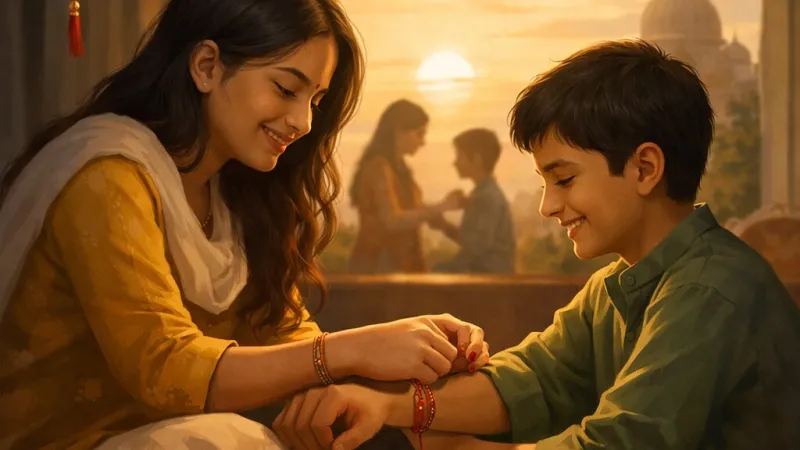
In Indian culture, the relationship between siblings—especially between brothers and sisters—is infused with unique warmth and playfulness. Our stories, from the tales of Tulsidas’s Ramcharitmanas to Rabindranath Tagore’s poignant poems, are full of illustrations where siblings stand up unfailingly for each other. The spirit of Raksha Bandhan is rooted in this familial sentiment, serving as a festival that upholds the values of affection, trust, and life-long dedication. For sisters, tying the Rakhi is an act full of hope and blessing, invoking divine protection for their brothers, while brothers respond by vowing to stand by their sisters, not just with empty words, but through action and empathy.The thread of rakhi is not simply a decorative band adorned with beads, stones, or silk. Every knot symbolizes a cherished desire—that the sibling will remain safe, happy, and smiling in the face of life’s storms. On this day, age-old rituals bring alive the emotional weight of such gestures. Sisters often begin the morning by preparing the rakhi thali, decorating it with vermilion, rice grains, diya, and sweets, as they sing songs full of mischief, memories of growing up, and wishes for the coming year. The act of tying the rakhi becomes a living metaphor for the strength of family ties; it is when affection is woven into a visible mark upon the wrist, declaring to the world an unbreakable vow.
From Uttarakhand, where brothers gift their sisters garlands made from sacred grass ‘doob’, to Maharashtra, where the festival blends into ‘Narali Purnima’, Raksha Bandhan adapts itself beautifully to regional flavours. Yet, the core values of selfless love and respect remain unchanged, speaking to the Indian ethos of families as support-systems and sanctuaries.
Rituals and Customs of Raksha Bandhan
The festival of Raksha Bandhan falls in Shravan, during the monsoon—nature’s reminder of rejuvenation and hope. According to the Hindu lunar calendar, it is observed on the full moon day, which makes the occasion astrologically favourable for starting new endeavours and cementing relationships. Preparations for the festival begin well in advance. Markets bustle with colourful stalls, selling an astonishing array of rakhis—from the dazzling, elaborate zari work popular in Delhi and Lucknow, to simple, eco-friendly threads cherished in rural homes.On the main day, sisters start by applying tilak (vermilion and rice) on their brother’s forehead, a gesture that symbolises auspiciousness and protection from evil. The aarti is performed as an offering of light and blessings, with prayers chanted for the brother’s prosperity and health. Then comes the quiescent moment of tying the rakhi—the sister’s gentle hands bringing together past memories and future hopes in a bond that gleams on the brother’s wrist.
Brothers, in turn, present gifts as an acceptance of their role—often promising not just material protection, but emotional support too. The laughter of children, the scent of homemade laddoos and kheer, and the exchange of stories enliven the homes. In some families, sisters fast until the ceremony, underlining the depth of their wish for their brother's well-being.
Mythological and Historical Significance
No Indian festival is complete without its stories—mythological, historical, or folk legends that draw from the vast imagination of our civilisation. Raksha Bandhan’s origins can be traced back to tales found in the Bhavishya Purana, where Lord Indra’s wife, Sachi, tied a protective thread (raksha) on his wrist to ensure his victory against demons. Such narratives underline the festival’s ancient roots.One of the most celebrated legends is from the Mahabharata. When Krishna injured his finger, Draupadi tore a piece of her sari to bind his wound. Touched by her gesture, Lord Krishna vowed to stand by her in troubled times—a promise he later fulfilled. This episode beautifully illustrates the spirit of selfless giving that lies at Raksha Bandhan’s heart.
History too provides stirring instances. The story of Rani Karnavati of Chittor sending a rakhi to Mughal Emperor Humayun when her kingdom was under threat is often recounted. Humayun, moved by her appeal, marched to defend her, demonstrating how the festival transcended personal relationships to affect political decisions and community bonds. Similarly, tradition says that Alexander’s wife sent a rakhi to King Porus, imploring him to spare her husband’s life. Porus, adhering to his promise, refused to kill Alexander in battle.
Over centuries, Raksha Bandhan has come to symbolise unity, compassion, and brotherhood, sometimes even crossing religious, social, and regional divides.
Contemporary Observance and Evolving Traditions
While the essence of Raksha Bandhan remains intact, its expression has evolved with changing times. Today, designer rakhis featuring cartoon characters for little brothers, metallic bands, and even biodegradable threads, cater to every taste and concern. With the rise of e-commerce, siblings separated by cities—or even continents—can now send rakhis, gifts, and sweets swiftly through online portals.In urban areas like Mumbai, Delhi, and Bengaluru, offices, schools, and even residential societies organise group Raksha Bandhan celebrations. These gatherings promote social harmony, with children tying rakhis to classmates and friends, symbolising universal fraternity and care. Even among the Indian diaspora in Fiji, Mauritius, and the UK, the festival has found a cherished space, marking an emotional connection to their roots and family.
The custom has also become inclusive over the years, with many families observing the festival irrespective of caste, religion, or gender. Some communities have reinterpreted the ritual, using the opportunity to tie rakhis to members of the armed forces, teachers, or neighbours—thus broadening the definition of protection and respect.
Moral and Social Lessons
Raksha Bandhan is much more than a ritualistic exchange; it instils in us lessons that are relevant, especially in present-day India. It strengthens family ties, reminding siblings of their shared past and mutual responsibilities. The festival nurtures values of empathy, trust, and care among the young, helping shape future citizens who appreciate the essence of protective and supportive relationships.In recent years, discussions around gender equality have prompted introspection on the festival. Increasingly, sisters also vow to protect their brothers, making the celebration more reciprocal. Cases are now common where rakhis are exchanged between friends, co-workers, or community members, making it a symbol of harmony and unity rather than a strictly gender-bound contract.
Perhaps the greatest relevance of Raksha Bandhan in today’s fast-paced world is its call for pausing and reconnecting. In a digital age flooded with smartphones and social media, the festival invites us to spend a day cherishing relationships in their purest form—through conversation, shared memories, and thoughtful gestures.
Rate:
Log in to rate the work.
Log in