Top 10 Lines Explaining the Significance of the Losar Festival
This work has been verified by our teacher: 16.03.2026 at 10:07
Type of homework: Essay Writing
Added: 13.03.2026 at 16:11
Summary:
Discover the top 10 lines explaining the significance of the Losar Festival, highlighting its history, rituals, and cultural importance in India’s Himalayan regions.
10 Lines on Losar Festival
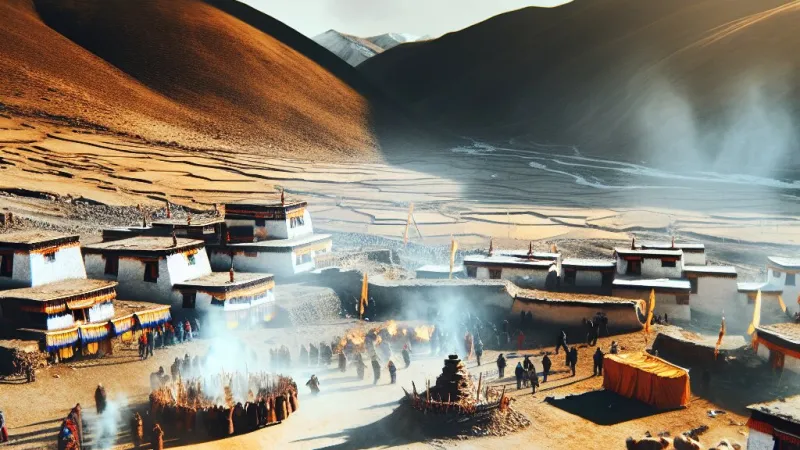
India, a land of vibrant cultures and multifarious traditions, plays home to an array of festivals, each narrating its own unique tale. Among these, Losar stands out as a magnificent celebration of the New Year, especially among Buddhist communities. While many Indians might be more familiar with Diwali, Holi or Eid, Losar quietly unfolds each year in the picturesque backdrop of the Himalayas—especially in Ladakh, parts of Himachal Pradesh such as Spiti, and Arunachal Pradesh among the Monpa community. More than just the start of a calendar year, Losar weaves together threads of spiritual renewal, rich local heritage, and strong community spirit. In this essay, I will explore ten essential lines that capture the heart of Losar, illustrating its meaning, rituals, and enduring impact on culture and society.
---
1. Meaning and Origin of Losar
The name ‘Losar’ itself emerges from the Tibetan words ‘Lo’ meaning ‘year’ and ‘Sar’ meaning ‘new’, thus signifying ‘New Year’. Its origin traces back to the ancient Bon faith, predating the arrival of Buddhism in Tibet and adjoining Himalayan regions. In earlier times, the Bon people performed winter rituals to dispel evil forces and welcome favourable spirits for a prosperous planting season. Over centuries, as Buddhism spread, these animistic customs mingled with Buddhist practices, crafting the Losar as we know it today. Hence, Losar is both a religious and cultural festival, upholding ancient beliefs while encompassing the enlightened philosophies of Buddhism, making it a living testimony to India’s layered spiritual history.---
2. Timing and Duration
Unlike festivals fixed by the modern calendar, Losar’s timing is decided by the Tibetan lunisolar calendar, usually falling between late February and early March. While in many Himalayan communities celebrations last three days, in some areas like Tibet, Losar extends up to fifteen days, marked by elaborate gatherings and rituals. The opening three days capture the most fervent activities—ritual prayers, visits to monasteries, and festive meals—setting the tone for an auspicious beginning. For students used to the Gregorian calendar, it may help to think of Losar as a movable festival, much like the dates for Holi or Eid which change each year as per the moon.---
3. Regional Variations within India
Losar's spirit is seen most colourfully in Indian regions with historic Buddhist influence. In Ladakh, the festival fills valleys with vibrant processions and monastery rituals, while the Monpa community of Tawang and West Kameng in Arunachal Pradesh brings their own flavour—erecting prayer flags, arranging statues of the Buddha outdoors, and celebrating with community dances. The Sikkimese version, though smaller, blends local Lepcha and Bhutia customs, using the occasion to strengthen inter-community bonds. Each region adds unique decorations, culinary favourites, and folk performances, proving how diverse traditions flourish under the expansive umbrella of Losar.---
4. Preparations Before the Festival
Preparations for Losar begin many days, sometimes even a month, in advance. Households are scrubbed clean—floors are whitewashed, clutter is removed, and old objects are discarded, symbolising the removal of negativity and the invitation of auspiciousness. Markets bustle with people shopping for fresh clothes, colourful scarves (khatas), and ingredients for special dishes. Women prepare ‘khapsay’ (crisp biscuits), ‘mok-mok’ (steamed dumplings), and barley flour for tsampa—each having ritual significance. Homes glow with the hues of hand-painted motifs and the soft fragrance of juniper and wildflowers, echoing a universal human yearning for purity and good fortune at the turn of the year.---
5. Rituals and Religious Practices
On Losar’s eve, families gather for deep house-cleaning and evening prayers, lighting butter lamps before pictures or statues of Buddha. In Ladakh and Tawang, monasteries come alive with the sound of gongs, trumpets, and chanting monks. Offerings of incense, flowers, and fruits are made to appease local spirits and invite blessings for the entire year. The ritual burning of incense, called ‘sang’, would remind one of the purifying bonfires of Holika Dahan. A traditional barley-based drink, ‘chhaang’, is offered and shared as a symbol of goodwill and joy, reminiscent of how other Indian festivals use sweets as tokens of hospitality.---
6. Cultural Programmes and Processions
The festival atmosphere heightens with mesmerising mask dances, or ‘Cham’, performed by monks and local artists. These theatrical enactments—filled with swirling robes and vibrant masks—dramatise tales from Buddhist mythology, such as the triumph of good over evil or the stories of Padmasambhava and Milarepa. Villages witness colourful parades, with participants dressed as legendary animals or deities, captivating children and elders alike. In towns like Leh or Tawang, local cultural troupes present folk songs and dances, preserving centuries-old oral traditions for the youth.---
7. Social Significance and Community Bonding
Perhaps the most beautiful aspect of Losar is how it dissolves social boundaries. Old disputes are quietly settled, and debts are repaid as people strive to enter the New Year with cleansed hearts. Neighbours exchange plates of food, and gifts—a mark of goodwill and shared prosperity—circulate within and between families. The communal feasts ensure that nobody is left out regardless of wealth or status, reflecting a principle similar to the langars of Sikhism. In a society often divided by caste, creed, and economic barriers, such festivals offer precious moments of healing and togetherness.---
8. Symbolism and Spiritual Significance
Losar brims with symbols of hope, renewal, and positivity. The fluttering prayer flags on rooftops catch not just winds but also wishes for peace and harmony, much like the kites during Makar Sankranti. The five colours—blue, white, red, green, and yellow—represent nature’s elements and the balance every person seeks in life. The flowers, incense, and ritual food are more than decorations; they express gratitude towards nature and the divine, nurturing self-introspection and spiritual growth that remain at the heart of Buddhist philosophy.---
9. Losar in Nepali and Bhutanese Context
Though Losar originated in Tibet, its warmth spills across borders. In Nepal, it is called ‘Lhochhar’, celebrated primarily by the Sherpa and Tamang communities, with dances and gatherings suited to local customs. Bhutanese Losar, while aligned with the same lunar calendar, includes special national prayer sessions and archery contests. These shared and yet distinct practices across the Himalayas display both unity in tradition and diversity in cultural expression, underscoring how festivals adapt and thrive within different communities just as Pongal and Bihu represent New Year in Tamil Nadu and Assam respectively.---
10. Contemporary Relevance and Global Observance
Today, Losar is no longer just an isolated hill festival. With the spread of Tibetan and Himalayan diasporas to cities like Delhi, Bangalore, and even abroad, Losar has found a place on the world map. Cultural exhibitions, workshops for schoolchildren, and traditional performances in urban centres introduce new generations—including those with no ancestral ties—to the festival’s meaning. Tourist interest in Ladakh and Arunachal Pradesh peaks during Losar, helping keep ancient traditions alive amid rapid modernisation. Thus, the festival acts as a bridge—connecting past and present, local and global, spiritual and social.---
Rate:
Log in to rate the work.
Log in