Sachin Tendulkar: Key Highlights of India’s Cricket Legend in 10 Lines
This work has been verified by our teacher: 15.04.2026 at 9:04
Type of homework: Essay Writing
Added: 13.04.2026 at 6:49
Summary:
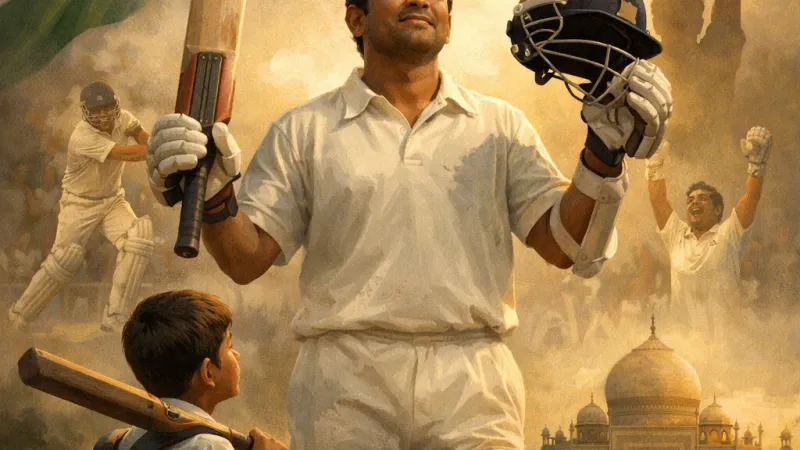
Explore Sachin Tendulkar’s life and cricket career in 10 lines to learn key highlights of India’s legendary player and his lasting impact on the sport.
A Comprehensive Exploration of Sachin Tendulkar’s Life, Career, and Legacy
In India, cricket is much more than a sport—it is nearly a religion. The thrum of excitement in neighbourhood gullies, the tense silence in drawing rooms during a close match, and the eruption of joy when India wins are parts of everyday life. At the heart of this national passion stands one man, Sachin Ramesh Tendulkar. Fondly called the “Master Blaster” and the "God of Cricket," he is not just an extraordinary athlete, but a beacon of dedication, perseverance, and hope for millions across the country and the world. His life story is not only about broken records and unforgettable innings, but also about humility, discipline, and the power to unite. This essay traces the journey of Sachin Tendulkar—his early life, stellar cricketing career, leadership, accolades, values, and enduring legacy.
---
I. Early Life and Background
1. Family and Origins
Sachin Tendulkar was born on 24th April 1973 in the heart of Mumbai, Maharashtra. His father, Ramesh Tendulkar, was a respected Marathi poet and professor, whose love for language and literature shaped young Sachin’s sensibilities. His mother, Rajni, worked in the insurance sector, providing a stable support system. Growing up in a modest, close-knit family, Sachin learned values of humility, honesty, and a drive for excellence from an early age. These family values became the bedrock on which his legendary career was built.2. Early Interests and Athletic Inclinations
Interestingly, Sachin’s first sporting passion was tennis. As a child, he idolised John McEnroe and would imitate the tennis star’s playing style in the lanes of Bandra. However, fate—and the wisdom of elders—soon guided him towards cricket. His brother, Ajit, noticed his restless energy and raw talent, and introduced him to Ramakant Achrekar, one of Mumbai’s most revered cricket coaches. Mumbai's rich cricket culture, particularly at Shivaji Park, played a pivotal role in nurturing Sachin’s abilities.3. Early Training and Development
Under Achrekar sir’s strict tutelage, Sachin’s days were split between academics and grueling cricket drills. Stories abound of Achrekar hiding behind trees to silently observe if Sachin would skip practice, instilling discipline and honesty. The young Sachin would often play multiple matches in a single day, sometimes travelling on the footboard of Mumbai’s crowded local trains. His participation in school-level tournaments for Sharadashram Vidyamandir and city clubs exposed him early to competitive cricket and set the stage for his meteoric rise.---
II. Rise to Prominence in Domestic Cricket
1. Debut and Remarkable Performances
At the age of just 15, Sachin debuted in the Ranji Trophy for Bombay (now Mumbai) and scored an unbeaten century—a feat that made him the youngest Indian to do so. His debut is now folklore, a reminder to all aspiring cricketers that age is no barrier to greatness if one possesses skill and determination. He soon became a mainstay in domestic tournaments like Duleep and Deodhar trophies, outclassing seasoned opponents well beyond his years.2. Key Milestones and Early Breakthroughs
One of Sachin’s formative moments came in a partnership with Vinod Kambli, where the duo put on an incredible 664-run stand in a Harris Shield school match. News of his exploits travelled fast, catching the attention of selectors and cricket lovers alike. He scored audacious runs against strong teams—memorable being his double century against the touring Australian side in 1988—a testament to his precocious talent.3. Technical Skills and Playing Style
Sachin was a right-handed batsman, but interestingly, he wrote with his left hand—the mark of cross-dominance often seen in legends. From an early age, he displayed impeccable balance, innovative stroke play, and the ability to adapt to challenging bowling on both bouncy and turning pitches. His technical prowess, composure, and grit honed in the domestic circuit would become his hallmark at the international level.---
III. International Career and Achievements
1. Test and One Day International (ODI) Debuts
In November 1989, a sixteen-year-old Sachin Tendulkar took guard against the fearsome Pakistani attack, which included Imran Khan and Wasim Akram. Facing blistering pace at such a young age, Sachin was hit on the face but continued batting, earning admiration for his courage and determination. His ODI debut soon followed, although his initial performances were modest. However, his resilient approach foreshadowed the greatness to come.2. Historic Records and Milestones
Many firsts and records followed. At just 17, he became the youngest Indian to score a Test century—against England at Old Trafford—a sign of extraordinary composure under pressure. Over the years, he became the first batsman in ODIs to score a double century, against South Africa in 2010, a record that symbolised the evolution of the format. More remarkably, he amassed 100 international centuries—a record still unmatched. His run accumulations, both in ODIs and Tests, set global standards for batting excellence.3. Captaincy and Leadership Roles
Sachin captained India in two stints (1996-98 and 1999-2000), though the results did not always match his personal standards. The pressures of captaincy in a cricket-mad nation weighed heavy, but Sachin’s approach to leadership was marked by honesty and humility. While victories under his captaincy were rare, he mentored young talents and led by example, earning respect both inside and outside the dressing room.4. World Cup Performances
Tendulkar’s love affair with the World Cup is legendary. In the 2003 edition, he was the tournament's highest run-scorer, his innings against Pakistan still cherished by fans. The crowning glory came in 2011, when he lifted the World Cup on home soil—a dream he had cherished since childhood. His ability to perform under immense pressure became the stuff of legend. Yuvraj Singh famously said, "Winning the World Cup for Sachin was the biggest motivation," underlining the respect he inspired among teammates.---
IV. Contributions Beyond Individual Records
1. Role Model and Inspiration
More than the records, Sachin’s influence lies in inspiring generations. In every by-lane, children aspired to be 'the next Sachin'. His discipline, focus, and respect for hard work resonated with millions. His humility—touching the feet of elders, addressing fans courteously—even at the height of his fame, made him a true role model.2. Sportsmanship and Conduct
Never did Sachin let success turn into arrogance. He was renowned for his impeccable sportsmanship, often walking before the umpire’s signal if he felt he was out—a rare sight in competitive sport. When sledged, he replied with performance, not words. Handling criticism and lean patches with patience, he taught the world the art of graceful conduct in both victory and defeat.3. Cultural Ambassadorship
Sachin’s presence made Indian cricket synonymous with excellence worldwide. His stint in county cricket with Yorkshire opened Indian talent to English audiences and bridged cultural divides. Beyond stadiums, Sachin stood at the forefront of social causes, lending support to health, education, and children’s welfare through his charitable initiatives.---
V. Awards, Honours, and Recognition
1. Civilian Awards and Government Honours
In acknowledgement of his contributions, Sachin Tendulkar received India’s highest civilian honour, the Bharat Ratna, in 2013, becoming the first sportsperson to do so. He also won the Padma Shri, Padma Vibhushan, and the Arjuna Award, the highest accolades for Indian athletes.2. Cricketing Accolades
Sachin was inducted into the ICC Cricket Hall of Fame in 2019. Domestically and internationally, he was repeatedly named ‘Player of the Year’, and was featured in Wisden’s list of Cricketers of the Year. Memorable awards, such as being voted the best Test player by his peers and receiving the Sir Garfield Sobers Trophy, further solidified his legacy.3. Legacy Ensured Through Memorials and Media
Statues of Sachin have been erected at venues like Wankhede Stadium, and documentaries like “Sachin: A Billion Dreams” chronicle his journey. Cricketing literature in India—like Harsha Bhogle’s “Out of the Box” and Sachin’s own autobiography “Playing It My Way”—have immortalised his experiences for future generations.---
VI. Personal Life and Values
1. Family and Personal Relationships
In 1995, Sachin married Dr. Anjali Mehta, a pediatrician. The couple’s children, Sara and Arjun, grew up shielded from the glare of fame, thanks to Sachin’s commitment to family privacy. Despite his global stardom, he made sure to cherish family time and lead a grounded life.2. Values and Off-Field Personality
What sets Sachin apart is not just his cricketing genius, but his modesty. He remains approachable, soft-spoken, and ever willing to learn, even after conquering the cricket world. His focus on fitness and mental wellbeing influenced generations, paving the way for professionalism in Indian cricket.3. Philanthropy and Social Engagements
Through the Sachin Tendulkar Foundation, he has supported underprivileged children’s education, provided medical care to those in need, and contributed to disaster relief efforts, such as during the 2004 tsunami. Sachin believes, as he often says, “People throw stones at you, and you convert them into milestones,” not just in cricket, but in life.---
VII. Retirement and Post-Cricket Endeavours
1. Retirement Overview
On 16th November 2013, India, and indeed the world, watched through moist eyes as Sachin played his final Test at the Wankhede Stadium. His emotional farewell speech—where he thanked everyone from his coach to the ground staff—remains etched in the hearts of fans.2. Roles After Retirement
Post-retirement, Sachin has donned new avatars—a mentor for Mumbai Indians in the IPL, a Rajya Sabha MP (appointed in 2012), and an advisor to Indian cricketing bodies. He has relentlessly championed grassroots sports development, working for better facilities and opportunities for young talent.3. Continued Influence and Legacy
His autobiography, speaking engagements, and involvement in cricket administration keep him close to the game. Young cricketers, from Prithvi Shaw to Shubman Gill, openly acknowledge the impact of Sachin’s words and achievements on their own journeys.---
Rate:
Log in to rate the work.
Log in