Short Essay on Violence Against Women in India: Causes and Solutions
This work has been verified by our teacher: 19.04.2026 at 11:02
Type of homework: Essay Writing
Added: 17.04.2026 at 11:44
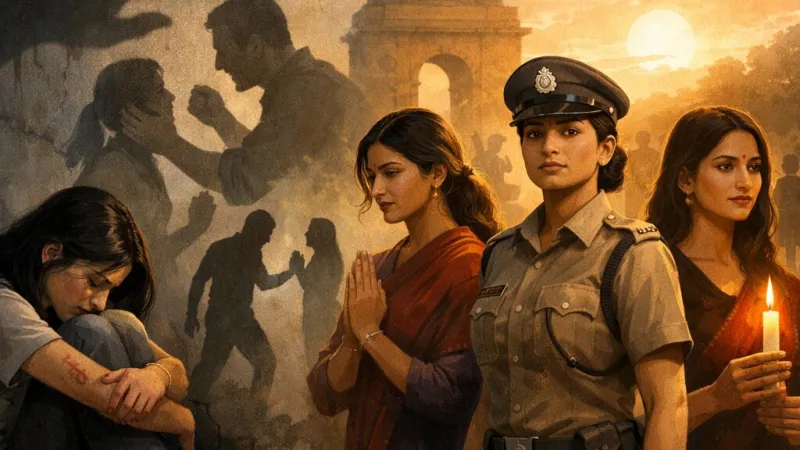
Summary:
Explore the causes and solutions of violence against women in India to understand its impact and learn effective ways to promote safety and equality.
Violence Against Women in India: A Deep-Rooted Social Challenge
Violence against women is a subject that strikes at the very core of our society’s conscience. In India, it envelops diverse forms, ranging from physical, sexual, and emotional abuse to economic deprivation and psychological terror. Whether occurring quietly within the four walls of homes or erupting dramatically in public spaces, such violence reflects deep-rooted prejudices and a violation of the basic rights and dignities assured to every woman. For centuries, our society has oscillated between worshipping women as goddesses and then subjecting them to heinous abuses in everyday life. Addressing this contradiction is not only a question of justice and equality but a precondition for genuine progress in India.Understanding Violence Against Women: Scope and Context
To comprehend the problem, one must first define violence against women clearly. It includes overt physical brutality—such as beatings, pushes, and assault—but also subtler forms, like psychological intimidation, economic dependency, sexual harassment, or curtailment of basic freedoms. The landmark Supreme Court judgment in the Vishaka Guidelines (1997) marked a turning point by explicitly recognising sexual harassment at the workplace as a violation of women’s fundamental rights.However, the struggle starts even before birth. Female foeticide and infanticide, fuelled by a traditional preference for sons, have skewed India’s sex ratio for decades. The ancient texts and traditions—like Manusmriti’s patriarchal codes—have long influenced gender relations, legitimising male dominance and often reducing women to subordinate roles as wives, mothers, and daughters-in-law. As a result, forms of violence against women are not just isolated criminal acts; they are a mirror of structural inequalities embedded in the very fabric of Indian society.
In recent years, the issue has gained increasing visibility. Public outrage after incidents like the 2012 'Nirbhaya' gang-rape in Delhi underscored the urgent need to address violence against women, prompting nationwide protests and legal reforms. Yet, despite increased awareness, these crimes remain widespread, reminding us that much work remains to be done.
Various Forms of Violence Faced by Women in India
1. Domestic Violence
The most pervasive form of abuse, domestic violence, often remains shrouded in silence. As per National Family Health Survey reports, a significant proportion of Indian women have experienced physical or emotional abuse at the hands of their husbands or marital families. This violence isn’t always physical; cruel words, relentless control, humiliation, and isolation erode women’s dignity and independence on a daily basis.2. Sexual Violence
From public groping on buses—commonly referred to as eve-teasing—to rape and molestation, sexual violence is a grim reality for many Indian women. The infamous 2012 Delhi case represented not an aberration, but a bitter truth etched in the everyday experience of countless girls and women as they commute, study, or work. Reports from the NCRB suggest that thousands of such cases are registered each year, but many more go unreported due to fear or social stigma.3. Dowry-Related Violence
Though payment of dowry was outlawed through the Dowry Prohibition Act (1961), incidents of dowry harassment continue to torment Indian homes. Women frequently face torture, and even murder, for dowry disputes, leading to tragic cases of “bride burning” or suspicious suicides.4. Female Foeticide and Infanticide
Despite advances in medical science, pre-natal sex determination and selective abortion of female fetuses continue in many states. Socio-cultural beliefs that sons are the primary bearers of family legacy, while daughters are burdens, fuel these crimes, creating disturbing gender imbalances.5. Acid Attacks and Honour Killings
Acid attacks, like those endured by Laxmi Agarwal, are among the most horrific assaults, scarring survivors physically and emotionally for life. Honour killings, where families murder women for ‘dishonouring’ family pride—often by marrying a partner of their choice—highlight society’s obsession with controlling women's bodies and choices.6. Psychological and Economic Abuse
Not all wounds are visible. Restricting women from pursuing education, employment or friendships, or denying them financial independence, constitutes less obvious but equally crippling violence. The cycle of control, dependency and manipulation invisibly imprisons countless women.Root Causes: Why Does Violence Persist?
Deep-Rooted Patriarchy and Gender Norms
Patriarchy saturates every layer of Indian society—from rural hamlets to urban apartments. Boys are raised to believe they are family custodians, while girls are trained in obedience and sacrifice. The literary classic “Godan” by Munshi Premchand captures the subtle oppressions rural women face, underlining how deeply cultural attitudes foster inequality. Social acceptance of hierarchy teaches women to silently endure injustice instead of challenging it.Deficiency of Education and Awareness
A lack of quality education, especially in rural India, means both women and men are often unaware of women’s rights and legal protections. Myths, prejudices, and regressive ideas are passed on uncritically, from generation to generation.Economic Dependence
Financial vulnerability is a key reason women often endure abuse. Without money or property rights, many feel powerless to exit violent relationships or assert their autonomy.Mass Media’s Roles
Cinema and television, through their depictions of ideal women or romanticisation of stalking and dominance, can reinforce harmful stereotypes. At the same time, responsible films like "Pink" and "Thappad" have begun challenging the status quo by opening public conversations around consent and spousal abuse.Weak Law Enforcement and Social Stigma
Several women refrain from seeking legal redress due to insensitive police responses, convoluted justice processes, or fear of being blamed by their own families and communities. The legal reforms post-2012 have improved some aspects, but underreporting and judicial delays persist.Victim Blaming and Silence
Victim blaming runs deep, with questions like “What was she wearing?” or “Why was she out late?” shifting fault from perpetrators to survivors. This culture of silence is the biggest shield protecting abusers.Consequences: Impact on Women and Society
The repercussions go beyond individuals. Women suffer physical injuries, long-term health problems, depression, and even suicidal thoughts. Young girls may be forced to abandon their studies or dreams due to hostile environments. These losses ripple across society—hampering India’s economic growth, destabilising families, and perpetuating cycles of deprivation.A country where half the population lives in fear cannot aspire to real development. The burden of violence drains our resources—be it medical care, legal support, or lost productivity. Moreover, unsafe public spaces restrict women’s mobility, limiting their participation in society and public life.
What Is Being Done: Laws and Government Initiatives
India’s legislative framework has gradually evolved to address these problems. With acts like The Protection of Women from Domestic Violence Act (2005), Section 498A IPC (addressing dowry harassment), and amendments to punish sexual crimes, the State has attempted to match penalties to the severity of offences. The launch of helpline numbers (like 181 for women in distress), all-women police stations, and fast-track courts after the Nirbhaya case are steps in the right direction.Schemes like “Beti Bachao, Beti Padhao” seek to challenge gender bias at the social-educational level. National and State Commissions for Women monitor violations and push for policy changes. However, legislation alone is insufficient without effective enforcement, police sensitivity, and societal support.
The Role of Society and Media
Social change requires participation beyond government. Grassroots NGOs like SEWA and Snehalaya have empowered lakhs of women through self-help groups and awareness camps. Campaigns—both government like "Beti Bachao, Beti Padhao" and independent efforts—drive home gender sensitivity messages in schools, communities and workplaces. Social media has amplified movements ranging from #MeToo to ‘Stop Acid Attacks’, enabling survivors to find support and solidarity.In media, responsible storytelling—both in real news coverage and fictional narratives—can challenge existing norms, as seen in shows like "Satyamev Jayate," which spotlighted everyday injustices and moved audiences to empathy and action. It is equally important to challenge and correct the narratives that trivialise violence or normalise stalking and harassment.
Young People and Students: Agents of Change
Students and the youth can play a transformative role. By sensitising peers, supporting victims instead of shaming them, and proactively participating in awareness campaigns, they help shift the culture of silence and complicity. Engaging in debates, promoting equality at home and on campus, and reporting incidents without fear are powerful steps forward. Even social media—often criticised for its toxicity—can be harnessed for positive awareness and support.Challenges and the Path Ahead
Overturning centuries-old prejudices is not easy. Patriarchal attitudes stubbornly persist, and legal implementation gaps remain large. Yet, progress is possible—by empowering girls and women through education, making workplaces and public spaces safer, reforming police and court systems, and supporting survivors, not stigmatising them.Above all, a genuine transformation demands a holistic approach—one that combines legal reform, education, economic empowerment, and cultural change. Only then can we lay the foundations for a safer and more just India.
Conclusion: Towards a Society of Respect and Equality
Violence against women in India is not merely a women’s issue; it is a national crisis that affects the health, progress, and moral fibre of our entire society. Ensuring women’s safety and equality must be seen as essential to Indian nationhood—not just as an aspiration but as an urgent necessity.It is the duty of every Indian—be it government, institutions, society, or individual—to act decisively against all forms of violence and discrimination. Let us remember that a nation where its women are free from fear is destined for true progress. Only then can we claim proudly that we are moving towards the ideals enshrined in our Constitution—equality, dignity, and justice for all.
Rate:
Log in to rate the work.
Log in