Onam Festival: Kerala's Cultural Heritage and Legendary Origins
This work has been verified by our teacher: 30.04.2026 at 9:31
Type of homework: Essay Writing
Added: 27.04.2026 at 8:43
Summary:
Explore Onam Festival’s cultural heritage and legendary origins to learn about Kerala’s traditions, myths, and the spirit of unity behind this grand celebration.
Paragraph on Onam
If one were to search for the soul of Kerala, it would undoubtedly be found amidst the vibrant colours, joyous music, and collective celebration during Onam. Recognised as the most important festival in Kerala, Onam is not just an occasion—it is an emotion for Malayalees across the world. Steeped in age-old traditions, rituals, and folklore, Onam brings to life the very essence of Kerala's rich cultural heritage. In the tapestry of Indian festivals, Onam is that golden thread which weaves unity, prosperity, and gratitude into one grand spectacle. This essay delves deep into the legendary origins, social relevance, and enduring customs that make Onam a symbol of hope and harmony, extending far beyond the boundaries of any religion or caste.
I. Historical and Mythological Origins of Onam
A. Mythological Foundation
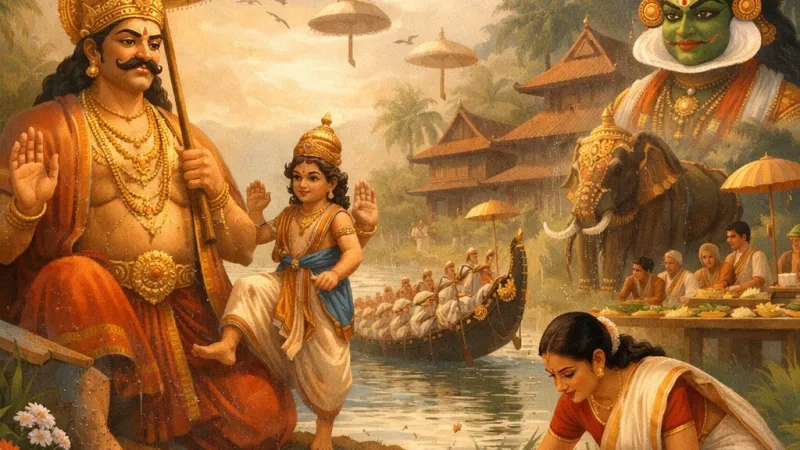
The story behind Onam, passed down through generations, is rooted in the legend of King Mahabali. Mahabali, popularly remembered as ‘Maveli’ in many folk songs, is described in Malayalam literature as an asura king whose reign was marked by peace, justice, and equality. Under his rule, Kerala is said to have flourished; there were no lies, no thefts, and nobody went hungry. The “Maveli Naadu Vaneedum Kalam” song, sung in every Kerala household during Onam, paints a picture of this utopian reign where everyone lived as one community.However, Mahabali’s growing popularity alarmed the Devas (celestial beings), who feared he would surpass them. They prayed to Lord Vishnu to intervene. Answering their plea, Vishnu incarnated as Vamana, a diminutive Brahmin boy, who approached Mahabali during a yajna (sacrifice). Vamana asked for three steps of land. In a remarkable display of humility and integrity, Mahabali agreed. Vamana then grew to enormous size, covering the earth and sky with two steps, leaving no space for the third. Mahabali offered his own head for the last step. Pleased with his devotion, Vishnu granted him a boon: he would visit his beloved subjects once a year. Onam commemorates this annual homecoming, a time when Keralites strive to recreate the prosperity and harmony of Mahabali's era.
B. Symbolism of the Legend
The legend of Mahabali offers much more than a mere tale. It is a metaphor laden with lessons about humility, selflessness, and the impermanence of power. Mahabali’s surrender before Vamana is not defeat; rather, it symbolises the triumph of righteousness and humility over arrogance. In a state known for its high literacy rates and progressive values, the tale also resonates as an advocacy for an egalitarian and just society. The annual return of Mahabali, welcomed by people of all communities, subtly highlights Kerala’s stress on inclusivity and universal well-being. Onam thus becomes a moment of reflection, reminding everyone to uphold values of justice and kindness in public life.II. Timing and Duration of Onam
A. Period of Celebration
Onam is celebrated in the Malayalam month of Chingam, which usually falls between August and September, right at the end of the monsoon and the beginning of the harvest. The timing itself is significant—earth and people alike are rejuvenated after the rains, and nature wears her most lush, green attire. Spanning ten days, each day in the Onam festival has its distinct rituals and customs.B. The Ten Days of Onam
The festival opens with Atham, the first day. People wake up early, clean their houses, and begin making the first layer of Pookalam, the floral carpet. Each subsequent day—Chithira, Chodhi, Vishakam, Anizham, Thriketa, Moolam, Pooradam, Uthradam—sees the Pookalam grow in complexity and colour as more flowers are added. Anizham is particularly famous for kick-starting the Vallam Kali—the iconic snake boat races. The culmination is Thiruvonam, the most auspicious day, when the grand Onam Sadhya is prepared, and most rituals are performed.C. Seasonal and Agricultural Relevance
Probably the oldest and most universal reason for celebration, Onam marks the harvest. Much like Pongal in Tamil Nadu, Baisakhi in Punjab, or Makar Sankranti in Maharashtra, Onam is Kerala’s own thanksgiving to Mother Nature for a bountiful crop. Farmers express their gratitude, and regardless of rural or urban setting, Onam is everyone’s festival—celebrating plenty after months of hard work and anticipation.III. Cultural and Social Significance
A. Reflection of Kerala’s Identity
Onam is the purest distillation of Malayalee culture. Its inclusiveness is legendary—irrespective of caste, creed, or community, everyone partakes in the revelry. Even in times of social tensions, Onam fosters unity, making society look beyond its differences. Government offices, schools, temples, churches, and mosques all adorn Pookalams, making the entire state a canvas alive with flowers and lights.B. Symbol of Social Harmony
The Sadhya, or feast, is traditionally served to everyone who walks in, echoing the hospitable spirit of Kerala. People often recall their childhood memories when neighbours exchanged banana chips, Payasam, and other delicacies regardless of faith. In schools, students join hands in intricate group dances and games; in offices, everybody dons the cream and gold attire, be it the elegant saree or mundu.C. Endorsement from Public Institutions
It is only fitting that Onam was declared Kerala's official state festival in 1960. Each Onam, the government organises public feasts for the underprivileged and traditional performances in major cities and villages. The Tourism Department actively promotes Onam internationally, drawing lakhs of visitors to witness Kerala's heritage live.IV. Customs and Rituals During Onam
A. Preparations and Decorations
The first sign of Onam is the sight of Pookalam in homes and public spaces. Bright chrysanthemums, marigolds, and jasmines are carefully arranged in intricate patterns, mirroring the creativity and patience of the people. Cleaning and decorating one’s home is not merely routine but symbolic of erasing negativity and welcoming auspiciousness.Female members often wear the Kerala Kasavu saree—ivory white with golden borders—while men sport the mundu and angavastram. Even children are dressed in ethnic finery. All this recreates the grandeur of Mahabali’s era, at least for a few days.
Rate:
Log in to rate the work.
Log in