Explore key concepts of the natural, social, and man-made environment in India to enhance your understanding and improve your homework or essay skills.
Paragraph on Environment
The environment is a vast, all-encompassing entity that shapes the world we live in, influencing every breath we take and every action we perform. It is a blend of the air we breathe, the water we drink, the land we tread upon, the plants and animals surrounding us, and the communities we live in. The revered Indian philosopher Swami Vivekananda once said, “Everything that is excellent will come when this sleeping soul is aroused to self-conscious activity,” and this holds true for our relationship with nature. As students growing up in India, we must understand that the environment is not just a distant concept, but the very fabric of life that supports and nurtures us. Recognising the environment’s value is the first step towards protecting it for ourselves and generations ahead.
Components of Environment
Natural Environment
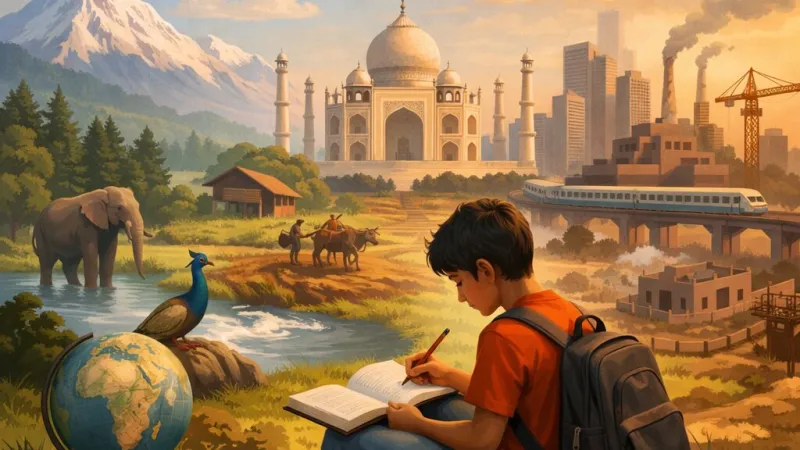
The natural environment is made up of both living (biotic) and non-living (abiotic) elements. The trees lining our streets, the birds chirping on the neem tree outside our windows, cattle grazing in the village meadows—these all represent the biotic factors. They interact with abiotic aspects such as fertile black soils of the Deccan plateau, the sacred rivers like Ganga and Yamuna, the monsoon winds, and the abundant sunlight scorching the plains during May and June. The delicate balance among these elements sustains the cycle of life. India’s forests, like the dense greens of Western Ghats or the Sundarbans mangroves, play a vital role in producing oxygen and housing diverse wildlife, from peacocks to tigers. Wetlands such as Chilika Lake in Odisha support unique aquatic ecosystems and migratory birds, underlining how intertwined and important natural habitats are for biodiversity and the country’s cultural identity.
Social Environment
Beyond the natural landscape, the social environment is formed by the web of human relationships, customs, values, and traditions. This sphere includes our families, neighbours, schools, local markets, festivities, and institutions – all of which influence how we perceive and interact with our surroundings. For example, festivals like Van Mahotsav, where schoolchildren across India plant saplings, show how social initiatives blend with environmental concerns. Our traditional respect for rivers, as seen in rituals performed at the Ganga’s ghats, reflects the deep social and spiritual attachment people have with nature. The teachings of Mahatma Gandhi, who championed simple living and reverence for all forms of life, highlight the influence of values and ethics on environmental stewardship.
Man-made Environment
Human creativity has dramatically reshaped the planet, especially in cities like Mumbai, Delhi, and Bengaluru, where soaring towers, roads, factories, and railway networks have become an inextricable part of daily life. Man-made environments provide us with shelter, jobs, and infrastructure necessary for modern living. However, they also pose challenges: rapid urbanisation often brings air and noise pollution, the proliferation of concrete restricts green spaces, and rivers are suffocated under industrial waste. Historical monuments like the Taj Mahal, threatened by air pollution, are testament to the complex relationship between progress and preservation.
The basic necessities for survival—clean air, pure water, fertile soil, food—are all gifts from the environment. The monsoon, awaited by millions of farmers across India, irrigates fields of paddy in Kerala, wheat in Punjab, and cotton in Gujarat, making agriculture possible. Rivers like the Brahmaputra and Godavari provide water for drinking and irrigation. The soil nurtures crops, forests offer timber and medicinal herbs, and the very air carries the oxygen we need. Cycles such as the water cycle and carbon cycle, taught in our biology textbooks, maintain balance in nature and support life.
Regulating Climate and Weather
Nature’s environmental controls are evident in India’s diverse landscapes. Forested areas such as those in the Nilgiris stabilise rainfall, prevent droughts, and check soil erosion. The loss or disturbance of such areas can invite disasters such as severe floods, droughts, or unseasonal rainfall. Trees, especially native varieties like banyan or sal, absorb carbon dioxide, releasing oxygen, thus helping regulate atmospheric gases. This role is crucial for controlling climate and supporting agriculture, which sustains 60% of India’s population.
Habitat and Biodiversity Conservation
India’s environment teems with life, holding a remarkable variety of plants and animal species. From the Asiatic lion prowling in Gir Forest to the endangered river dolphin in the Ganges, our nation’s biodiversity reflects nature’s resilience and beauty. These species form complex food chains and ecological webs. When even a single link is threatened, the impact can ripple across the entire ecosystem—affecting crops, water bodies, forests, and, ultimately, human communities.
Cultural and Psychological Significance
Nature is deeply interwoven with Indian culture and spirituality. Rivers such as Yamuna are personified as goddesses, mountains like the Himalayas are seen as abodes of deities, and sacred groves (devara kadus in Karnataka) are protected by villagers for religious reasons. Natural environments, whether the ghats of Varanasi or the backwaters of Kerala, have spiritual and calming effects, reducing anxieties. Studies now confirm what our ancestors intuitively knew: spending time in natural settings helps reduce stress and rejuvenates the mind.
Threats to Environment
Pollution
Rapid development and changing lifestyles have led to complex challenges. Air pollution—resulting from vehicles, industrial emissions, and burning of waste or crop residue—chokes cities in winter, especially Delhi and Kanpur, causing respiratory and heart problems. Water bodies, from the Yamuna in Delhi to the Hussain Sagar Lake in Hyderabad, are contaminated by untreated sewage, industrial wastes, and plastic pollution. Excessive use of chemical fertilisers and pesticides is turning fertile land barren and contaminating food with toxins, posing threats to food security and health.
Deforestation and Habitat Loss
The relentless clearing of forests for agriculture, mining, and urban settlements has led to the destruction of precious habitats. The Aravallis, once filled with forests, are now barren in many stretches. This not only means fewer trees to soak up carbon dioxide and produce oxygen, but wildlife also lose their homes, pushing species like elephants and leopards into conflict with humans. Deforestation amplifies climate change and disturbs water cycles, leading to drought and disasters like the Uttarakhand floods.
Climate Change
Greenhouse gases from fossil fuel burning and deforestation have triggered global warming. India faces the brunt through heatwaves, erratic monsoons, and rising sea levels threatening coastal cities like Chennai and Mumbai. Himalayan glaciers, which feed major rivers, are receding, causing alarm for millions who depend on them for water.
Overpopulation and Overconsumption
India’s burgeoning population places heavy demands on resources—groundwater tables are falling, forests are shrinking, and mineral and fossil fuel reserves are depleting. Every festival, urban construction project, or new industry adds pressure unless sustainability is planned.
Natural Disasters
Our environment is periodically battered by natural disasters—cyclones in Odisha, floods in Assam, landslides in Himachal Pradesh—which are worsened by human interference. Effective disaster management requires understanding the link between development and environmental protection.
Ways to Protect and Preserve the Environment
Individual Actions
While the challenges are vast, solutions lie in our hands. Practising the “three Rs”—reduce, reuse, and recycle—helps minimise waste. Carrying cloth bags, refilling water bottles, segregating garbage, and using solar lamps are simple but meaningful steps. By choosing to walk or cycle short distances instead of firing up a two-wheeler, we can cut down on air pollution and promote health. Small acts like switching off lights and fans when not in use, or planting a neem or peepal sapling, contribute silently but significantly.
Community and Social Initiatives
Collective action amplifies individual efforts. In many Indian towns, groups of students and residents conduct regular cleanliness drives inspired by Swachh Bharat Abhiyan, planting trees on Gandhi Jayanti and encouraging organic kitchen gardens on apartment terraces. Community-led efforts in village water conservation, such as constructing check dams in drought-prone Maharashtra, revive wells and sustain agriculture. Eco-clubs in schools, which run competitions, debates, and awareness rallies, are shaping an environmentally conscious generation.
Government and Policy Measures
At a national level, strong policies are indispensable. Campaigns like Clean Ganga Mission and National Afforestation Programme have made progress, although more needs to be done. The government is pushing for solar energy, wind power, and e-mobility (like electric buses in many cities) to reduce our dependence on fossil fuels. Laws regulating plastic usage, penalties for polluting industries, and establishing protected sanctuaries are significant moves, but their effectiveness lies in strict enforcement and public cooperation.
Educating and Raising Awareness
Education is the foundation of environmental consciousness. Textbooks now teach environmental science at all levels, focusing on conservation, waste management, and sustainability. Cultural programmes, exhibitions, and documentaries on channels like Doordarshan or All India Radio amplify the message. Social media platforms also mobilise youth by promoting environmental campaigns, from Earth Hour to river cleaning drives.
Conclusion
In conclusion, the environment shapes and sustains human civilisation, providing essentials, inspiration, and life itself. We are intricately tied to nature—our survival, happiness, and even festivals are closely linked to how well we safeguard our natural and social surroundings. The responsibility does not solely rest with governments or organisations, but with each one of us. If every citizen sows the seeds of awareness and acts responsibly, we can heal our planet. As the Sanskrit saying goes, “Vasudhaiva Kutumbakam”—the world is one family. Let us protect our home, not just for ourselves, but as a legacy for the children of tomorrow. Every conscious act—be it planting a tree, conserving water, or educating someone—brings us a step closer to a cleaner, greener, and more harmonious world.
Frequently Asked Questions about AI Learning
Answers curated by our academic expert team
What is the environment according to Understanding the Environment: A Simple Guide for Students?
The environment includes air, water, land, plants, animals, and our communities. It shapes our lives and supports all living beings.
What are the main components of environment in Understanding the Environment: A Simple Guide for Students?
The main components are the natural environment, social environment, and man-made environment. Each has unique elements and roles in shaping our surroundings.
Why is environment important for students as explained in Understanding the Environment: A Simple Guide for Students?
The environment provides essentials like clean air, water, soil, and food. Protecting it ensures a healthy life for present and future generations.
How do natural and social environments differ in Understanding the Environment: A Simple Guide for Students?
Natural environment includes living and non-living elements, while the social environment consists of human relationships, customs, and values.
What challenges do man-made environments pose as discussed in Understanding the Environment: A Simple Guide for Students?
Man-made environments lead to problems like air and noise pollution, reduced green spaces, and can harm cultural monuments through environmental degradation.
Rate:
Log in to rate the work.
Log in