International Human Solidarity Day: Importance and Global Unity Explained
This work has been verified by our teacher: 30.04.2026 at 11:26
Type of homework: Essay Writing
Added: 28.04.2026 at 12:58
Summary:
Discover the importance of International Human Solidarity Day and learn how global unity and collective responsibility promote peace and equality worldwide.
International Human Solidarity Day – Celebrating Unity and Collective Responsibility
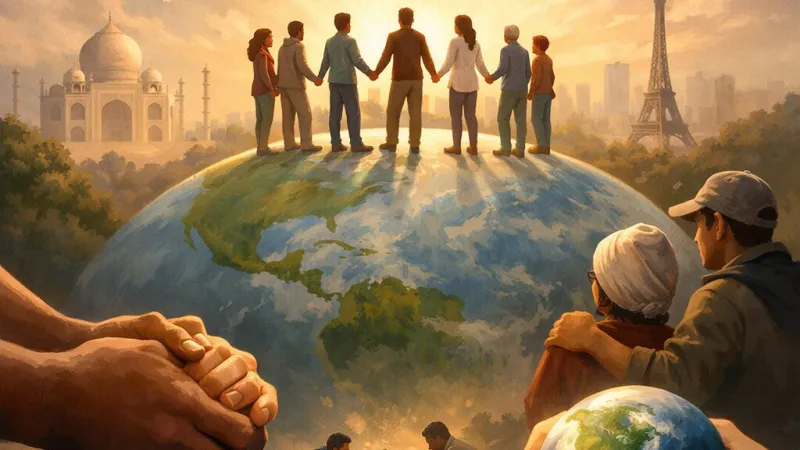
Solidarity is a word that glows with warmth and togetherness. In a world where differences sometimes divide us, solidarity stands for unity, mutual respect, and the power to act collectively for the greater good. It reflects the ancient Indian ethos of “Vasudhaiva Kutumbakam”—the world is one family. International Human Solidarity Day (IHSD) is observed on 20th December every year, reminding us of our shared humanity and encouraging cooperation to overcome global issues, especially poverty and inequality. Established in 2005 by the United Nations, the day celebrates the strong ties that bind people across different countries, cultures, and traditions, and calls for collective action to build a just, peaceful, and sustainable world. This essay explores the origins, significance, and impact of IHSD, while highlighting India’s unique perspective on solidarity.
Historical Background and Significance of IHSD
The roots of International Human Solidarity Day can be traced back to the 2005 United Nations World Summit, where member states reaffirmed that solidarity is one of the fundamental values essential for international relations in the 21st century. Recognizing the success of the Millennium Development Goals (MDGs) depended on collaboration, the United Nations General Assembly adopted resolution 60/209 on 22nd December 2005, formalizing 20th December as IHSD.Solidarity is woven into the larger framework of the Sustainable Development Goals (SDGs), aiming to end poverty, reduce inequality, and promote lasting peace by 2030. Much before this, in 2002, the World Solidarity Fund was launched, marking a commitment to pool resources for poverty alleviation. Over time, the idea expanded beyond material aid to include empathy, respect, and mutual help, setting the tone for today’s observance of IHSD.
Core Concepts and Values Promoted by International Human Solidarity Day
What does it mean to be in solidarity with others? At its core, solidarity calls for unity regardless of cultural, religious, linguistic, or geographical boundaries. It recognizes that social justice and progress cannot be achieved by individuals or nations alone; instead, a collective spirit is essential.Solidarity in India is reflected in movements and literature—from Rabindranath Tagore’s “Gitanjali” poems envisioning a world “where the mind is without fear and the head is held high,” to Mahatma Gandhi’s emphasis on Sarvodaya—the upliftment of all. These ideals encourage us to shoulder responsibilities together, foster empathy, and ensure that no one is left behind. Gender equality, social inclusion, and respect for diversity lie at the centre of this value system. For instance, social reformers like Jyotirao Phule and Savitribai Phule stood in solidarity with the oppressed, paving the way for free and equal education for girls and Dalits.
The Role of IHSD in Combating Global Issues
International Human Solidarity Day addresses pressing global challenges—chief among them, poverty and inequality. Solidarity creates the foundation for pooling resources and devising meaningful solutions, whether through financial aid, sharing technology, or raising awareness.One real-life example is the midday meal scheme in India. Initiated as a way to tackle hunger and encourage school attendance, it also brings together communities, government agencies, and volunteers in a nationwide effort. On IHSD, such community empowerment initiatives gain renewed focus, inspiring charity drives, health camps, rural development projects, and volunteering activities.
Solidarity is especially vital in mental health support and welfare of vulnerable groups. NGOs like The Banyan and Sangath champion holistic care for persons with mental illness, reflecting the spirit of collective responsibility. Solidarity also extends to environmental action—cleanliness drives inspired by the Swachh Bharat Abhiyan or campaigns against climate change echo the global call to protect our planet for future generations.
How IHSD is Observed Globally and in India
Across the world, International Human Solidarity Day is celebrated through conferences, seminars, debates, and cultural programmes that foster awareness and promote community action. The United Nations organises discussions featuring global leaders, activists, and youth representatives. With the growing influence of social media, hashtags like #HumanSolidarityDay flood online platforms, amplifying the message.In India, the day sees participation from both government bodies and non-governmental organisations (NGOs). Special events highlight the importance of unity, such as fundraisers, awareness marches, and distribution of essentials to the needy. For example, various Akshaya Patra kitchens operate food drives in honour of IHSD, feeding underprivileged children.
Schools and colleges play an active role by organising essay writing competitions, poster-making workshops, and interactive sessions. These activities encourage students to reflect on their role in creating a more equitable society. Young Indians, inspired by the values embedded in our freedom struggle, are motivated to take up causes such as rural literacy, gender justice, and social inclusion.
Psychological and Social Impact of Promoting Solidarity
India’s diversity is its strength. When people come together, whether during festivals like Ganesh Chaturthi or in times of crisis such as the Kerala floods, the spirit of “unity in diversity” prevails. Solidarity encourages us to think beyond ourselves, developing a sense of belonging to a larger community.During the COVID-19 pandemic, countless stories emerged of neighbours sharing food, volunteers delivering medicines, and migrant workers being assisted across state borders. This resilience, bolstered by shared responsibility, is at the heart of solidarity. Moreover, solidarity in international settings paves the way for better diplomatic relations. For instance, India’s vaccine diplomacy—sharing doses with neighbouring countries—was a gesture extending the circle of care beyond national borders.
Challenges and Criticisms
Despite its ideals, solidarity faces practical obstacles. Deep-seated prejudices, religious divides, and caste-based discrimination continue to fragment society. Economic disparities often hamper collective efforts, as the needs of the marginalised are overshadowed by the powerful. Sometimes, observances like IHSD risk becoming ceremonial rather than transformative—limited to symbolic events without meaningful follow-up.Global politics further complicate matters. Rich countries may not always act in the true spirit of solidarity with poorer nations. Additionally, the digital divide in India, where millions lack access to the internet, restricts the spread of information and opportunities for participation, especially in rural areas.
Strategies to Strengthen and Sustain International Human Solidarity
Education is the starting point for real change. Incorporating lessons about empathy, cooperation, and civic responsibility in school textbooks and curricula can inspire the next generation to act with compassion. Programmes like “Bharat Scouts and Guides” and “National Service Scheme” (NSS) actively involve students in community service, instilling the habit of helping others.Grassroots initiatives such as women’s self-help groups in states like Kerala and Maharashtra have proven effective in mobilising communities for economic empowerment. Leveraging technology, platforms like MyGov.in and social media campaigns can reach young minds, encouraging them to take part in solidarity actions.
Government policies must translate intentions into tangible outcomes. Enacting strong anti-discrimination laws, increasing budget allocation for social welfare, and collaborating with international bodies ensure that solidarity is not just an ideal, but a lived experience. The private sector, through corporate social responsibility (CSR) initiatives, can contribute by promoting fair opportunities and supporting social causes.
Lessons India Can Offer and Learn From Global Solidarity Movements
India’s story is filled with examples of solidarity overcoming differences. From freedom struggle leaders like Maulana Azad and B. R. Ambedkar joining hands across communities, to today’s interfaith peace initiatives, our history testifies to the power of coming together. Rural traditions such as “chulha-sharing” and “chowkidar watch” reflect community-based security and cooperation.At the same time, India learns from global examples—such as Norway’s success in poverty reduction through inclusive policies, or Brazil’s Bolsa Família programme that offers conditional cash transfers to the needy. International collaborations, whether through the United Nations or regional associations like SAARC, give India the opportunity to both contribute to and learn from worldwide solidarity movements.
Rate:
Log in to rate the work.
Log in