Iswaran the Storyteller: Key MCQs and Insights for Class 9 English
This work has been verified by our teacher: 1.05.2026 at 12:18
Type of homework: Essay Writing
Added: 29.04.2026 at 13:17
Summary:
Explore key MCQs and insights on Iswaran the Storyteller from Class 9 English to boost comprehension and master this engaging chapter with confidence.📚
The Artistry and Impact of Iswaran the Storyteller: Analysing NCERT Class 9 English Chapter 3 Through MCQs
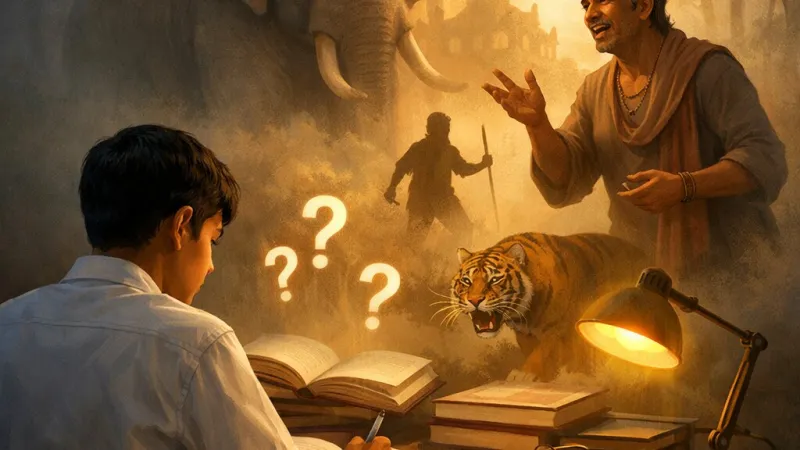
Stories have always formed the backbone of Indian tradition—whether passed down by grandmothers during power cuts or recited as epics during temple festivals. The art of storytelling not only entertains but also educates, shapes imagination, and preserves culture. In literature, this mastery of spinning tales gives life to both characters and narratives. "Iswaran the Storyteller," from the NCERT Class 9 English textbook, written by R. K. Laxman, epitomises this county’s age-old love for stories. Iswaran, the protagonist, is not just a servant but a creator of fantastic worlds, astonishing both his employer Mahendra and readers alike through his dramatic and engaging tales.
The chapter has become a fixture of classroom discussion and examination alike, often accompanied by well-crafted Multiple Choice Questions (MCQs) that test more than simple memory—they push students to think deeply about characters, motives, and the delicate threads holding fiction and reality together. This essay explores how the study of "Iswaran the Storyteller" through MCQs fosters not just comprehension, but also analytical thinking and appreciation for the nuanced tapestry of storytelling.
---
Understanding the Character of Iswaran
Iswaran’s Personality and Traits
Iswaran leaps off the page not as a mere side character, but as a vibrant personality. He is loyal and attentive, managing Mahendra’s daily needs with great discipline, but his primary distinction lies in his unrestrained creativity. Unlike Mahendra’s pragmatic and scientific outlook, Iswaran’s world is filled with colours and sound—every simple event transforms, through his telling, into a grand adventure or a chilling mystery.His sources of inspiration are the Tamil popular thrillers he devours, which are known for their larger-than-life narratives and dramatic flourishes. This is a familiar cultural phenomenon; fans of Tamil pulp fiction or the old ‘Vikram-Betal’ TV series will see in Iswaran a reflection of India’s own love affair with high drama and narrative twist.
His Storytelling Style
What sets Iswaran apart is his unique way of narrating stories. He employs suspense, liberal exaggeration, and a keen sense for theatrical gestures—mimicking sounds, pausing at critical moments, and adjusting his voice to mimic characters and situations. A classic example is his story of how he tamed a mad elephant, which he recounts with such intensity and detail (climbing onto its back, striking its nail, narrating gasps and cheers), that even the usually skeptical Mahendra is drawn in despite himself.Iswaran’s tales effortlessly swing between the mundane and the magical. The deliberate ambiguities, the suspenseful build-up, and the climactic endings ensure every listener hangs onto his every word. Even tales of ghosts or haunted buildings, often dismissed rationally, are rendered believable through his passion and conviction.
Impact on Others, Especially Mahendra
Mahendra, the rational supervisor, represents the typical audience—initially skeptical but gradually swayed by the storyteller’s charm. At first, Mahendra often dismisses Iswaran’s tales as make-believe; yet, over time, he begins to feel the growing pull of these stories, experiencing fear and fascination. The dynamic between these two characters, reminiscent of the ‘Bhagavatam’ recitations or the village bard and landlord, reflects the eternal tussle between reality and imagination—a theme dear to both literature and everyday life in India.---
Thematic Exploration through MCQs
The Role of Suspense and Surprise in Storytelling
One of the merits of framing MCQs for this chapter is that they can probe the techniques of suspense and surprise so central to Iswaran’s art. Consider the story within the story—the mad elephant episode. The gradual build-up, the uncertain outcome, and the ultimate twist all capture what makes a tale gripping. MCQs focusing on these events might ask students to identify how Iswaran uses suspense (such as, “Which element does Iswaran use to hold the listener’s interest in his story about the elephant?”).Questions can also touch upon the ghost story Iswaran narrates, which comes full circle when Mahendra himself starts doubting his own senses. Such MCQs teach students to notice not only ‘what’ happens but ‘how’ the anticipation and unexpected ending are crafted.
The Blend of Reality and Fiction
Iswaran’s stories walk the thin line between fact and fiction. Are the ghosts real? Did the elephant truly fall to a single blow? By challenging students with MCQs that force them to distinguish between Iswaran’s fantasies and Mahendra’s reality, teachers help them appreciate the essence of storytelling. Often, Iswaran’s tales derive some kernel from true incidents, which are then heavily embellished—a classic mark of oral storytelling, reminiscent of folk tales from the Panchatantra or Akbar-Birbal stories.Such MCQs might ask, “What effect does Iswaran’s imagination have on his storytelling?” or “How does Mahendra respond to Iswaran’s accounts?”—pushing students to look deeper than the surface events.
The Influence of Cultural Background on Storytelling
Iswaran’s flair comes not just from his nature but also from cultural influences. His love for Tamil thrillers, his intuitive grasp of dramatic elements, and even his tendency to exaggerate are direct products of a cultural milieu where storytelling is an art form practiced on street corners and festival stages alike.MCQs on this theme could ask about Iswaran's inspirations, drawing attention to the connection between local traditions and literary characters—a reminder of the diversity and depth in Indian narrative forms, from biraha singers in Uttar Pradesh to Pandavani performers in Chhattisgarh.
---
The Educational Value of MCQs in Understanding the Lesson
Enhancing Recall and Comprehension
For Class 9 students, MCQs act as stepping stones to a better understanding of the text. Factual MCQs (“Who is the author?”, “What disaster does Iswaran claim to have averted?”) ensure students pay attention to details. This is crucial in the context of CBSE exams, where precision is valued. Moreover, these questions lay the groundwork for deeper analysis by ensuring a solid grasp of characters, settings, and incidents.Promoting Analytical Thinking
The real strength of MCQs, however, lies in their ability to go beyond memory. By posing questions that ask ‘why’ or ‘how’ (for instance, “Why does Iswaran include suspense in his stories?”), they urge students to understand narrative techniques and authorial intent. This is aligned with the CBSE’s emphasis on reading with meaning—a skill that is as vital for literature as for other subjects like History or Science.Preparing Students for Exam Strategies
Regular practice with MCQs equips students with effective exam techniques. By recognizing patterns in questions and learning how to eliminate incorrect options, students develop quick thinking and confidence—both critical in high-pressure board and school exams. For instance, a question with four closely related answers encourages careful reading and deduction rather than mere guesswork.---
Critical Analysis of Key MCQ Topics in the Chapter
Character-based Questions
Focusing MCQs on Iswaran’s, and Mahendra’s, distinct attitudes reveals the story’s underlying themes of faith versus skepticism and imagination versus logic. For instance, “Which of the following best describes Mahendra’s approach to Iswaran’s stories?” allows students to interpret and justify their choices with evidence from the text.Plot and Incident-based Questions
Questions around the elephant episode or the ghost story not only check recall but also force students to map the arc of suspense and resolution. “What action did Iswaran take against the elephant?” provides an opportunity to discuss both the content and the plausibility of the tale—bringing in essential critical reasoning.Language and Literary Techniques
MCQs focusing on how the story is told—pauses for effect, repetition, and use of vivid imagery—help students recognise the craftsmanship behind effective storytelling. By asking, “Why does Iswaran pause at crucial points in his narrative?” students are encouraged to think like storytellers themselves.Moral and Thematic Questions
The chapter deals subtly with themes of courage, the power of belief, and the imagination as both a gift and a potential source of anxiety. MCQs inviting students to reflect on these aspects (“What does the story suggest about the power of imagination?”) push them to move from factual to thematic understanding.---
Practical Tips for Students Preparing MCQs on "Iswaran the Storyteller"
Thorough Reading and Note-taking
There is no substitute for reading the text closely, preferably more than once. Mark out key events, character descriptions, and dialogue. Make brief notes, summarising each story Iswaran tells.Identifying Key Literary Devices and Their Effects
Spot where Iswaran builds suspense, uses humour, or exaggerates. Note phrases or sentences that reveal his technique—these are often the focus of analytical MCQs.Understanding the Underlying Themes
Pause to think: Why does Iswaran tell stories? How does Mahendra change by the end? Reflecting on these questions helps tackle MCQs on theme and message.Practising with Sample MCQs and Mock Tests
Attempt as many practice questions as possible. Analyse the reasoning for each correct answer. Learn to eliminate distractors, and don’t just rote-learn answers—try to justify them logically.---
Conclusion
Iswaran, with his magical blend of drama and devotion, reminds us of the lasting power of stories to shape minds and stir emotions. His tales animate an ordinary world with the extraordinary, blurring the lines between reality and imagination. Engaging with "Iswaran the Storyteller" through MCQs allows students not just to recall events, but to appreciate the art of narrative, to analyse perspectives, and to uncover the deeper messages hidden beneath the surface.Such lessons reach far beyond the examination hall. They teach us, as does our rich Indian storytelling tradition, to listen more keenly, imagine more deeply, and question more courageously. Active engagement—close reading, discussion, and thoughtful MCQs—is the key to truly understanding literature, preparing students not just for exams, but for a life enriched by stories and critical thought.
---
In sum, "Iswaran the Storyteller" is not just a chapter—it is an invitation to explore the magic of tales, the complexity of human imagination, and the subtle art of asking the right questions. By pairing literature with effective study methods like MCQs, we unlock both knowledge and wonder, preparing ourselves for success not only in school, but in the greater narrative of life.
Rate:
Log in to rate the work.
Log in