Significance of National Unity Day: Honouring Sardar Patel's Legacy
This work has been verified by our teacher: 2.05.2026 at 11:34
Type of homework: Essay Writing
Added: 30.04.2026 at 14:42
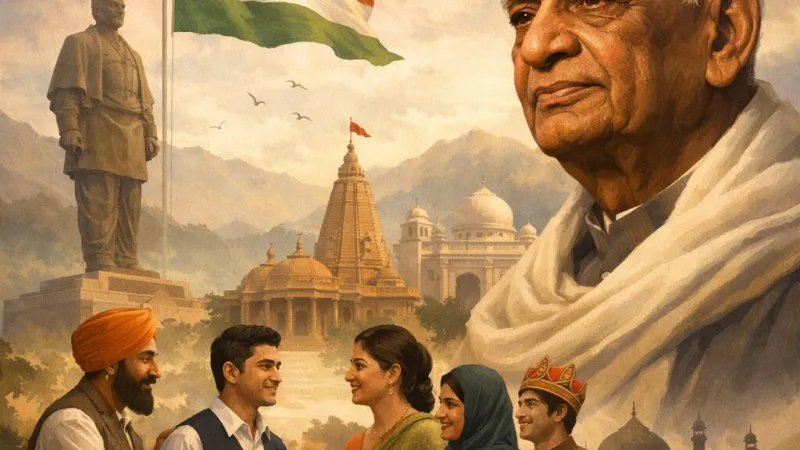
Summary:
Explore the significance of National Unity Day and learn how Sardar Patel’s legacy shaped India’s unity and strength as a diverse nation. 🇮🇳
National Unity Day: Celebrating the Spirit of a United India
India is renowned across the globe for its vibrant diversity — a nation woven together by countless languages, faiths, and cultures. Despite these differences, our country has time and again demonstrated the strength that comes from unity. In recognition of this invaluable quality, we commemorate National Unity Day every year. Observed on 31st October, the day marks the birth anniversary of Sardar Vallabhbhai Patel, celebrated as the ‘Iron Man of India’. National Unity Day not only honours Patel’s unparalleled contribution towards integrating our nation but also serves as a timely reminder that unity is the cornerstone of all progress. In this essay, I will explore the historical background of National Unity Day, the vision and role of Sardar Patel in uniting independent India, ways in which the day is observed, and its ongoing relevance in contemporary times.I. The Historical Backbone: Sardar Vallabhbhai Patel and the Unification of India
Sardar Vallabhbhai Patel’s journey began in the sleepy village of Nadiad, Gujarat, where he was born in 1875. His early life bore the stamp of simplicity and resilience, qualities that would later define his leadership. Inspired by the vision of Mahatma Gandhi, Patel became a stalwart in the Indian freedom struggle, leading the Bardoli Satyagraha and championing the cause of peasant rights. What set Sardar Patel apart, however, was his astute understanding of the immense task that lay ahead once freedom was attained.In 1947, as the British Raj ended, India emerged as a free nation — but with a unique challenge. The country was a patchwork mosaic of over 560 princely states, each with its own ruler, flag, and identity. Some, like Hyderabad and Junagadh, were unwilling to join the Indian Union; Hyderabad, for instance, was determined to remain independent despite being landlocked within Indian territory. Sardar Patel, as the first Deputy Prime Minister and Home Minister, took it upon himself to accomplish the daunting mission of integrating these myriad states into a single, cohesive nation. Through a combination of personal diplomacy, tact, and firmness, Patel persuaded most rulers to accede to India peacefully. In difficult cases, like Hyderabad, he resorted to decisive action while maintaining respect for India’s pluralism.
Sardar Patel’s visionary leadership made him the architect of a united India. His legacy is not just political; he left behind a timeless lesson that unity, above all else, is vital for a nation’s survival and growth.
II. The Emergence and Symbolism of National Unity Day
National Unity Day, or Rashtriya Ekta Diwas, was instituted by the Government of India in 2014, with the first official observance inaugurated by Prime Minister Narendra Modi. The decision to celebrate the day on Patel’s birth anniversary was not random — it was a deliberate step to keep his ideals alive, especially among younger generations who may not always find a place for history in their busy lives.On a symbolic level, National Unity Day reminds us of India’s profound strength in diversity. Our land is home to over 22 official languages, thousands of dialects, communities practising every major religion, and an extraordinary range of customs and beliefs. At times, these differences have led to friction, but ultimately, the Indian identity has always triumphed. National Unity Day stands as a beacon, advocating communal harmony and social integrity.
To deepen Patel’s legacy, the government unveiled the Statue of Unity in Gujarat in 2018 — the tallest statue in the world. This colossal monument is more than just a tourist destination; it embodies resilience, leadership, and the indomitable will to unite people of disparate backgrounds. It invites every Indian to reflect on what it means to live in a nation where differences are not a cause for division, but a source of pride.
III. Observing National Unity Day: Celebrations Across the Nation
The spirit of National Unity Day comes alive through a multitude of events stretching from bustling cities to remote villages.At the governmental level, the day begins with the “Run for Unity,” a marathon organised in major cities such as Delhi, Mumbai, Kolkata, Chennai, and Ahmedabad. Citizens from all backgrounds, including students, officers, and local dignitaries, take part. In countless towns and government offices, people gather to take a special pledge to uphold unity, solidarity, and integrity. Officials, including Chief Ministers and Governors, pay floral tributes at statues of Sardar Patel.
Educational institutions play a vital role in perpetuating the significance of the day. Schools conduct assemblies devoted to Patel’s life, followed by essay and speech competitions themed around national integration. Students prepare posters, slogans, and skits celebrating the idea of ‘Ek Bharat, Shreshtha Bharat’ (One India, Supreme India). Debates and quizzes are held to energise young minds about critical moments from Patel’s career, such as the integration of Hyderabad or the role of women and youth in freedom and unity.
On the cultural front, universities and local clubs organise vibrant programmes showcasing folk dances, songs, and dramatizations that represent the breadth of Indian traditions. Giddha from Punjab, Garba from Gujarat, Lavani from Maharashtra, and Bihu from Assam may all make an appearance, underscoring the message that India’s varied cultures are threads in one beautiful tapestry.
In recent years, social and digital platforms have become key avenues for engaging the youth. Hashtags like #UnityRun or #RashtriyaEktaDiwas trend each year, accompanied by stories of communal harmony and shared heritage. Non-profits and youth organisations host community meals, interfaith dialogues, and drives against discrimination, echoing Patel’s dream of an undivided India.
IV. Contemporary Relevance: The Need for Unity in Today’s India
While we take pride in our unity, India is not untouched by challenges. The menace of regionalism, communal discord, linguistic chauvinism, and divisive political currents sometimes threatens the idea of a united nation. The tragic riots or friction over language policies remind us that unity is not a one-time achievement but a continuous pursuit.In these times, the observance of National Unity Day has gained urgency. It encourages each of us — especially the youth — to look beyond differences and seek what binds us. The digital age, though a medium for unity, also amplifies misinformation and polarisation. National Unity Day, therefore, is more than ceremonial; it is a clarion call to defend the values of tolerance, mutual respect, and dialogue.
Unity is not only about social cohesion but also about national development. India’s stride towards becoming a global leader in entrepreneurship, science, and culture depends on teamwork across state, caste, and economic divides. Internally, unity underpins peace and law and order, without which prosperity is impossible. On the global stage, a united India commands respect and exerts a positive influence.
V. Fostering Unity: Personal and Community Efforts
Unity cannot be enforced from above; it must begin at home, in schools, and in neighbourhoods. All of us, irrespective of age, can practice the values that National Unity Day upholds.At a personal level, respecting every individual’s background — whether it is language, festival, attire, or food — is a daily step toward harmony. Students can initiate anti-discrimination campaigns in their schools or help organise inclusive cultural festivals. Simple gestures, like making friends from different linguistic or religious backgrounds, go a long way.
On a broader scale, education is the best tool. School curriculums should embed stories of unity, struggles for freedom, and the contributions of unsung heroes from all communities. Open discussions in the classroom about stereotypes, prejudices, and real-life incidents can foster understanding.
In this digital era, responsibility falls upon our fingertips. We must use social media to communicate hope, not hatred. Sharing messages of unity or reporting hate speech are practical ways in which ordinary citizens can make a difference.
Rate:
Log in to rate the work.
Log in