Importance of Blood Donation: A Social Responsibility Essay for Students
This work has been verified by our teacher: 3.05.2026 at 16:45
Type of homework: Essay Writing
Added: 2.05.2026 at 14:40
Summary:
Discover the importance of blood donation and its role as a vital social responsibility. Learn how students can contribute to saving lives in India today. 🩸
Paragraph on Blood Donation
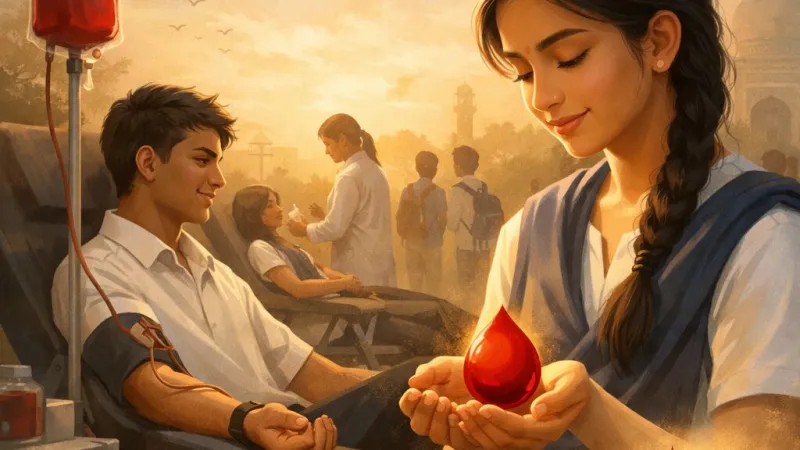
Blood donation is an act of great generosity, embodying the values of empathy and responsibility within our society. Simply defined, blood donation is when a healthy individual voluntarily gives a specific amount of their blood to help patients in need of transfusions. In a country as populous and diverse as India, with its rich tapestry of cultures and communities, this selfless act plays a vital role in saving countless lives. The Indian education system often encourages students to participate in blood donation drives, underlining its significance not only as a service to others but as a practical lesson in social responsibility and citizenship.The Blood Donation Process in India
The process of blood donation in India is carefully designed to ensure both donor and recipient safety. Generally, a person must be between 18 and 65 years of age and weigh at least 50 kilograms to qualify as a donor, as per the guidelines of the National Blood Transfusion Council (NBTC). It is also essential that a donor is free from infectious diseases and maintains a minimum haemoglobin level of 12.5 g/dL. One unique feature in our country is the emphasis on periodic donation; men can donate once every three months, while for women, the safe interval is four months, to allow full restoration of physical health.Registration for blood donation typically takes place at hospitals, established blood banks, or temporary donation camps. Cities like Mumbai, Delhi, and Chennai, and even smaller towns, often host these camps, particularly during festival seasons or commemorative days such as World Blood Donor Day (14th June). Once a donor registers, a medical officer or nurse conducts a brief health screening: checking temperature, blood pressure, pulse, and haemoglobin. The process also includes a confidential questionnaire about medical history to rule out any risk factors.
The donation itself is quick and protected by modern hygienic practices. Only sterile, single-use needles are employed to draw about 350 to 450 millilitres of blood, which represents less than 10 per cent of the total blood volume in an adult's body. The actual drawing lasts around 10-15 minutes, but donors are advised to rest for another 15-20 minutes afterwards and are often provided with refreshments such as juice and biscuits. For many, especially students volunteering for the first time, it becomes a moment of personal pride and excitement, fostering camaraderie among participants.
The Transformative Impact of Blood Donation
The importance of blood donation becomes evident when we consider its irreplaceable role in medical emergencies. According to data from the Ministry of Health & Family Welfare, India needs about 12 million units of blood annually but often struggles to meet this demand. Hospitals rely on donated blood to treat victims of road accidents—which sadly occur at a high rate in our country—as well as those undergoing surgeries, women facing complications during childbirth, and patients battling diseases such as thalassemia, haemophilia, and cancer. Literature and cinema, such as the touching scenes in the Hindi movie "Anand", where support and compassion help patients face grave illness, parallel the real-life impact of a timely transfusion.But blood donation is not just about the recipient—the act offers several benefits to the donor as well. Medically, regular donation helps in regulating the body’s iron levels, thus reducing the likelihood of iron overload-related conditions such as hemochromatosis. It also stimulates the bone marrow to produce new red blood cells, keeping the circulatory system active and responsive. There are psychological rewards too: as Swami Vivekananda said, “They alone live who live for others.” Participating in blood donation can result in a profound sense of satisfaction, belonging, and purpose.
Blood Donation: Social, Cultural, and Ethical Contexts
In India, the ethos of giving has been deeply influenced by ancient concepts such as *daan* (charity) and *seva* (service). Blood donation fits squarely within these values, transforming abstract ideals into real, actionable goodwill. Organisations like the Indian Red Cross Society, Sankalp India Foundation, and several student groups in universities, regularly conduct awareness campaigns and donation drives. These collective efforts help dispel myths that still persist: for instance, some people wrongly believe that donating blood causes weakness or infertility, or that women shouldn't donate due to menstruation or anaemia concerns. It is crucial to counter such misconceptions with scientifically accurate information, often disseminated during National Voluntary Blood Donation Day (1st October) or through educational workshops conducted by government health departments and NGOs.A significant social challenge is ensuring that all donations are given voluntarily and without payment. The government and healthcare authorities stress the ethical principle of non-remunerated voluntary donation, as purchasing blood can encourage unsafe practices and exploitation, especially among vulnerable populations. The "Blood Connect" initiative in various Indian universities is an exemplary movement promoting only altruistic blood donation and ensuring confidentiality and dignity for both donors and recipients.
Community engagement is equally important. During calamities such as the Uttarakhand floods or the COVID-19 pandemic, there was a remarkable surge in voluntary donations from all walks of life, highlighting India's unity and communal spirit. In rural areas, mobile blood banks and "blood-on-call" ambulances, especially in states like Maharashtra and Kerala, have bridged the infrastructural gap, making it possible for more citizens to contribute, regardless of their location.
Overcoming the Challenges of Blood Donation in India
Despite the encouraging advances, India still faces several obstacles on the path to achieving a sufficient and safe blood supply. The main struggle is the scarcity of regular, repeat donors, as most donations come from first-timers or relatives of patients. Awareness levels remain low in some regions, weighed down by traditional beliefs and lack of access to reliable information. Additionally, blood banks in remote or rural areas often grapple with inadequate facilities, shortage of staff, or poor transportation, posing a significant problem for those who need urgent transfusions.Medical safety remains paramount. It is essential to meticulously screen donations to prevent the transmission of infectious diseases like HIV, Hepatitis B & C, malaria, and syphilis. The government’s National Blood Policy mandates continuous upgrading of technology in blood banks and strict adherence to protocols. Awareness creation in schools, colleges, and workplaces, with practical sessions, quizzes, street plays, and talks by expert doctors, can steadily improve both knowledge and participation levels, particularly among the youth.
Public recognition—such as felicitation certificates, badges, and social media shoutouts—has begun to serve as an ethical motivator, encouraging donors to return without resorting to unethical financial incentives. Many corporates now collaborate with blood banks to arrange regular drives at offices, making it more convenient for working professionals to participate.
Rate:
Log in to rate the work.
Log in