10 Simple Lines About Blood Donation and Its Importance
This work has been verified by our teacher: 12.02.2026 at 16:02
Type of homework: Essay Writing
Added: 9.02.2026 at 7:44
Summary:
Discover 10 simple lines about blood donation and its importance to learn how this life-saving act benefits health and society in India.
10 Lines on Blood Donation
Blood is often called the river of life, coursing through our bodies to deliver oxygen, nutrients, and remove waste. In India, where road accidents, health emergencies, and chronic illnesses claim countless lives each day, the importance of blood donation stands out as a beacon of hope. Many people do not realise that something so simple and quick can have life-saving consequences. This essay aims to highlight the key facts and significance of blood donation in our context, presenting important points that every student and citizen should know. Understanding these can help us build a more compassionate, prepared, and healthier society.
---
Understanding Blood and the Act of Donation
First and foremost, we must understand what blood actually is and why it matters so much. Blood is not just a red liquid; it is made up of four main components—Red Blood Cells (RBCs) that carry oxygen, White Blood Cells (WBCs) that fight infection, Platelets that help in clotting, and Plasma which is the liquid base carrying proteins and nutrients. Each of these components is used in treating different medical conditions. For example, thalassemia patients need regular RBC transfusions, while accident or Dengue patients might need platelets.Blood donation is the voluntary act of giving a portion of your own blood so that it can be used to save someone else’s life. In India, donation is usually done without any expectation of money or reward, in a spirit of service and social responsibility. Our cultural history, from the teachings of Swami Vivekananda who spoke of “nar seva, narayan seva” (serving humanity is serving God), to the principles of Gandhiji, emphasises selfless acts. Blood donation beautifully embodies these ideals. It’s a simple gesture that can make a world of difference.
Anyone healthy, typically between the ages of 18 and 60 years (though some blood banks in India do permit 16-year-olds with guardian consent), and weighing more than 50 kilograms, is generally eligible to donate. It is important that donors are healthy to ensure safety for both themselves and the recipients. Screening processes are always done before donation: blood pressure, temperature, haemoglobin level, and medical history are checked.
---
The Process of Donating Blood
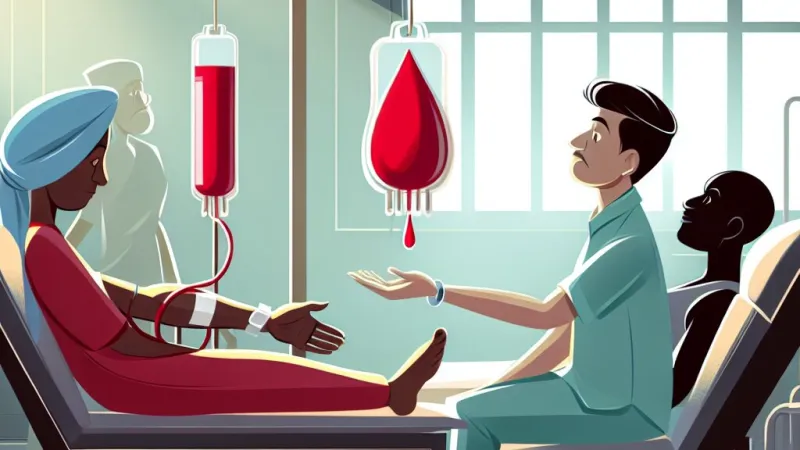
Often, people are afraid of blood donation because of myths, fear of needles, or worries about weakness. In reality, the process is straightforward and safe. A trained technician or doctor uses a sterile, single-use needle to draw about 350 to 450 ml of blood—barely half a litre—from your arm. This amount is less than ten percent of the blood in your body, and the loss is quickly replaced by the body within a few days.The whole process, from filling up a form to enjoying a glass of juice after donation, usually takes about half an hour, with the actual blood collection taking only about 10 to 15 minutes. The seats or beds used are comfortable, and the donor is always under observation. All equipment is strictly sterilised and used just once to avoid any risk of infection, including major concerns like HIV or Hepatitis.
Before donation, small checks are performed: pulse, blood pressure, body weight, and a finger-prick haemoglobin test. After donation, the donated blood is again tested for infections. This careful approach is essential, preventing any spread of disease and ensuring the safety of both donor and recipient.
---
The Importance and Impact of Blood Donation
The biggest reason to donate blood lies in its power to save lives. One unit of donated blood can be separated into its components and potentially save up to three people—for example, a trauma victim, a child with leukaemia, and a mother facing complications during childbirth. India, with its vast population, frequent accidents, maternal deaths, and growing surgeries, is perpetually in need of blood.Despite these immense needs, India’s voluntary blood donation rate is lower than its requirements. According to the Ministry of Health and Family Welfare, India’s annual need is around 12 million units, but the country usually collects between 9 and 10 million. The shortfall endangers patients regularly. Most blood in Indian banks still comes from replacement donors (friends and families of patients), not volunteers.
Blood can be donated safely every three months. The human body is incredibly efficient—within 48 hours, plasma is replaced, and red blood cells take about 3 to 4 weeks. Platelets regenerate even faster, within days. This means a healthy adult can be a lifesaver multiple times a year without any harm.
There are benefits for the donor too. Some studies suggest regular blood donation may lower the risk of heart disease and iron overload, though more data is needed. But the biggest gain is emotional—knowing you have possibly saved a life is deeply satisfying. It also instils a sense of social responsibility, teaching values of empathy and community service, which are emphasized in the value education curricula of schools like Kendriya Vidyalayas and Jawahar Navodaya Vidyalayas.
---
Awareness and the Indian Blood Donation Culture
India actively celebrates days like World Blood Donor Day on June 14th and National Voluntary Blood Donation Day on October 1st to raise awareness and inspire participation. Colleges, offices, and community halls bustle with donation drives, with NGOs such as Sankalp India Foundation and Indian Red Cross Society at the forefront. Even in times of crisis, like the COVID-19 pandemic, countless young people and local organisations answered the call for rare blood groups through social media platforms and WhatsApp groups.Despite these positive steps, there remain misconceptions and gaps. Many believe blood donation can cause long-term weakness or infertility (a myth), and some hesitate due to fears about cleanliness or contracting diseases. Education is the only answer here—medical authorities, teachers, and youth leaders must spread correct information.
For becoming a donor, the path has been made simple. Interested individuals can approach local hospitals, mobile camps, or register on apps such as e-Raktkosh, created by the Indian government. Before donating, one should sleep well, eat a light, iron-rich meal (like poha or chana), and drink plenty of water. Afterward, donors can immediately resume most activities, taking care to rest briefly.
---
Conclusion
To summarise: Blood donation is a simple, short, and safe act with extraordinary results. Just one donor can save several lives, especially in a nation where the need remains high and constant. The process involves minor discomfort, minimal risk, and offers personal satisfaction and health monitoring in return. Our festivals and faiths teach us to care for each other—what better way than giving the gift of life itself? Students should talk about blood donation at home and in school, and seek opportunities to participate or support such drives.Most importantly, we must remember—our actions today write someone’s tomorrow. Every drop donated creates a ripple of hope. If each eligible person in India donates just once a year, none of our fellow citizens would die waiting for blood. It is truly said: “Rakt daan, maha daan”—blood donation is the greatest donation of all. Let us pledge to become part of this noble movement and inspire others to join us.
Rate:
Log in to rate the work.
Log in