10 Simple Lines About Dogs for Indian Secondary School Students
This work has been verified by our teacher: 17.05.2026 at 14:45
Type of homework: Essay Writing
Added: 15.05.2026 at 16:33
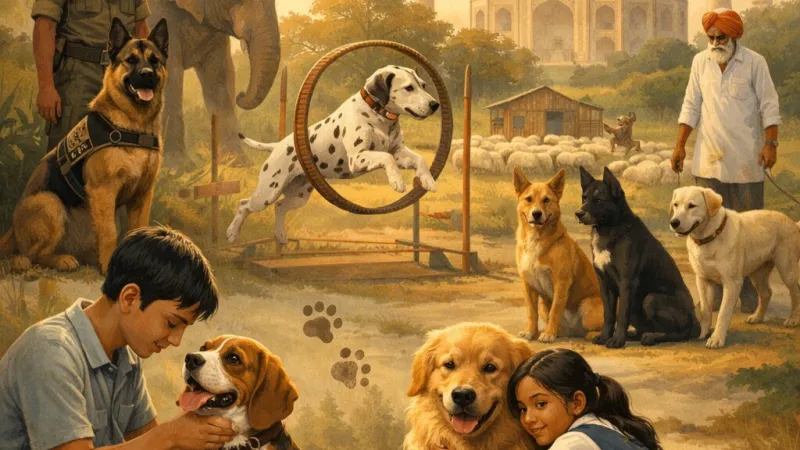
Summary:
Explore 10 simple lines about dogs for Indian secondary students to learn their traits, breeds, and role in India with clear, easy essay points. 🐕
10 Lines on Dog – An Essay for Indian Students
Dogs have held a special place in human society since ancient times, not only as pets but as guardians, guides, and even loyal friends. Across the length and breadth of India, from the crowded streets of Mumbai to the quiet villages of Kerala, dogs are found in every setting, touching the lives of people from all walks of life. Stories about their loyalty and courage are woven into our folk tales, like those of Shabari’s dog in the Ramayana, waiting faithfully for the return of its master. In this essay, let us explore, in ten thoughtful lines, the fascinating world of dogs, focusing on their nature, behaviour, their relationship with humans, and their key role in Indian society.
---
1. Dogs: Our Faithful Companions
The dog is a domesticated animal that has lived alongside humans for several thousand years. According to archaeological evidence, dogs were among the first animals to be tamed and kept for companionship and utility. In India, we see dogs not only as pets in urban homes but also as street companions, temple guardians, and valued helpers in rural areas. Their bond with people is often so close that many families treat their dogs as a part of the household, giving them names and celebrating their birthdays just like any other member.2. Amazing Variety – Breeds and Appearance
One of the most fascinating things about dogs is their variety. Dogs come in countless breeds, each differing in size, shape, colour, fur type, and temperament. In India, we have indigenous breeds like the Indian Pariah, Rajapalayam, and Mudhol Hound, each adapted to our climate and needs. For example, the Rajapalayam is famous in Tamil Nadu for its white coat and bravery, historically used by royalty for hunting. Apart from Indian breeds, many people also keep foreign breeds like Labradors, Beagles, and German Shepherds, making the world of dogs highly diverse and colourful.3. Special Physical Features
Dogs have certain physical qualities that set them apart from other animals. They possess sharp hearing and a nose that can pick up thousands of different smells, which is why they are often used by police and rescue teams. Their colour vision is not as vivid as that of humans, and they see mainly blues and yellows. A dog's bark, growl, or whine has specific meanings. The wagging of a tail usually means friendliness or excitement, while flattened ears can signal fear. In literature and popular sayings, dogs are praised for their alertness—for example, the common belief that “a dog can sense the arrival of its master before anyone else.”4. The Language of Dogs – How They Communicate
Dogs don’t speak our language, but they are excellent at expressing their feelings. They communicate through barks, tail movements, licking, and other body signs. When a dog jumps up with joy, licks your face, or curls up at your feet, it is showing its affection. If they bark loudly at strangers, it is their protective nature at work. From a young age, children in India are taught to read these signals—some families even tell amusing stories about how their dog greeted returning children each day after school, showing pure, wordless happiness.5. Eating Habits – What Do Dogs Eat?
Unlike cats, which are mostly carnivorous, dogs are omnivores. This means they can eat a variety of foods, including rice, chapati, milk, cooked meat, vegetables, and special dog food available in shops. In many Indian households, dogs often share the same food as humans, unless it is too spicy. However, it is important to know that some foods can be dangerous for dogs—like chocolate or certain seeds. Pet owners must see that their dog’s diet is balanced to ensure good health and a long life.6. Loyal Protectors and Helpers
One of the reasons dogs are so respected is their sense of loyalty and their natural instinct to protect. In Indian homes, it is common for dogs to guard the front gates, barking at strangers but wagging their tails for familiar faces. Dogs play a vital role in society—they work with the police to find criminals and lost persons, assist disabled individuals as guide dogs, and serve in rescue operations during disasters. For example, during the Uttarakhand floods, trained dogs helped in search and rescue missions, becoming unsung heroes.7. Family Life – Birth and Growing Up
The female dog, or bitch, gives birth to puppies, usually four to six in one litter. Puppies are blind and helpless at birth, but with proper care, they grow quickly. Many Indian families fondly remember when their pet had puppies, watching them take their first wobbly steps. The bond between a mother dog and her young ones is strong—she protects and nourishes them until they are old enough to eat on their own. A healthy dog can live between ten and thirteen years, depending on its breed and lifestyle.8. The Human-Dog Bond
Dogs are known as “man’s best friend” for a reason. Numerous studies, as well as ancient Indian tales, highlight the deep emotional connection between dogs and humans. Mahatma Gandhi himself believed that “the greatness of a nation can be judged by the way its animals are treated.” Having a dog at home encourages children to be responsible, compassionate, and active. Taking your dog for a walk or playing fetch in the colony garden brings joy not only to the dog but also to the family, strengthening bonds and creating happy memories.9. Stray Dogs – Friends in Need
India has a large population of stray dogs, especially in cities and villages. These dogs face many challenges: hunger, disease, and sometimes unkind treatment. However, they too are intelligent, learning to survive amidst traffic and crowds. Many local groups and NGOs run sterilisation and vaccination drives to control dog populations and prevent diseases like rabies. Some famous films such as “Pariah” have told their stories sensitively. It is important that we treat stray dogs with care—never hurting or teasing them, and supporting efforts to give them proper shelter and medical care.10. Treating Dogs with Love and Responsibility
To have a dog is not just a privilege—it is a responsibility. Proper vaccination, regular feeding, clean drinking water, and hygiene are essential. Dogs, whether pedigreed or stray, deserve to be treated with respect. Indian tradition teaches kindness towards all living beings; teachings from the Jataka Tales and stories of the Mahabharata remind us of animals’ loyalty and devotion. In return for our love and care, dogs offer us unwavering loyalty and affection. Whether standing guard, playing in the yard, or simply sitting beside us during a tough day, a dog enriches our life in ways no other animal can.---
Conclusion
In summary, dogs are so much more than pets; they are friends, protectors, helpers, and even silent teachers of love and duty. Their importance in Indian households, neighbourhoods, and culture cannot be overstated. By treating all dogs—pets or strays—with compassion and responsibility, we create a society that honours the bond between man and animal. After all, as one old Indian proverb says, “A loyal dog is worth more than a hundred careless guards.” Such is the beauty and wonder of our canine companions.---
Quick Summary List: 1. Dogs have been trusted companions to humans from ancient times. 2. They vary in breed, shape, colour, and temperament, including Indian breeds like Rajapalayam and Pariah. 3. Dogs have sharp hearing and smell, used in policing and rescue. 4. They communicate their feelings using body language and sounds. 5. Dogs are omnivores and must be fed with care. 6. They are loyal protectors of homes and families. 7. Puppies are born helpless; proper care helps them grow. 8. Playing with and caring for dogs brings happiness and health to families. 9. Stray dogs also deserve kindness and protection. 10. We must treat all dogs with love, respect, and responsibility.
Dogs, in every sense, teach us the values of friendship, compassion, and loyalty that are at the heart of Indian culture.
Rate:
Log in to rate the work.
Log in