10 Short Lines on Water Transport and Its Importance
This work has been verified by our teacher: 30.01.2026 at 18:48
Type of homework: Geography Essay
Added: 28.01.2026 at 11:34
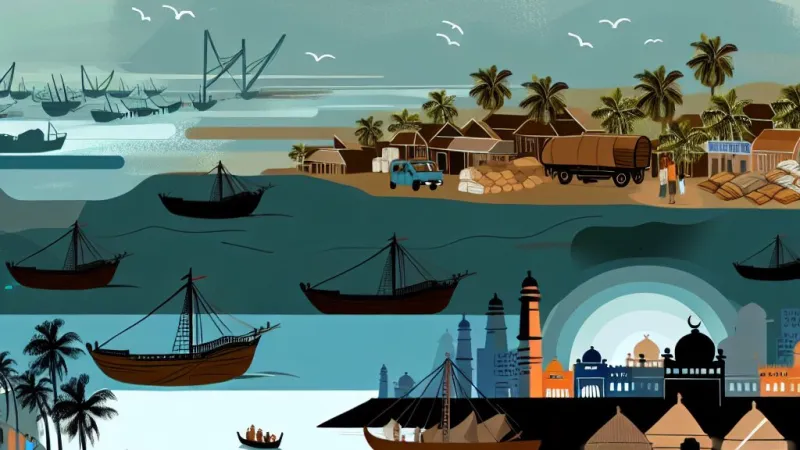
Summary:
Explore 10 short lines on water transport and its importance to learn how it connects India’s regions, supports trade, and boosts economic growth efficiently.
10 Lines on Water Transport – An In-Depth Essay
In the vast tapestry of human civilisation, transportation weaves crucial threads, connecting people, goods, and cultures across land and water. Among the oldest and most significant means is water transport—the carrying of passengers and cargo via rivers, lakes, seas, and oceans. From the ancient paddle boats gliding down the Ganga to the modern container ships docking at Mumbai Port, water transport has always played a vital role in shaping trade, society, and progress in India. Its story is not merely of geography or economics, but also of human aspiration—of reaching out, exchanging ideas, and linking diverse regions. Today, as India looks to the future, water transport remains integral to growth, be it in commerce, connectivity, or environmental sustainability.
Historical Evolution of Water Transport
Waterways were India's original highways, long before trains or aeroplanes came into existence. Early civilisations like those of the Indus Valley depended heavily on river transport for commerce and movement. Simple rafts, made from bundled reeds or hollowed logs, set the foundation for later advancements. The Rigveda mentions boats, and ancient texts such as the Arthashastra discuss riverine and maritime trade. By the medieval era, Indian shipbuilders crafted large wooden vessels capable of sailing to Southeast Asia and the Arabian Peninsula. The ports of Muziris and Lothal bustled with foreign traders. The arrival of steam power in the 19th century heralded a new era, introducing paddle steamers and mechanised ships that linked Indian cities and connected the subcontinent to the wider world. Today, India’s water transport fleet ranges from nimble fishing boats to massive ocean liners.Types of Water Transport
Inland Waterways Inland water transport refers to the movement of goods and people through rivers, canals, and lakes. In India, rivers like the Ganga and Brahmaputra have long served as vital arteries for boats, ferries, and barges. In places like Kerala, houseboats are not just a tourist attraction but a traditional mode of transit. Inland water transport links remote, often rural, communities to larger marketplaces and alleviates congestion on heavily trafficked roads.Marine or Oceanic Transport Marine transport involves navigating the seas and oceans, usually with large ships and tankers. India's peninsular location, with a coastline stretching over 7,500 kilometres, offers significant scope for sea transport. Major vessels carry bulk commodities like oil, coal, and grain across international waters, anchoring at gigantic ports such as Kolkata, Mumbai, and Chennai—and playing key roles in India’s export and import businesses.
Coastal Shipping Distinct from deep-sea shipping, coastal vessels operate along the Indian coast, moving goods and passengers between states. For example, ferries connecting the islands of Andaman and Nicobar, or fishing boats plying the shores of Gujarat, demonstrate the versatility and accessibility of coastal shipping.
Specialised Watercraft Some boats serve unique roles: India's navy defends the nation's maritime boundaries, while cruise ships on the Brahmaputra and luxury riverboats in Kerala’s backwaters promote tourism and leisure.
Importance of Water Transport
Water transport underpins the Indian economy in visible and subtle ways. It is exceptionally cost-effective for moving bulky goods—fuel, iron ore, fertilisers, and food grains—saving both money and energy. According to the Ministry of Shipping, almost 95% of India’s overseas cargo by volume travels by sea. Ports generate employment and revenue, thus boosting the national GDP.From an ecological perspective, water transport uses less fuel per tonne-kilometre than trucks or trains, helping reduce overall carbon emissions. Since rivers and seas are natural pathways, there’s little need to carve out new routes as with roads or railways, thus preserving precious land and ecosystems.
In regions where connectivity is a challenge—such as Assam’s river islands, or the Sunderbans—waterways can be lifelines, bringing essential goods, medicines, and services. Additionally, India's burgeoning river-cruise industry and houseboat tourism provide unique livelihoods and showcase the nation’s beauty to the world.
Importantly, the Indian Navy safeguards coastal and maritime interests, while patrol boats and coast guard vessels ensure national security and disaster response along vulnerable shorelines.
Advantages of Water Transport
There are many compelling benefits:1. Economic Efficiency: Ships and barges carry immense loads with low fuel consumption per unit, making each journey highly economical compared to trucks or planes. 2. Huge Carrying Capacity: Only water transport can move gigantic items like machinery, turbines, or crude oil in a single trip. 3. Relative Safety: The risk of accidents is less than on overcrowded roads; dangerous chemicals or gases are safer in a ship than a tanker truck. 4. Environmental Sustainability: By using existing waterways, this mode avoids the environmental scars caused by roads, and emits fewer pollutants. 5. Natural Infrastructure: Rivers and seas already exist, requiring minimal construction and less maintenance compared to overland routes. 6. Job Creation: Ports and related industries provide direct and indirect employment to thousands of Indians. 7. Supports Remote Access: Boats and ferries reach places where roads are difficult or impossible to build. 8. Tourism Boost: Unique experiences like Kerala’s houseboats or Brahmaputra cruises foster regional development through tourism. 9. Less Intrusive: Minimal noise and visual pollution compared to highways. 10. Strategic Utility: Strengthens national defence and supports disaster relief during floods or cyclones.
Challenges and Limitations
Water transport is not without its drawbacks. It is inherently slower than air or express trains, making it unsuitable for urgent deliveries or perishable goods. The unpredictable Indian monsoon can flood rivers, ground ferries, or cause rough seas, disrupting schedules.Rivers may silt up or shrink during dry seasons, requiring regular dredging and investment. Some remote regions still lack proper jetties or terminals, making docking and passenger transfer difficult. Ensuring safety is another challenge—oil spills, accidents, or piratical attacks can endanger lives and aquatic ecosystems.
Ports require constant modernisation to handle larger vessels and sophisticated cargo. The cost of building and maintaining these facilities, along with reliable communication and navigation systems, is significant. Despite advances in satellite tracking, finding a vessel lost at sea is often harder than finding a lorry missing on a highway.
On top of these, competition from faster modes of transport and regulatory hurdles occasionally slow progress.
Water Transport in India: A Case Study
Given India’s abundant rivers and long coastline, water transport holds unique promise. Take the Ganga-Bhagirathi-Hooghly river system, which runs through the heart of north India and forms National Waterway 1—a vital conduit for coal, foodgrains, and construction material. Similarly, the Brahmaputra in Assam and the Godavari-Krishna network in the south have historically supported local economies.India has more than a dozen major ports, with Mumbai, Kolkata, and Chennai being among the busiest and most developed. These ports handle millions of tonnes annually, hosting vessels from every part of the globe.
Recognising the potential, in 1986 India established the Inland Waterways Authority (IWAI) to oversee the development and regulation of river transport. Landmark schemes like Jal Marg Vikas, which focuses on modernising the Ganga waterway, and Sagarmala, aiming to develop port infrastructure, signal the government’s commitment.
Yet, challenges remain: seasonal fluctuations in river levels, siltation, and the need for synergy between water, road, and rail logistics. With rising traffic and pollution on highways, promoting eco-friendly water transport can ease pressure and open up new economic opportunities, especially in underdeveloped regions.
Future Prospects and Innovations
Next-generation water transport in India will likely hinge on technological and environmental innovation. Hybrid and electric-powered ferries, already on trial in places like Varanasi, promise to clean up air and water pollution. Satellite and GPS-based tracking is making navigation and cargo management smarter and safer.Efforts to integrate river and coastal shipping with road and rail networks—creating seamless multimodal logistics—are underway, especially for freight corridors and urban transport. Investment, both by the government and private players, is building modern terminals and encouraging public-private partnerships.
Tourism is another growth area. Proposed river cruise routes between Varanasi and Kolkata and luxury trips through Kerala’s backwaters aim to attract both Indian and international travellers, boosting local economies.
Rate:
Log in to rate the work.
Log in